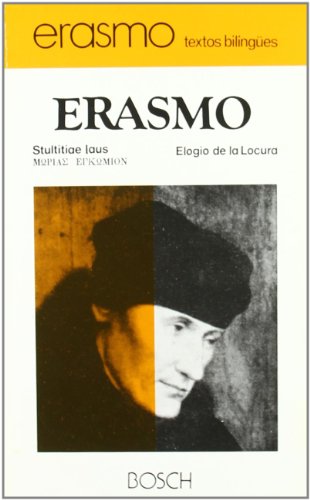

Elogio de la locura D. Erasmo de Rotterdam ; introducción, nueva traducción y notas de Oliveri Nortes Valls.
Idioma: Lenguaje original: Latín Series Erasmo, textos bilingüesDetalles de publicación: Barcelona Bosch c1976.Descripción: 357 p. 19 cmISBN:- 8471625911
| Imagen de cubierta | Tipo de ítem | Biblioteca actual | Biblioteca de origen | Colección | Ubicación en estantería | Signatura topográfica | Materiales especificados | Info Vol | URL | Copia número | Estado | Notas | Fecha de vencimiento | Código de barras | Reserva de ítems | Prioridad de la cola de reserva de ejemplar | Reservas para cursos | |
|---|---|---|---|---|---|---|---|---|---|---|---|---|---|---|---|---|---|---|
| Libro | Biblioteca Encarnación Valdés Colección General bev | 879.7 E65m E (Navegar estantería(Abre debajo)) | Disponible | 80000001014508 |
Additional t.-p.: Desiderii Erasmi Roterodami Morias enkomion, id est Stultitiae laus.
Latin and Spanish on opposite pages.
Notas de autor provistas por Syndetics
Desiderius Erasmus was born, probably in 1469, in Rotterdam, Holland. He studied in Paris, traveled in England, Germany, and Italy, and wrote in Latin. Living at the time of the Renaissance when most intellectual concepts were being examined, Erasmus was a great admirer of the ancient writers and edited many of their works. Erasmus remained a Roman Catholic, but believed that many of the priests and theologians had distorted the simple teachings of Jesus. He published an edition of the New Testament-the first edition in the original Greek-in order to make clear the essential teachings of Christianity.Erasmus liked above all things clear and honest thinking; he despised intolerance and persecution. He was the greatest of the humanists because his books, more effectively than any others, propagated a humane philosophy of life, teaching that one's chief duties are to be intelligent, open-minded, and charitable. The most famous and the most influential of Erasumus' books were The Praise of Folly (1509) and Colloquies (1518). These works, written in lively, colloquial, and witty Latin, expressed his ideas on the manners and customs of his time.
Erasmus exerted a powerful influence not only through his books, but also through the private letters that he wrote to a great number of humanist scholars in all parts of Western Europe. He carried on extensive correspondences with Thomas More of England. More than 1500 of his letters survive today.
Erasmus died in Basel, Switzerland, on July 12, 1536.
(Bowker Author Biography)