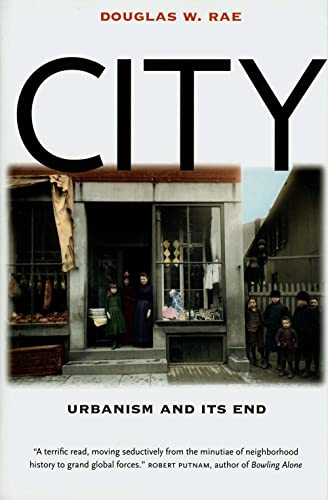

City urbanist and its end Douglas W Rae txt
Series The Yale Esps seriesUnited States of America Yale University Press New Haven Colony Historical Society 2003Descripción: xix,516p. ill,maps 25cmTipo de contenido:- text
- unmediaded
- volume
- 9780300107746
- 0300095775
- F104.N657 R34 2003
| Imagen de cubierta | Tipo de ítem | Biblioteca actual | Biblioteca de origen | Colección | Ubicación en estantería | Signatura topográfica | Materiales especificados | Info Vol | URL | Copia número | Estado | Notas | Fecha de vencimiento | Código de barras | Reserva de ítems | Prioridad de la cola de reserva de ejemplar | Reservas para cursos | |
|---|---|---|---|---|---|---|---|---|---|---|---|---|---|---|---|---|---|---|
| Libro | CARIBET Biblioteca Arquitectura Colección General CARIBET | General F104.N657 R34 2003 (Navegar estantería(Abre debajo)) | 1 | Disponible | 91000000001974 |
Descripciones mejoradas de Syndetics:
A new understanding of the modern city, its challenges, and why old ideas about urban renewal won't work
How did neighborhood groceries, parish halls, factories, and even saloons contribute more to urban vitality than did the fiscal might of postwar urban renewal? With a novelist's eye for telling detail, Douglas Rae depicts the features that contributed most to city life in the early "urbanist" decades of the twentieth century. Rae's subject is New Haven, Connecticut, but the lessons he draws apply to many American cities. City: Urbanism and Its End beginswith a richly textured portrait of New Haven in the early twentieth century, a period of centralized manufacturing, civic vitality, and mixed-use neighborhoods. As social and economic conditions changed, the city confronted its end of urbanism first during the Depression, and then very aggressively during the mayoral reign of Richard C. Lee (1954-70), when New Haven led the nation in urban renewal spending. But government spending has repeatedly failed to restore urban vitality. Rae argues that strategies for the urban future should focus on nurturing the unplanned civic engagements that make mixed-use city life so appealing and so civilized. Cities need not reach their old peaks of population, or look like thriving suburbs, to be once again splendid places for human beings to live and work.
Include index.
Includes bibliographical reference (p.477-497)