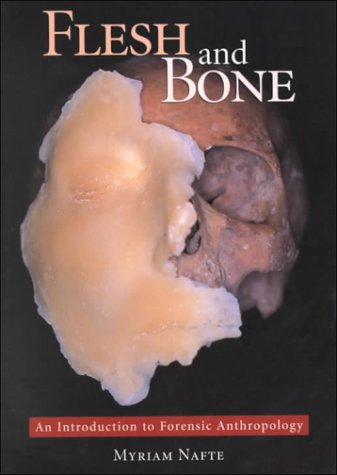

Flesh and bone an introduction to forensic anthropology Myriam Nafte.
Detalles de publicación: Durham, N.C. Carolina Academic Press c2000.Descripción: xvi, 173 p. ill. 26 cmISBN:- 0890896380
- Introduction to forensic anthropology
- 614.17 N146f 22
- GN69.8 .N33 2000
| Imagen de cubierta | Tipo de ítem | Biblioteca actual | Biblioteca de origen | Colección | Ubicación en estantería | Signatura topográfica | Materiales especificados | Info Vol | URL | Copia número | Estado | Notas | Fecha de vencimiento | Código de barras | Reserva de ítems | Prioridad de la cola de reserva de ejemplar | Reservas para cursos | |
|---|---|---|---|---|---|---|---|---|---|---|---|---|---|---|---|---|---|---|
| Libro | Biblioteca Encarnación Valdés Colección General bev | 614.17 N146f (Navegar estantería(Abre debajo)) | Disponible | 80000002440801 |
Descripciones mejoradas de Syndetics:
Flesh and Bone: An Introduction to Forensic Anthropology offers the reader a solid background in forensic anthropology by out- lining some of the methods and procedures that best define the discipline. It introduces readers to the rapidly growing area known as forensic science, providing a comprehensive look at many of the participants in the field. Nafte avoids technical terminology whenever possible and includes photographs, charts, and illustrations to complement the text.
The book evolves sequentially, beginning with a discussion of all things forensic and then continuing to detail the broad field of anthropology, the process of death, decomposition, and skeletonization. Methods of identifying the human skeleton, DNA analysis, and the reconstruction of identity are highlighted. The final chapter deals with the modern application of forensic anthropology to human rights missions.
"I found this book to be a pleasure to read, and I thoroughly recommend it as an excellent text that may be used in introductory courses on the subject, or simply as an interesting volume for use by anyone who might have a personal interest in learning more about this fascinating area of study."Roxana Ferllini, University College London, Reviews
"It is unique among most available books on this subject, placing forensic anthropology within the broader context of forensic science. In addition to methods of skeletal analysis, the author includes sections on topics such as science and the legal system, the expert witness, chain of custody, the autopsy, and human rights and forensic science....the book should be appropriate for undergraduate and graduate students who are considering careers in forensic science, as well as for forensic scientists who do not have training in forensic anthropology, and as a handy reference for people involved in law enforcement and crime investigation." -- CHOICE Magazine
Includes bibliographical references (p. 161-170) and index.
Tabla de contenidos provista por Syndetics
- Preface(p. ix)
- Acknowledgments(p. xi)
- About the Author(p. xiii)
- Introduction(p. xv)
- Section I The Development of a New Discipline
- Chapter 1 Forensic Science(p. 5)
- Chapter 2 Anthropology and Forensics(p. 23)
- Section II The Human Body
- Chapter 3 Flesh and Bone--The Process of Decomposition(p. 39)
- Chapter 4 The Human Skeleton(p. 51)
- Section III Uncovering the Mystery
- Chapter 5 Assessing the Remains(p. 83)
- Chapter 6 Evidence of Trauma(p. 117)
- Chapter 7 Reconstructing Identity(p. 133)
- Section IV New Applications
- Chapter 8 Human Rights and Forensic Science(p. 153)
- References(p. 161)
- Index(p. 171)