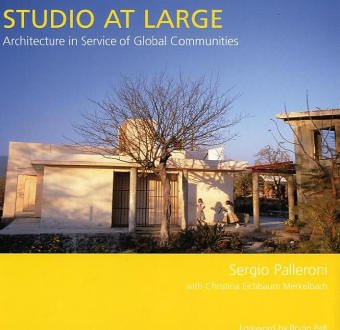

Studio-at-large architecture in service of global communities by Sergio Palleroni, in collaboration with Christina Eichbaum Merkelbach.
Idioma: Español Series Sustainable design solutions from the Pacific NorthwestSeattle University of Washington Press 2004Descripción: xvi, 191 p. col. ill. 25 cmTipo de contenido:- text
- unmediaded
- volume
- 0295984325 (pbk. : alk. paper)
- NA2005 P35 2004
| Imagen de cubierta | Tipo de ítem | Biblioteca actual | Biblioteca de origen | Colección | Ubicación en estantería | Signatura topográfica | Materiales especificados | Info Vol | URL | Copia número | Estado | Notas | Fecha de vencimiento | Código de barras | Reserva de ítems | Prioridad de la cola de reserva de ejemplar | Reservas para cursos | |
|---|---|---|---|---|---|---|---|---|---|---|---|---|---|---|---|---|---|---|
| Libro | CARIBET Biblioteca Arquitectura Colección General CARIBET | General NA2005 P35 2004 (Navegar estantería(Abre debajo)) | 1 | Disponible | 91000000013672 |
Descripciones mejoradas de Syndetics:
For more than a decade, architects and students from the University of Washington have been working with squatter communities in Mexico, migrant laborers in eastern Washington, and Indian reservations of the inland West as well as communities in Cuba, India, and Africa to provide housing, schools, clinics, and other vital structures. Led by Sergio Palleroni, Steve Badanes, and David Riley, these pioneering design/build programs have combined innovative architectural training with cross-cultural immersion, social activism, and environmental science, using design skills and hands-on construction projects to confront poverty and urgent social problems one building at a time.
Studio at Large documents the international and regional community studios organized by Sergio Palleroni and his colleagues, typically held in intensive ten-week builds in marginalized communities. Involving community members and students, these studios promote maximum use of recycled or inexpensive, locally available materials, as well as lighting and energy systems that reduce utility costs and promote resource conservation. They serve as models for making architectural education relevant to urgent social problems, helping communities mobilize indigenous resources and social capital to develop long-term sustainable practices that protect rather than erode cultural identity, dignity, and stability.
For more information go to: http://www.basicinitiative.org
Includes index.
Worldwide, Oct/20/05, 2006-075.
Tabla de contenidos provista por Syndetics
- Foreword(p. ix)
- Preface(p. xi)
- Acknowledgments(p. xv)
- Introduction(p. 3)
- Global Community Studio
- Design/Build Mexico, Cuba, India
- Escuela San Lucas(p. 14)
- Casa de Salud Malitzin(p. 28)
- Escuela Rosario Castellanos(p. 40)
- Urban Organic Agricultural Center(p. 48)
- Biblioteca Publica Municipal Juana de Asbaje y Ramirez(p. 58)
- U.S. Pavilion(p. 70)
- Unidad Basica de Rehabilitacion(p. 84)
- Housing Solutions Studios
- Migrant Worker Housing Initiative
- Maldonado Farm(p. 102)
- Esperanza(p. 110)
- American Indian Housing Initiative
- Peggy White House(p. 118)
- Fast Wolf House(p. 128)
- Martha Bear Quiver House(p. 138)
- Chief Dull Knife College Adult Education Center(p. 144)
- Local Neighborhood Studio
- Neighborhood Design/Build Studio
- Stairs, Accessible Gardens, and Garden Structures at Danny Woo International District Community Garden(p. 156)
- Play Courts at the Experimental Education Unit(p. 162)
- Pavilion and Work Areas at Highland Gardens(p. 168)
- Pavilion, Gateways, and Footbridge at Bradner Gardens Park(p. 172)
- Stage, Trellis, and Sheds at T. T. Minor Elementary School(p. 178)
- Looking Ahead(p. 185)
- Project Credits(p. 189)
Notas de autor provistas por Syndetics
Sergio Palleroni is visiting associate professor at the School of Architecture, University of Texas, Austin, and the founding director of the University of Washington BASIC Initiative. Christina Merkelbach is a designer and former design/build student. Bryan Bell is a founder of Design Corps and editor of Good Deeds, Good Design: Community Service through Architecture.