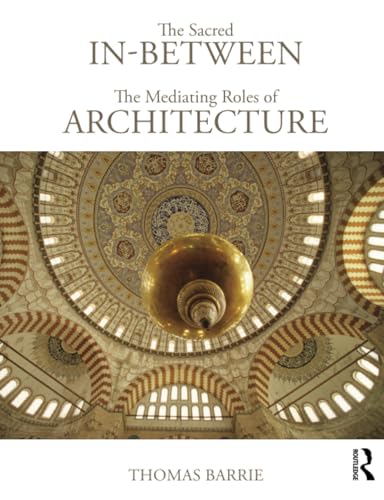

The sacred in-between : the mediating roles of architecture / Thomas Barrie. txt
Oxon : Routledge , 2010Edición: First published 2010Descripción: xii, 272 p. ill., maps, plans 26 cmTipo de contenido:- text
- unmediaded
- volume
- 9780415779647
- 0415779634
- 0415779642
- 9780415779630
- 726 22
- NA4600 B36 2010
| Imagen de cubierta | Tipo de ítem | Biblioteca actual | Biblioteca de origen | Colección | Ubicación en estantería | Signatura topográfica | Materiales especificados | Info Vol | URL | Copia número | Estado | Notas | Fecha de vencimiento | Código de barras | Reserva de ítems | Prioridad de la cola de reserva de ejemplar | Reservas para cursos | |
|---|---|---|---|---|---|---|---|---|---|---|---|---|---|---|---|---|---|---|
| Libro | CARIBET Biblioteca Arquitectura Colección General CARIBET | General NA4600 B36 2010 (Navegar estantería(Abre debajo)) | 1 | Disponible | 91000000018424 |
Descripciones mejoradas de Syndetics:
The sacred place was, and still is, an intermediate zone created in the belief that it has the ability to co-join the religious aspirants to their gods. An essential means of understanding this sacred architecture is through the recognition of its role as an 'in-between' place. Establishing the contexts, approaches and understandings of architecture through the lens of the mediating roles often performed by sacred architecture, this book offers the reader an extraordinary insight into the forces behind these extraordinary buildings.
Written by a well-known expert in the field, the book draws on a unique range of cases, reflecting on these inspiring places, their continuing ontological significance and the lessons they can offer today. Fascinating reading for anyone interested in sacred architecture.
Includes bibliographical references (p. [258]-263) and index.
Introduction -- The middle ground of interpretation. Phenomenology, hermeneutics, and the sensory experience of architecture -- Practices of connection. Applications of transcendentalist and Buddhist philosophies -- Mediating elements. Symbolism, religions, and the in-between -- Symbolic engagements. The media of architecture: Carl Jung's house in Bollingen: architecture as a medium of transformation -- Earth and sky. Place and primordial architecture: Native American earthworks, burial mounds, and effigy figures: cosmological orientations and mediations -- The sacred path and place. Spatial sequences and symbolic narratives: Tongdo Zen Buddhist Monastery, Korea: the path as a mediator -- Ordering the world. Means and meanings of proportion and geometry: Saint Benedict's Abbey, Vaals, Holland, by Dom Hans von der Laan: designing a middle ground -- Perfected worlds. Cosmograms and connections: the late works of the Ottoman architect Sinan: multitudinous contexts, packed agendas, and diverse interpretations -- Conclusions -- Closing thoughts. Personal experiences of place.
Tabla de contenidos provista por Syndetics
- Illustration Credits(p. ix)
- Acknowledgments(p. xi)
- 1 Introduction(p. 1)
- 2 The Middle Ground of Interpretation: Phenomenology, Hermeneutics, and the Sensory Experience of Architecture(p. 14)
- 3 Practices of Connection: Applications of Transcendentalist and Buddhist Philosophies(p. 29)
- 4 Mediating Elements: Symbolism, Religion, and the In-Between(p. 39)
- 5 Symbolic Engagements: The Media of Architecture(p. 61)
- Carl Jung's House in Bollingen: Architecture as a Medium of Transformation(p. 64)
- 6 Earth and Sky: Place and Primordial Architecture(p. 80)
- Native American Earthworks, Burial Mounds, and Effigy Figures: Cosmological Orientations and Mediations(p. 91)
- 7 The Sacred Path and Place: Spatial Sequences and Symbolic Narratives(p. 103)
- Tongdo Zen Buddhist Monastery, Korea: The Path as a Mediator(p. 113)
- 8 Ordering the World: Means and Meanings of Proportion and Geometry(p. 132)
- Saint Benedict's Abbey, Vaals, Holland, by Dam Hans van der Laan: Designing a Middle Ground(p. 150)
- 9 Perfected Worlds: Cosmograms and Connections(p. 167)
- The Late Works of the Ottomon Architect Sinan: Multitudinous Contexts, Packed Agendas, and Diverse Interpretations(p. 178)
- 10 Conclusion(p. 212)
- 11 Closing Thoughts: Personal Experiences of Place(p. 227)
- Notes(p. 231)
- Bibliography(p. 258)
- Index(p. 264)