
| Imagen de cubierta | Tipo de ítem | Biblioteca actual | Biblioteca de origen | Colección | Ubicación en estantería | Signatura topográfica | Materiales especificados | Info Vol | URL | Copia número | Estado | Notas | Fecha de vencimiento | Código de barras | Reserva de ítems | Prioridad de la cola de reserva de ejemplar | Reservas para cursos | |
|---|---|---|---|---|---|---|---|---|---|---|---|---|---|---|---|---|---|---|
| Libro | Biblioteca Encarnación Valdés Colección General bev | 142.7 H972zmb (Navegar estantería(Abre debajo)) | Disponible | 80000001050163 |
Descripciones mejoradas de Syndetics:
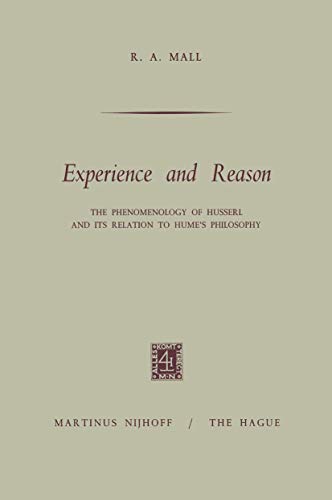
In this work the author has tried to present a brief exposition of the phenomenology of HusserI. In doing this, he had in mind a two-fold purpose. He wanted on the one hand to give a critical exposition, interpretation and appreciation of the most leading concepts of HusserI ian phenomenology. On the other hand, he tried to show that a true comprehensive understanding of HusserI's phenomenology culminates in his teaching of experience and reason. It is the strong conviction of the author that the central-most teaching of HusserI's phenomenology is the discovery of the "noetic noematic" correlativity. In the reduced realm of "constituting intentionality," the distinction between reason and experience seems to vanish, and these two concepts become interchangeable terms. The present study suffers from one great limitation, and this must be made clear right here in order to avoid any misconception about the author's intentions. The author has not discussed the other important theories of experience and reason. He has undertaken the humble task of giving an account of HusserI's phenomenology of experience and reason. The bringing in of Hume serves, as would be clear in the course of the book, a two-fold purpose. It tries on the one hand to show the pro grammatic similarity between the philosophies of these two philoso phers. On the other hand, it implicitly maintains that the philosophical continuity from Hume to HusserI runs not so much via Kant, but rather via Meinong, Brentano, A venarius, James and so forth.
Bibliography: p. [148]-150.