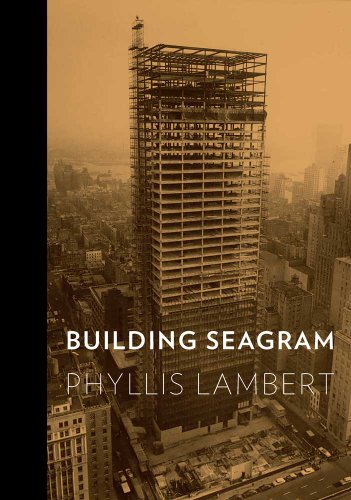

Building Seagram / Phyllis Lambert ; foreword by Barry Bergdoll. txt
New Haven ; London : Yale University Press , 2013Descripción: xiv, 306 pages illustrations (some color) 30 cmTipo de contenido:- text
- unmediaded
- volume
- 9780300167672
- 720.483097471 23
- NA6233.N5 L36 2013
| Imagen de cubierta | Tipo de ítem | Biblioteca actual | Biblioteca de origen | Colección | Ubicación en estantería | Signatura topográfica | Materiales especificados | Info Vol | URL | Copia número | Estado | Notas | Fecha de vencimiento | Código de barras | Reserva de ítems | Prioridad de la cola de reserva de ejemplar | Reservas para cursos | |
|---|---|---|---|---|---|---|---|---|---|---|---|---|---|---|---|---|---|---|
| Libro | CARIBET Biblioteca Arquitectura Colección General CARIBET | General NA6233.N5 L36 2013 (Navegar estantería(Abre debajo)) | 1 | Disponible | 91000000047829 |
Descripciones mejoradas de Syndetics:
A personal, authoritative history of one of the 20th century's most influential buildings
The Seagram building rises over New York's Park Avenue, seeming to float above the street with perfect lines of bronze and glass. Considered one of the greatest icons of twentieth-century architecture, the building was commissioned by Samuel Bronfman, founder of the Canadian distillery dynasty Seagram. Bronfman's daughter Phyllis Lambert was twenty-seven years old when she took over the search for an architect and chose Mies van der Rohe (1886-1969), a pioneering modern master of what he termed "skin and bones" architecture. Mies, who designed the elegant, deceptively simple thirty-eight-story tower along with Philip Johnson (1906-2005), emphasized the beauty of structure and fine materials, and set the building back from the avenue, creating an urban oasis with the building's plaza. Through her choice, Lambert established her role as a leading architectural patron and singlehandedly changed the face of American urban architecture. Building Seagram is a comprehensive personal and scholarly history of a major building and its architectural, cultural, and urban legacies. Lambert makes use of previously unpublished personal archives, company correspondence, and photographs to tell an insider's view of the debates, resolutions, and unknown dramas of the building's construction, as well as its crucial role in the history of modern art and architectural culture.
Includes bibliographical references (pages 254-294) and index.
Notas de autor provistas por Syndetics
Phyllis Lambert is founding director of the Canadian Centre for Architecture in Montreal. A licensed architect, she has contributed essays to numerous books and is the subject of the 2007 documentary film Citizen Lambert: Joan of Architecture . Barry Bergdoll is professor of architectural history in the department of art history and archaeology at Columbia University and the Philip Johnson Chief Curator of Architecture and Design at the Museum of Modern Art, New York.