Reseñas proporcionadas por Syndetics
Library Journal Review
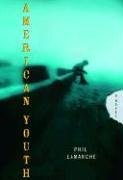
In LaMarche's first novel, the life of New England teen Ted LeClare is turned upside down the summer before high school when his friend Bobby Dennison is accidentally shot at Ted's house with a gun Ted loaded. Ted's guilt about what happened, along with an ongoing investigation that could implicate him in Bobby's death, sends him on a downward spiral. He finds solace and a degree of acceptance by becoming involved with American Youth, a group of neo-Nazi teens who act out their anger against middle-class newcomers to town and who regard Ted as something of a hero because he owns a gun. He participates in their vandalism and even becomes involved with the ex-girlfriend of one of the group's leaders-until their actions begin to hit too close to home and he must make a decision. LaMarche's style can distance the reader from the characters at times, making this raw and often violent coming-of-age tale less emotionally compelling than it might have been. Still, it's a worthwhile purchase for public libraries. [See Prepub Alert, LJ 12/06.]-Lawrence Rungren, Merrimack Valley Lib. Consortium, Andover, MA (c) Copyright 2010. Library Journals LLC, a wholly owned subsidiary of Media Source, Inc. No redistribution permitted.
Publishers Weekly Review
In telling the story of New England ninth grader Ted LeClare, LaMarche takes Mitch Albom-like sincerity, holds it arm's length from George Saunders-like deadpan satire, and transports the lot to a gun-crazy America that he refuses to judge. The results make his characters unwittingly sophisticated vessels for the hopes and fears of the post-post-Columbine exurbs. The plot is simple: while showing off his .22, Ted loads the gun; while Ted's back is turned, his schoolmate Kevin Dennison accidentally kills Kevin's younger brother, Bobby. The aftermath includes Ted's being taken up by a group of boys calling themselves the American Youth, teens who spout a debased, quasireligious, gun rights, antidevelopment, NIMBY-like parody of conservative talk show rhetoric. Ted also, at his mother's direction (his father is absent), lies about having loaded the gun. As Ted (referred to as "the boy" most of the time) comes around to telling the truth about what happened, there are detours into bad behavior with the Youth. In vivid set pieces, aimless teens take vigilante action against creeping cookie-cutter housing and enforce a bizarre set of double-standards. Drugs, alcohol and sex fascinate and repel the Youth in equal measure. LaMarche deftly allows his debut to be at once a parable and a dead-on rendering of its time and place. (Apr.) (c) Copyright PWxyz, LLC. All rights reserved
School Library Journal Review
Adult/High School-Ted LeClare, a New England ninth grader, is showing off his father's guns when he hands one to visiting brothers. While he is in another room, one accidentally shoots and kills the other. Ted's terrified mother tells him not to tell the authorities that he loaded the gun. When Ted, who is referred to as "the boy" throughout the novel, returns to school after this violent incident, he is rejected by most classmates but is befriended by a group who call themselves American Youth. Their interests lie in vandalizing houses in the new subdivisions that are taking over the countryside. The Youth embrace gun rights, vigilante acts, and their own brand of religion that helps them rationalize their activities. As Ted begins to see the Youth for what they really are, he finally tells the truth about loading the gun and begins to feel release from his own guilt and pain. This novel is a harrowing but unsentimental look at Ted's world-an impersonal place of encroaching subdivisions and pressures to fit in, and where young people are caught between absurd double standards. The account is honest and perceptive, and readers will find themselves hoping that Ted will rise up through his anger and sadness as he wrestles with his personal dilemma of whether or not to tell the truth at great cost to himself and his family.-Susanne Bardelson, Kitsap Regional Library, WA (c) Copyright 2010. Library Journals LLC, a wholly owned subsidiary of Media Source, Inc. No redistribution permitted.
Booklist Review
A title this generic suggests that the author is going to paint with a broad brush, but while LaMarche does tackle big issues in his debut--using gun violence as a way into teen alienation, urban-rural conflict, and the nostalgic impulse behind fascism--he does so by painting a deceptively simple picture. In New England, a rural boy shows his gun to two brothers, and one of the brothers accidentally shoots and kills the other. The boy's terrified mother orders him to keep a terrible secret: he loaded the gun. Ostracized at school, the boy joins a group called American Youth, straight-edgers whose main purpose seems to be vandalizing homes in the area's new subdivisions. Beset by parents, police, and peers, the boy turns his anger on himself until a violent release seems inevitable. Although some lines of thought could have been explored more fully, LaMarche's surgically clean prose exposes the full extent of the boy's pain, and as a portrait of young people trapped in the ruptures of our society, this short novel has great power. --Keir Graff Copyright 2007 Booklist