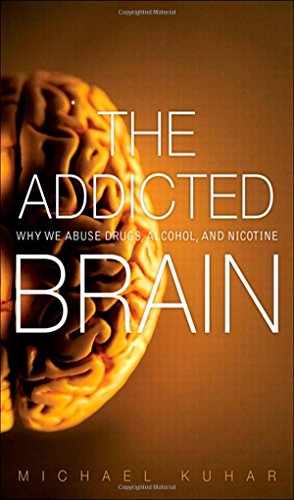
Imagen de portada de Amazon
Imagen de Amazon.com
Imagen de cubierta Syndetics
Portada de Syndetics
Imagen de OpenLibrary

The addicted brain why we abuse drugs, alcohol, and nicotine Michael J. Kuhar.

Por: Detalles de publicación: Upper Saddle River, N.J. FT Press 2012.Edición: 1st edDescripción: xiii, 222 p. ill. 24 cmISBN:
  • 9780132542500 (hardback : alk. paper)
Tema(s): Clasificación CDD:
  • 616.86/0651 23
Clasificación LoC:
  • RC564 .K84 2012
Valoración
    Valoración media: 0.0 (0 votos)
Existencias
Imagen de cubierta Tipo de ítem Biblioteca actual Biblioteca de origen Colección Ubicación en estantería Signatura topográfica Materiales especificados Info Vol URL Copia número Estado Notas Fecha de vencimiento Código de barras Reserva de ítems Prioridad de la cola de reserva de ejemplar Reservas para cursos
Libro Biblioteca de Mayagüez Colección General mb RC564 .K84 2012 (Navegar estantería(Abre debajo)) Prestado 09/10/2026 50000003232245
Total de reservas: 0

Descripciones mejoradas de Syndetics:

Addiction destroys lives. In The Addicted Brain, leading neuroscientist Michael Kuhar, Ph.D., explains how and why this happens-and presents advances in drug addiction treatment and prevention. Using breathtaking brain imagery and other research, Kuhar shows the powerful, long-term brain changes that drugs can cause, revealing why it can be so difficult for addicts to escape their grip.

Discover why some people are far more susceptible to addiction than others as the author illuminates striking neural similarities between drugs and other pleasures potentially capable of causing abuse or addiction-including alcohol, gambling, sex, caffeine, and even Internet overuse. Kuhar concludes by outlining the 12 characteristics most often associated with successful drug addiction treatment.


Authoritative and easy to understand, The Addicted Brain offers today's most up-to-date scientific explanation of addiction-and what addicts, their families, and society can do about it.

Includes bibliographical references.

eigm 12/2012

Reseñas proporcionadas por Syndetics

CHOICE Review

The Addicted Brain is an extremely readable introduction to issues and concerns related to drug addiction. Kuhar (Emory Univ.) is a respected researcher and scholar with a strong pedigree in pharmacology and neuroscience who has distilled his knowledge into a format that should be well received by anyone seeking to understand substance abuse disorders. The first chapter provides an overview of the book's content and why it is important. The next 12 chapters cover animal research implications for human behavior, neurophysiology and psychopharmacology, and issues related to stress, social status, gambling, sex, food, gender, and adolescence. Chapter 13 discusses what is currently known about the treatment and prevention of addiction. In the final chapter, "What Does the Future Hold?," Kuhar provides a broad outline of what needs to occur in society to counter the problems and issues related to dealing with addiction. This work is suitable for undergraduates in a variety of health-related disciplines, including psychology and social work. It can serve as either a primary or an ancillary text. Summing Up: Recommended. Upper-division undergraduates, graduate students, and general readers. G. A. Blevins Governors State University

Notas de autor provistas por Syndetics

Michael Kuhar, Ph.D. , is currently a professor at the Yerkes National Primate Research Center, Candler professor in the Emory University School of Medicine, and a Georgia Research Alliance Eminent Scholar. His general interests have been the structure and function of the brain, mental illness, and the drugs that affect the brain. Addiction has been his major focus for many years, and he is one of the most productive and highly cited scientists worldwide. He has trained a large cadre of students, fellows, and visitors, received a number of prestigious awards for his work, and remains involved in many aspects of addiction research and education. In June 2011, he received the Nathan B. Eddy lifetime achievement award from the College on Problems of Drug Dependence.

Compartir
logopucpr-y-vive

Contáctanos

¡Queremos saber de ti!

Tel. 787.841.2000 Ext. 1801

bibliotecavaldes@pucpr.edu

⁣Búscanos en las redes

© 2026 Desarrollado por Ignite Online • All Rights Reserved • Powered by Koha.