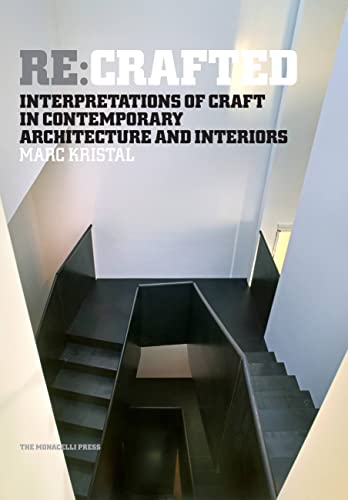
Imagen de portada de Amazon
Imagen de Amazon.com
Imagen de cubierta Syndetics
Portada de Syndetics
Imagen de OpenLibrary

Re:Crafted:Interpretation of craft in contemporary architecture and interiors/Marc Kristal txt

Por: Idioma: Español New York : Monacelli Press, ©2010. Monacelli Press ©2010Edición: 1st edDescripción: 203p. ill. 11cmTipo de contenido:
  • text
Tipo de medio:
  • unmediaded
Tipo de soporte:
  • volume
ISBN:
  • 9781580932769
Otro título:
  • Re Crafted: Interpretations of craft in contemporary architecture and interiors
Tema(s): Clasificación LoC:
  • NA687 K75 2010
Contenidos:
Contents: Siamese towers, Santiago, Chile, Alejandro Aragena -- Salt point house, Salt Point, New York, Thomas Phifer and partners -- Svalbard Science Center, Longyearbyen, Spitzberge, Svalbard, Norway, Jarmund/Vigsnaes architects MNAL -- Palms house, Venice, California, Daily Genik architects -- Alice Tully Hall, New York, New York, Diller Scofidio + Renfron with FXFOWLE -- Koby Cottage, Albion, Michigan, Garrison architects -- Lauder School of government, diplomacy and strategy and Arison School of Business, Israel, Ada Karmi-Melamede architects -- Dow Jones, New York, New York, STUDIOS architecture -- California Academy of Sciences, San Francisco, California, Renzo Piano Building workshop -- Great (bamboo) wall, Beijing, China, Kengo Kuma & Associates -- Renaissance Paris Arc de Triomphe Hotel, Paris, France, Atelier Christian de Portzamparc -- Aqua Tower, Chicago, Illinois, Studio Gang architects -- 23 Beekman Place, New York, New York, Della Valle Bernheimer -- Tietgenkollegiet, Copenhagen, Denmark, Lundgaard & Tranberg architects -- Xsmall House, North Cambridge, Massachusetts, UNI -- Tod's Omotesando, Shibuya-ku, Tokyo, Japan, Toyo Ito & Associates architects -- Greenwich Townhouse, New York, New York, Matthew Baird architects -- Fiera Milano, Milan, Italy, Massimiliano Fuksas architetto -- Hotel Aire de Bardenas, Tudela, Navarre, Spain, Emiliano López Mónica Rivera architects -- Formosa 1140, West Hollywood, California, Lorcan O'Herlihy architects -- Yas Hotel, Abu Dhabi, United Arab Emirates, Asymptote architecture -- Airspace Tokyo, Tokyo, Japan, Studio M, Faulders Studio -- 41 Cooper Square, New York, New York, Morphosis architects -- Solar umbrella, Venice, California, Pugh + Scarpa architects -- Glass pavilion at the Toledo Museum of Art, Toledo, Ohio, Kazuyo Sejima and Ryue Nishizawa/SANAA.
Valoración
    Valoración media: 0.0 (0 votos)
Existencias
Imagen de cubierta Tipo de ítem Biblioteca actual Biblioteca de origen Colección Ubicación en estantería Signatura topográfica Materiales especificados Info Vol URL Copia número Estado Notas Fecha de vencimiento Código de barras Reserva de ítems Prioridad de la cola de reserva de ejemplar Reservas para cursos
Libro CARIBET Biblioteca Arquitectura Colección General CARIBET General NA687 K75 2010 (Navegar estantería(Abre debajo)) Enlace al recurso Disponible 91000000015966
Total de reservas: 0

Descripciones mejoradas de Syndetics:

Now more than ever, architects and designers are crossing aesthetic borders, and redefining craft to suit their own creative needs, philosophies, and expectations--often by commenting upon or challenging it. By transforming our notions of what might be considered "crafted," today's practitioners have not only put a new spin on an ancient art; they have expanded our understanding of where and how the personal touch is found in the sometimes bewildering or inhospitable terrain of the contemporary aesthetic landscape. Featuring twenty-five residential, commercial, and institutional projects--by major international design figures as well as the relatively unknown and up-and-coming--this volume looks at what constitutes the craft influence in contemporary architecture and design. By turns luxurious and simple; time-honored and leading-edge; small-scale and monumental; unabashedly beautiful, surprisingly witty, socially adroit, and sublimely poetic, these projects are sure to give us a new appreciation of the pleasures of making--and enlarge and enrich our understanding of the presence, and importance, of craft in all our lives.

Includes Bibliographical references.

Contents: Siamese towers, Santiago, Chile, Alejandro Aragena --
Salt point house, Salt Point, New York, Thomas Phifer and partners --
Svalbard Science Center, Longyearbyen, Spitzberge, Svalbard, Norway, Jarmund/Vigsnaes architects MNAL --
Palms house, Venice, California, Daily Genik architects --
Alice Tully Hall, New York, New York, Diller Scofidio + Renfron with FXFOWLE --
Koby Cottage, Albion, Michigan, Garrison architects --
Lauder School of government, diplomacy and strategy and Arison School of Business, Israel, Ada Karmi-Melamede architects --
Dow Jones, New York, New York, STUDIOS architecture --
California Academy of Sciences, San Francisco, California, Renzo Piano Building workshop --
Great (bamboo) wall, Beijing, China, Kengo Kuma & Associates --
Renaissance Paris Arc de Triomphe Hotel, Paris, France, Atelier Christian de Portzamparc --
Aqua Tower, Chicago, Illinois, Studio Gang architects --
23 Beekman Place, New York, New York, Della Valle Bernheimer --
Tietgenkollegiet, Copenhagen, Denmark, Lundgaard & Tranberg architects --
Xsmall House, North Cambridge, Massachusetts, UNI --
Tod's Omotesando, Shibuya-ku, Tokyo, Japan, Toyo Ito & Associates architects --
Greenwich Townhouse, New York, New York, Matthew Baird architects --
Fiera Milano, Milan, Italy, Massimiliano Fuksas architetto --
Hotel Aire de Bardenas, Tudela, Navarre, Spain, Emiliano López Mónica Rivera architects --
Formosa 1140, West Hollywood, California, Lorcan O'Herlihy architects --
Yas Hotel, Abu Dhabi, United Arab Emirates, Asymptote architecture --
Airspace Tokyo, Tokyo, Japan, Studio M, Faulders Studio --
41 Cooper Square, New York, New York, Morphosis architects --
Solar umbrella, Venice, California, Pugh + Scarpa architects --
Glass pavilion at the Toledo Museum of Art, Toledo, Ohio, Kazuyo Sejima and Ryue Nishizawa/SANAA.

Tabla de contenidos provista por Syndetics

  • Introduction
  • Aberystwyth Business Units Aberystwyth, Wales
  • Hot Rod House Seattle, Washington
  • Deformscape San Francisco, California
  • Rhode Island School of Design Library Providence, Rhode Island
  • Goodman House Pine Plains, New York
  • Casa A
  • Vilches, Chile
  • East River Triplex New York, New York
  • Ini Ani Coffee Shop New York, New York
  • Hotel Seeko'o Bordeaux, France
  • Mobile Chaplet Fargo, North Dakota
  • Charred Cedar House Nakano, Japan
  • Molori Safari Lodge Madikwe Game Preserve, South Africa
  • Tanner Studiolo New York, New York
  • Courtyard House Toronto, Canada
  • Ling Loft New York, New York
  • Orchard East Chicago, Illinois
  • Turtle Creek Water Works Dallas, Texas
  • Villa for an Industrialist Shenzhen, China
  • Santa Monica Parks Project Santa Monica, California
  • Ventana House Tucson, Arizona
  • Central Park West Apartment New York, New York
  • Integral House Toronto, Canada
  • Oasis Advertising New York, New York
  • Bloomfield Hills House Bloomfield Hills, Michigan
  • Norwegian National Opera and Ballet Oslo, Norway
  • Acknowledgments
  • Photography
  • Credits

Extracto provisto por Syndetics

Introduction For as long as I can remember, I've had a particular way of working. I begin by making notes based on my thoughts about a subject and my research into it. This is followed by interviews, which I record and then transcribe--a time-consuming process, but one that enables me to discover things I missed while absorbed in the original conversations. I cut the notes and transcripts into strips of paper--sometimes hundreds of them--and lay them out on the floor, arranging and rearranging them until their order represents the story I want to tell in the way I want to tell it. With a pencil and yellow pad, I draft whatever it is I'm writing, then type it up with the Olympia manual I've had for forty-plus years, rewriting and retyping until the work is done--at which point it finally goes into the computer. While I don't work precisely this way all the time, unless I follow some variant of my routine, however cumbersome it may sometimes be, the outcome doesn't feel authentically "mine"--because it hasn't emerged from the process by which I practice the craft of writing. As a result of this approach--and my sensitivity to when my own work becomes authentic to me--I have always been interested in why certain things feel "crafted" and others do not. In 1964, Supreme Court justice Potter Stewart famously observed that while he couldn't precisely define hard-core pornography, "I know it when I see it." That is how I feel about craft. It may seem easily discernible. But the more of it you see--the more you realize how many forms it takes, and how imaginatively it can be interpreted--the more resistant craft becomes to easy explanation. On the one hand, everyone knows what it is: craft involves, in the architect Adam Yarinsky's formulation, "the hand and how it registers on the making of something"; an informed understanding of a (typically organic) material and how to tease out its potential; and a method of making that combines a vast store of skill-based knowledge with experience and artful intuition. Viewed from this perspective, a craft object is easy to identify: George Nakashima's tables, a glass dragonfly by René Lalique, George Ohr's pottery, a Fabergé egg. On the other hand, this definition isn't large enough to include what we instinctively perceive to be craft when we encounter it in other, unexpected places--for example, in product and industrial design, as in the work of Tapio Wirkkala, one of the twentieth century's most prolific and versatile creators. A gifted draftsman who could express himself equally well with hand tools, Wirkkala would produce countless sketches of an object, refining his ideas with multiple models and molds. Then he would migrate this craft-based sensibility to the mass-production phase: immersing himself in the requisite processes, making design adjustments as necessary, and working side by side with the fabricators, whether the object was a Venini polychrome vase or the Finlandia vodka bottle--perhaps his best-known design, the manufacturing of which required thousands of hours of experimentation. By keeping hold of the reins throughout production, Wirkkala was able to preserve the quality of craft that had emerged during development--a quality that remained evident in the mass-produced object. This same double vision can be applied to the presence of craft in architecture and interiors. If there is such a thing as a common understanding of "the craft of architecture," it can perhaps be found in the appropriately named Craftsman style of the architects Charles and Henry Greene--notably their 1908 Gamble House in Pasadena, California, with its superlative woodwork--or the English Arts and Crafts movement and its presiding figure, William Morris, Excerpted from Re:Crafted: The Craft Influence in Contemporary Architecture and Design by Marc Kristal All rights reserved by the original copyright owners. Excerpts are provided for display purposes only and may not be reproduced, reprinted or distributed without the written permission of the publisher.

Notas de autor provistas por Syndetics

An architecture and design journalist, Marc Kristal is a contributing editor of Dwell, a former editor of AIA/J, and has written for Metropolis, the New York Times, Architectural Digest, Elle Décor, and numerous other publications. In 2003, he curated the exhibition "Absence Into Presence: The Art, Architecture, and Design of Remembrance" at Parsons School of Design, and in 2009, he was part of the project team that created the Greenwich South planning study for the Alliance for Downtown New York. Also a screenwriter, Kristal wrote the film Torn Apart. He lives in New York.
Compartir
logopucpr-y-vive

Contáctanos

¡Queremos saber de ti!

Tel. 787.841.2000 Ext. 1801

bibliotecavaldes@pucpr.edu

⁣Búscanos en las redes

© 2026 Desarrollado por Ignite Online • All Rights Reserved • Powered by Koha.