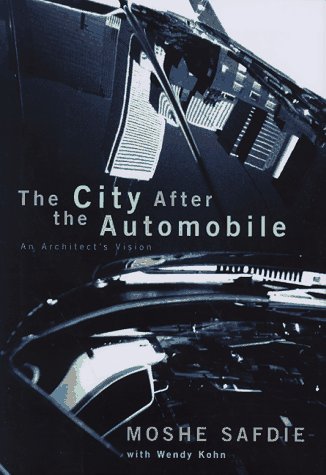
Imagen de portada de Amazon
Imagen de Amazon.com
Imagen de cubierta Syndetics
Portada de Syndetics
Imagen de OpenLibrary

The city after the automobile : an architect's vision / Moshe Safdie with Wendy Kohn. txt

Por: Colaborador(es): United States of America : Westview Press , 1998Descripción: xii, 187 p. ill. 21 cmTipo de contenido:
  • text
Tipo de medio:
  • unmediaded
Tipo de soporte:
  • volume
ISBN:
  • 0465098363
Tema(s): Clasificación CDD:
  • 307.76/01/12 21
Clasificación LoC:
  • HT151 S144 1998
Valoración
    Valoración media: 0.0 (0 votos)
Existencias
Imagen de cubierta Tipo de ítem Biblioteca actual Biblioteca de origen Colección Ubicación en estantería Signatura topográfica Materiales especificados Info Vol URL Copia número Estado Notas Fecha de vencimiento Código de barras Reserva de ítems Prioridad de la cola de reserva de ejemplar Reservas para cursos
Libro CARIBET Biblioteca Arquitectura Colección General CARIBET General HT151 S144 1998 (Navegar estantería(Abre debajo)) 1 Disponible 91000000000794
Total de reservas: 0

Descripciones mejoradas de Syndetics:

0813333849 the Last Crusade: Martin Luther King Jr., the Fbi, and the Poor People's Campaign

"A New republic book."

Includes bibliographical references (p. 175-179) and index.

Reseñas proporcionadas por Syndetics

Publishers Weekly Review

Forty-three percent of the world's 5.5 billion inhabitants live in cities, many of them, says architect Safdie, regional mega-cities that are growing recklessly, with traffic congestion that daily threatens the environment. Safdie, who achieved prominence for his futuristic Habitat housing complex at Montreal's Expo '67, blames a lack of regional planning and the unexpected impact of the automobile for our deteriorating cities. In the first two parts of his book, Safdie treads familiar territory‘noting the dispersal of affluent families to the suburbs that left empty downtowns and contributed to social polarization, monolithic office buildings that dwarf pedestrians, and the vast, unsafe garages in airports and commercial buildings. Along the way he touches on the role of the architect, several of his own projects that were derailed by shortsighted clients and the need for buildings to take best advantage of their natural sites. In the last third of the book, Safdie describes his vision of a new kind of urban center, one that accommodates the beauties of its particular topography and is a central spine of intense activity. He also proposes a new method of transportation, replacing private ownership of cars with a pool of government-owned electric vehicles that would be at drivers' disposal by the hour, day, week or month. These Utility cars would be instantly available from a storage depot and left there after use. But radical ideas such as this are best bolstered by practical details for implementation, which Safdie fails to offer. (June) (c) Copyright PWxyz, LLC. All rights reserved

CHOICE Review

This short, well-written book by an architect with more than 30 years of international prominence deserves attention. It makes current interpretations and dramatic solutions to the ever-expanding worldwide urban crisis easily accessible to the lay audience it addresses. If present trends continue, our world will be overwhelmed with cities and our cities overwhelmed with people. The uncoordinated practices now at work in urbanization are inadequate. Required are large-scale remedies undertaken by regional-scaled administrative authorities. The book is characteristic of a current genre: it does not challenge the premises of the modern world, which accepts consumerism as the basis of community, sees ease of mobility as a right, and thinks privacy is a public good; therefore, the affluent world of livable cities it envisages remains curiously unconnected to our world, in which the population is impoverishing itself and consuming nature's bounty at an even more rapid rate than it is expanding in number. A few sketches and endnotes complete the presentation. General; undergraduate; graduate; professional. C. W. Westfall; University of Virginia

Booklist Review

Architect Safdie examines the car's tremendous impact upon our urban centers while arguing for the formation of new cities that incorporate the best of the old model with the open feel of the suburbs. The car's impact on the urban landscape became most pronounced after World War II, with a boom in both auto and highway production. City planning was then formulated around traffic flow and the need for parking. But with mobility, people headed out and away from the urban core, forming a new American city. We see it today in the housing enclaves, office buildings, and strip malls lining our highways. Safdie calls for a revolutionary change in city and regional planning to revitalize cities and give people the connection to nature they currently find in the suburbs. Insightful and thought provoking, the book is required reading for anyone concerned about the decline of the American city. --Brian McCombie

Notas de autor provistas por Syndetics

Gerald D. McKnight is professor of history at Hood College, where he is chair of the History and Political Science Department.
Compartir
logopucpr-y-vive

Contáctanos

¡Queremos saber de ti!

Tel. 787.841.2000 Ext. 1801

bibliotecavaldes@pucpr.edu

⁣Búscanos en las redes

© 2026 Desarrollado por Ignite Online • All Rights Reserved • Powered by Koha.