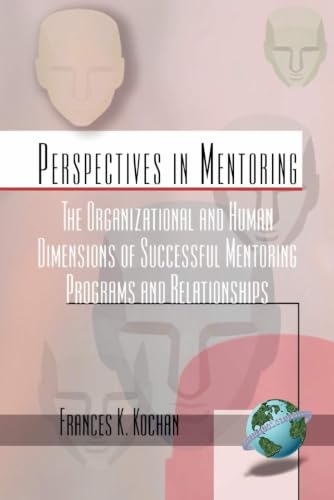

The organizational and human dimensions of successful mentoring programs and relationships edited by Frances K. Kochan.
Series Perspectives in mentoringDetalles de publicación: Greenwich, Conn. Information Age Pub. c2002.Descripción: xiii, 286 p. 24 cmISBN:- 1930608373
- 1930608365 (pbk.)
- 371.102 O687 21
- BF637.M45 O74 2002
| Imagen de cubierta | Tipo de ítem | Biblioteca actual | Biblioteca de origen | Colección | Ubicación en estantería | Signatura topográfica | Materiales especificados | Info Vol | URL | Copia número | Estado | Notas | Fecha de vencimiento | Código de barras | Reserva de ítems | Prioridad de la cola de reserva de ejemplar | Reservas para cursos | |
|---|---|---|---|---|---|---|---|---|---|---|---|---|---|---|---|---|---|---|
| Libro | Biblioteca Encarnación Valdés Colección General bev | 371.102 O687 (Navegar estantería(Abre debajo)) | Disponible | 80000002491911 |
Descripciones mejoradas de Syndetics:
Mentoring has become an important aspect of professional development in a wide variety of fields such as education engineering and business. There is an increased interest in the topic on a global scale. Research indicates that those who receive mentoring rise faster in their organizations and have more success in their careers than those who do have this experience. This series will focus on various aspects of the mentoring process. This book examines mentoring with a focus on enhancing opporutnities for those traditionally ignored in the mentoring process. It includes chapters about mentoring in a variety of settings with varied populations to capture the essence of the experience. The editor gleans the chapters to present an analysis of the organizational factors which should be considered when designing a mentoring program and the human side of the mentoring process. The book should be of interest to those who want to foster the success of others through organizational mentoring intitiatives as well as to individuals who wish to partiicpate in mentoring endeavors as a mentor or mentee.
Includes bibliographical references.
Tabla de contenidos provista por Syndetics
- About the Contributors(p. ix)
- 1. The Organizational and Human Dimensions of Successful Mentoring Across Diverse Settings(p. 1)
- Section I. Mentoring for School-Age Children
- 2. Parents Mentoring Parents for School Success(p. 7)
- 3. Project Nia (Purpose): A University/School Partnership to Enhance Student Achievement and Success(p. 23)
- 4. From Impersonal Policy to Personal Relationships: An Educational Researcher's Experience with Mentoring(p. 37)
- Section II. Mentoring with University Students
- 5. Student Perceptions of the Mentoring Relationship in Higher Education(p. 53)
- 6. Programmatic Elements That Enhance The Mentoring Relationship(p. 69)
- 7. Mentoring Aspiring School Leaders in Scholarly Writing Through Case Studies of Diversity(p. 83)
- 8. Joint Reflections on Mentoring: Creating a Legacy of Care(p. 103)
- Section III. Mentoring Teachers and Administrators
- 9. Transformational Learning Through Mentoring in Early Childhood Education: The DART Model(p. 121)
- 10. The Missouri Teachers' Academy: Mentoring for Organizational and Personal Transformation(p. 141)
- 11. Mentoring Leaders: Some Reflections on the Experience(p. 153)
- 12. Tracing the Development of Mentoring Relationships of Teachers: Four Case Studies(p. 169)
- 13. Mentoring and Teacher Induction: Hearing the Voices of Change(p. 185)
- Section IV. Mentoring Women and Minorities in the Workplace
- 14. Mentoring Women in Educational Leadership(p. 207)
- 15. Using Mentoring to Advance Females and Minorities in a Corporate Environment(p. 221)
- 16. Matching Mentors and Proteges: Dynamics of Race, Ethinicity, Gender, and Job Location(p. 243)
- Section V. Analysis and Conclusions
- 17. Examining the Organizational and Human Dimensions of Mentoring: A Textual Data Analysis(p. 269)