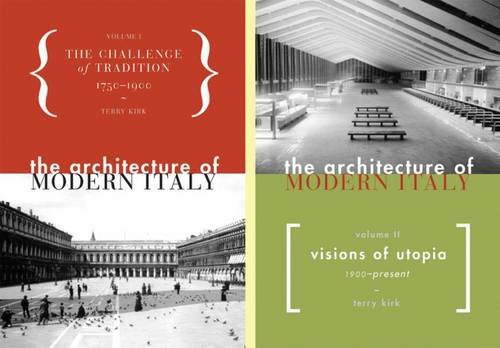

The architecture of modern Italy : Terry Kirk. txt
Idioma: Español New York : Princeton Architectural Press, 2005Edición: First editionDescripción: 179p. ill. ; 23cmTipo de contenido:- text
- unmediaded
- volume
- 1568984383 (set : alk. paper)
- 1568984200 (v. 1 : alk. paper)
- 1568984367 (v. 2 : alk. paper)
- 9781568984209
- 720/.945 22
- NA1114 K574 v.2 2005
| Imagen de cubierta | Tipo de ítem | Biblioteca actual | Biblioteca de origen | Colección | Ubicación en estantería | Signatura topográfica | Materiales especificados | Info Vol | URL | Copia número | Estado | Notas | Fecha de vencimiento | Código de barras | Reserva de ítems | Prioridad de la cola de reserva de ejemplar | Reservas para cursos | |
|---|---|---|---|---|---|---|---|---|---|---|---|---|---|---|---|---|---|---|
| Libro Col. General CARIBET | CARIBET Biblioteca Arquitectura Colección General CARIBET | General NA1114 K574 2005 v.1 (Navegar estantería(Abre debajo)) | 1 | 1 | Disponible | 91000000000901 | ||||||||||||
| Libro Col. General CARIBET | CARIBET Biblioteca Arquitectura Colección General CARIBET | General NA1114 K574 2005 v.2 (Navegar estantería(Abre debajo)) | 2 | 2 | Disponible | 91000000001669 |
Descripciones mejoradas de Syndetics:
When most of us think of Italy, we think of its ancient sites, yet restoration and urban reconfiguration has reshaped almost everything we see in Italian cities today. From the facade of the Cathedral of Florence to the famous Galleria in Milan, these newer works are often the most prominent in their environments. Terry Kirk traces the history of deisgn in Italy from the time of Piranesi through the eclecticism of the 19th century, the futurism of the early 20th century, the dogmatic fascism of the interwar period, the brilliant structural designs of Pier Luigi Nervi, and on to the present day, with its new generation of designers led by Renzo Piano.Maps of Italy, Rome and Milan along with numerous illustrations depict the different eras under discussion and a comprehensive bibliography allows for further study.
Includes index.
Includes bibliography.
v. 1.
Contents :
Acknowledgments 9 --
Introduction 10 --
Chapter 1 Architecture of the Italian Enlightenment, 1750-1800:
The Pantheon Revisited 14 --
Rome of the Nolli Plan 20 --
Alessandro Galilei and San Giovanni Laterano 22 --
Nicola Salvi and the Trevi Fountain 24 --
Luigi Vanvitelli and the Reggia at Caserta 28 --
Fernando Fuga and the Albergo dei Poveri 40 --
Giovanni Battista Piranesi 47 --
Giacomo Quarenghi 59 --
The Grand Tour and the Impact of Archeology 62 --
Collecting and Cultural Heritage 65 --
The Patronage of Pope Pius VI 73 --
Giuseppe Piermarini and Milan in the Eighteenth Century 77 --
Venice's Teatro La Fenice and Conclusions on Neoclassicism 83 --
Chapter 2 Napoleon in Italy, 1800-1815:
Napoleon's Italic Empire 86 --
Milan 91 --
Venice 98 --
Turin 101 --
Naples 105 --
Trieste 107 --
The Neoclassical Interior 110 --
Rome 112 --
Napoleon's Interest in Archeology 120 --
Political Restoration and Restitution of Artworks 123 --
Napoleonic Neoclassicism 125 --
Chapter 3 Restoration and Romanticism, 1815-1860:
Giuseppe Jappelli and the Romantic Ideal 126 --
Villa Rivalry The Borghese and the Torlonia of Rome 136 --
Italian Opera Stage Design and Theater Interiors 143 --
Antonio Canova's Temple in Possagno 147 --
Pantheon Progeny and Carlo Barabino 153 --
Romanticism in Tuscany 156 --
Alessandro Antonelli 160 --
Construction in Iron 166 --
Architectural Restoration of Monuments 169 --
Revivalism and Camillo Boito 176 --
Chapter 4 unification and the Nation's Capitals, 1860-1900:
Turin, the First Capital 186 --
Florence, the Interim Capital 190 --
Naples Risanata 196 --
Milan, the Industrial Capital 199 --
Cathedral Facades and Town Halls 204 --
Palermo and National Unification 217 --
The Last of Papal Rome 219 --
Rome, the Capital of United Italy 222 --
Monumental Symbols of the New State 231 --
A New Urban Infrastructure for Rome 241 --
A National Architecture 246 --
Rome, a World Capital 252 --
Bibliography 260 --
Credits 275 --
Index 276--
The challence of traditions,1750-1900
V.2 :
Contents:
Acknowledgments 9 --
Introduction 10 --
Chapter 5 Architects of the Avant- Garde, 1900s-1920s:
The International Exhibition of Decorative Arts, Turin, 1902 14 --
Stile Liberty: Pietro Fenoglio, Giuseppe Sommaruga, Ernesto Basile 19 --
Socialized Public Housing 26 --
Neo-Eclecticism: Giulio Ulisse Arata, Aldo Andreani, Gino Coppede 28 --
Titanic Visions of Industry: Dario Carbone, Gaetano Moretti, Ulisse Stacchini 34 --
Antonio Sant'Elia: Architectural Visionary 43 --
Futurism 51 --
FIAT 57 --
Paris 1925 63 --
Chapter 6 Architecture during the Fascism Regime, 1922-1944:
The Return of Neoclassicism 69 --
Italian Rationalism: Gruppo 7 & Giuseppe Terragni, MIAR & Adalberto Libera 74 --
Marcello Piacentini, the Mostra della Rivoluzione Fascista, and the University of Rome 84 --
Fascist Party Architecture: Casa del Fascio 95 --
Mussolini Made the Trains Run on Time 102 --
The Competitions for the Palazzo del Littorio 109 --
Industry, Empire, and Autarchy 114 --
Fascist Urbanism 120 --
Foro Mussolini and the Fascist Culture of Sport 128 --
E42 133 --
Fascist Architects and Modern Architecture 137 --
Chapter 7 Postwar Reconstruction, 1944-1968:
War Memorials 146 --
Continuity with Prewar Work 149 --
Transforming Stazione Termini 153 --
The Housing Crisis 156 --
Neo Realism 159 --
Luigi Carlo Daneri and Le Corbusier's Influence 161 --
Adriano Olivetti's Last Efforts 164 --
Two Towers for Milan Ponti's Pirelli vs. B.B.P.R.'s Velasca 166 --
History's Challenge to the Modern Movement 174 --
Giovanni Michelucci's Sacred Architecture 185 --
Pier Luigi Nervi's Engineering Solutions for Architecture 190 --
1960s Urbanism and Megastructures 196 --
Carlo Scarpa 199 --
Chapter 8 Italian Architecture for the Next Millennium, 1968-2000:
After Modernism: Aldo Rossi, Gino Valle, Paolo Portoghesi, and Mario Botta 208 --
Between Theory and Practice Franco Purini, Vittorio Gregotti, and Manfredi Nicoletti 223 --
Archeology and Abusivismo 229 --
Rebuilding La Fenice 233 --
Architecture in the Service of Culture 237 --
Renzo Piano Building Workshop 244 --
Rome 2000 253 --
Bibliography 258 --
Credits 273 --
Index 274 --