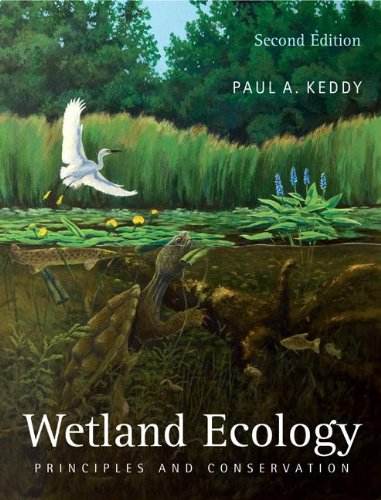

Wetland ecology principles and conservation Paul A. Keddy.
Detalles de publicación: New York Cambridge University Press 2010.Edición: 2nd edDescripción: xvi, 497 p. ill. (some col.), maps (some col.) 26 cmISBN:- 9780521519403 (hardback)
- 9780521739672 (pbk.)
- 577.68 K259w2 22
- QH541.5.M3 K44 2010
| Imagen de cubierta | Tipo de ítem | Biblioteca actual | Biblioteca de origen | Colección | Ubicación en estantería | Signatura topográfica | Materiales especificados | Info Vol | URL | Copia número | Estado | Notas | Fecha de vencimiento | Código de barras | Reserva de ítems | Prioridad de la cola de reserva de ejemplar | Reservas para cursos | |
|---|---|---|---|---|---|---|---|---|---|---|---|---|---|---|---|---|---|---|
| Libro | Biblioteca Encarnación Valdés Colección General bev | 577.68 K259w2 (Navegar estantería(Abre debajo)) | Disponible | 80000002505728 |
Descripciones mejoradas de Syndetics:
Richly illustrated and packed with numerous examples, this unique global perspective introduces wetland ecology from basic principles to advanced applications. Thoroughly revised and reorganised, this new edition of this prize-winning textbook begins with underlying causal factors, before moving on to more advanced concepts that add depth and context. Each chapter begins with an explanation of the basic principles covered, illustrated with clear examples. More difficult concepts and exceptions are introduced only once the general principle is well-established. Key principles are now discussed at the beginning of the book, and in order of relative importance, enabling students to understand the most important material without wading through complex theory. New chapters on wetland restoration and wetland services draw upon practical examples from around the world, providing a global context, and a new chapter on research will be particularly relevant to the advanced student planning their own studies.
"Richly illustrated and packed with numerous examples, this unique global perspective introduces wetland ecology from basic principles to advanced applications. Thoroughly revised and reorganised, this new edition of this prize-winning textbook begins with underlying causal factors, before moving on to more advanced concepts that add depth and context. Each chapter begins with an explanation of the basic principles covered, illustrated with clear examples. More difficult concepts and exceptions are introduced only once the general principle is well-established. Key principles are now discussed at the beginning of the book, and in order of relative importance, enabling students to understand the most important material without wading through complex theory. New chapters on wetland restoration and wetland services draw upon practical examples from around the world, providing a global context, and a new chapter on research will be particularly relevant to the advanced student planning their own studies"-- Provided by publisher.
Machine generated contents note: Preface to the second edition; Preface to the first edition; Acknowledgments; 1. Wetlands: an overview; 2. Flooding; 3. Fertility; 4. Disturbance; 5. Competition; 6. Herbivory; 7. Burial; 8. Other factors; 9. Diversity; 10. Zonation: shorelines as a prism; 11. Services and functions; 12. Research: paths forward; 13. Restoration; 14. Conservation and management; Index.
Tabla de contenidos provista por Syndetics
- Preface to the second edition
- Preface to the first edition
- Acknowledgments
- 1 Wetlands: an overview
- 2 Flooding
- 3 Fertility
- 4 Disturbance
- 5 Competition
- 6 Herbivory
- 7 Burial
- 8 Other factors
- 9 Diversity
- 10 Zonation: shorelines as a prism
- 11 Services and functions
- 12 Research: paths forward
- 13 Restoration
- 14 Conservation and management
- Index