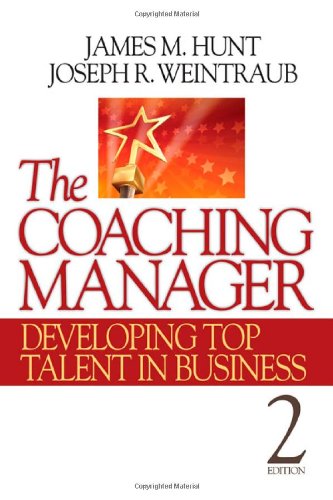

The Coaching Manager Developing Top Talent in Business edited by James M. Hunt, Joseph R. Weintraub.
Detalles de publicación: California SAGE Publications 2011.Edición: 2 nd edDescripción: xix,304 p. 23 cmISBN:- 9781412977760
| Imagen de cubierta | Tipo de ítem | Biblioteca actual | Biblioteca de origen | Colección | Ubicación en estantería | Signatura topográfica | Materiales especificados | Info Vol | URL | Copia número | Estado | Notas | Fecha de vencimiento | Código de barras | Reserva de ítems | Prioridad de la cola de reserva de ejemplar | Reservas para cursos | |
|---|---|---|---|---|---|---|---|---|---|---|---|---|---|---|---|---|---|---|
| Libro | Biblioteca de Mayagüez Colección General mb | HF 5385 .H86 2011 (Navegar estantería(Abre debajo)) | Disponible | 50000003205167 |
Descripciones mejoradas de Syndetics:
The Coaching Manager is a timely and valuable resource for leaders interested in fostering a culture of coaching in contemporary organizations. Evidence-based strategies and real-world exemplars are provided for cultivating talent today and inspiring success for the future." --Patricia A. Hickey, PhD, MBA, RN, FAAN, Vice President, Cardiovascular and Critical Care Services Children's Hospital Boston "The second edition takes into account the new challenges and opportunities posed by an increasingly global workforce, new technology, and a persistent and rapid pace of change. The authors have, once again, provided an excellent handbook for any manager who wants to be an effective coach, and any individual who wants to leverage the potential of coaching in varied and commonly encountered situations at work." --Kathy E. Kram, PhD, Shipley Professor in Management Boston University
A tested approach to developing top performers in business Unlike coaching books that focus on performance problems, The Coaching Manager presents a developmental coaching methodology that managers can use to guide employees to achieve higher levels of skill, experience greater engagement with organizations, and promote personal development. Clearly written, without jargon, specific coaching techniques are illustrated through short case studies and self-assessment exercises that help readers apply the principles in their own lives.
Includes bibliographical references and index.
eigm 05/2011
Tabla de contenidos provista por Syndetics
- Preface
- Acknowledgments
- 1 Introduction: The Coaching Manager
- Coaching Can Help, for Employees Who Want to Learn
- Coaching Is Good for You
- Why Don't More Managers Coach?
- Coaching and Learning
- The Coaching Manager and Emotional Intelligence (EQ)
- Coaching Isn't the Same as Mentoring
- Why Think About Becoming a Coaching Manager?
- Your Approach to Coaching Determines the Outcome of Your Effort
- 2 An Overview of Developmental Coaching
- Developmental Coaching: An Example
- A Simple Model of Developmental Coaching
- As You Experiment With Coaching
- 3 Defining Success as a Coaching Manager
- Coaching Managers Focus on Running a Business
- Not Just Results, but Process: How the Work Gets Done
- What Should the Coaching Manager Pay Attention To? Competency
- If Your Company has a Competency Model
- If Your Company Does Not Have a Useful Competency Model
- Coaching and Selection
- Summary
- 4 Creating a Coaching-Friendly Context
- Case 4.1 Financial Co.-A Learning Context?
- The Values and Practices of the Coaching-Friendly Context
- The Coaching-Friendly Context and the High-Performance Organization
- Creating a Coaching-Friendly Context in Your Business Unit
- Case 4.2 Fred, the Coach
- Protecting a Coaching-Friendly Context Over Time
- The Future of the Coaching-Friendly Context
- 5 The Development of a Coaching Manager and the "Coaching Mind-set"
- The Naturals
- The Manager Who Learns to Coach
- Can Anyone Learn to Coach?
- The Coaching Mind-Set: An Attitude of Helpfulness
- The Coaching Manager
- 6 The "Coachable" Learner
- The Question of "Coachability"
- Case 6.1 The Reluctant Coachee?
- What do Employees Want From Their Managers?
- Hallmarks of the Coachable Learner
- The Problem of Impression Management
- Barriers to Coaching: What Does an Apparent Lack of Coachability Look Like?
- Coachability: Treat Each Employee as an Individual
- 7 Stopping the Action and Starting a Coaching Dialogue
- Case 7.1 George, the Struggling Team Leader
- Seizing a Coaching Opportunity With a Coaching Mind-Set
- Being Vigilant for Learning Opportunities
- Assessing the Importance of the Opportunity
- Is the Timing Right?
- Establish or Reestablish Rapport
- Ask Reflective Questions, Listen for Understanding
- On Learning to Ask Useful Questions
- Help the Employee Define and Take Ownership of the Real Issue
- Follow-Up: Ask the Employee About Useful Next Steps
- Practice Cases: Stopping the Action and Starting the Dialogue
- Case 7.2 Is John Headed for Burnout?
- Case 7.3 Sara, the Frustrated Superstar
- Stopping Time and the Coaching Dialogue
- 8 The Coaching Mirror
- Why Are Performance Data, Even Observational Data, Suspect?
- The Real Problem: Our Tendency to Draw Inferences From Selected Data
- Error and Expectations: What You See Is What You Get
- Getting the Most From Direct Observation and Other Approaches to Gathering Performance Data
- The Coachee's Role
- The Coaching Manager as Observer: Promoting Learning and Performance, From the Sidelines
- 9 Provinding Balanced and Helpful Feedback
- The Benefits of Feedback
- The Problem With Feedback
- Making Feedback Useful - A Summary
- The Basics of Providing Balanced Feedback
- The Emotional Impact of Feedback
- Maximizing the Value of That Imperfect Instrument, Feedback
- Your Development as a Provider of Feedback
- 10 What Does It All Mean? Collaboratively Interpreting Learning Needs
- Case 10.1 What's Going On With Jack?
- Do You Need to Know Why?
- The Coaching Dialogue
- Root Causes
- Individual Factors
- Cultural Factors
- Team and Organizational Factors
- The Importance of "Getting It Right" When Interpreting Performance
- 11 Goal Setting and Follow-Up: Making Change Happen
- Planned Development
- Setting Goals
- How People Change
- Unfreezing
- Change
- Refreezing
- Building Commitment for Learning and Change
- Conclusions: Goal Setting and Follow-Up
- 12 Coaching and Career Development
- An Overview of Career Development in the Modern Organization
- Knowing What You Want
- Choosing Learning Goals
- Who You Know Does Count: Networks, Supporters, and Blockers
- Using Developmental Coaching to Address Career Concerns and Promote Career Development
- Coaching for Career Development
- Case 12.1 The Good Employee Who Has Become Bored With Her Job
- Case 12.2 The Employee Who Wants to Move Up (Too Fast!)
- Case 12.3 The Employee With Work and Family Concerns
- Conclusions: Developmental Coaching and Career Development
- 13 Developmental Coaching and Performance Problems
- Causes of Performance Problems
- Poor Managers and Poorly Communicated Expectations
- The Wrong Person in the Wrong Job
- The Right Person in the Wrong Situation
- Personal Problems
- Case 13.1(a) What the Manager Sees
- Case 13.1(b) What the Manager Hears
- Case 13.1(c) What the Manager Never Knew
- Character
- Team Problems
- Organizational Change
- Addressing Performance Problems: Some Coaching Guidelines
- 14 Using Coaching to Leverage the Investment in the Classroom
- The Nature of the Problem
- Transfer of Learning
- Case 14.1 The Wrong Executive Education Experience at the Wrong Time
- Case 14.2 Leadership Education That Helped
- Case 14.3 The Challenge of Becoming More Strategic
- Making the Most of Classroom Learning
- Defining the Learning Goal
- Choosing the Right Program
- Following Up
- The Classroom and the Coaching Manager
- Epilogue: The Coaching Manager
- Technology and Coaching
- Changing Demographics
- Coaching in Tough Times
- The Relationship With the Coaching Manager Is the Key
- A Final Word for Our Coaches, Old and New
- Appendix
- References
- Index
- About the Authors
Notas de autor provistas por Syndetics
Dr. James M. Hunt is an associate professor of management and former Chair of the Management Division at Babson College, in Wellesley, Massachusetts. There he teaches leadership, talent development and creativity. James has consulted to numerous business and health care organizations on the development of an organizational coaching capability, executive coaching, and talent development by managers. His current research is on the relationship between creativity, uncertainty and career development. He co-lead the design of Babson''s innovative Talent Management course in the MBA Program and lead the redesign team for Babson''s flagship course, Foundations of Management and Entrepreneurship. Formerly, he was faculty co-director of the Babson College Coaching for Leadership and Teamwork Program and a founder and former faculty co-director of the Babson Executive Education Coaching Inside the Organization program, designed for organizational development and human resource professionals . James is coauthor of the book The Coaching Organization: A Strategy for Developing Leaders, a groundbreaking study of best practice companies and coaching, published by Sage (2007). Dr. Hunt graduated from the Massachusetts Institute of Technology with a bachelor''s of science degree and received a doctorate in business administration from Boston University Graduate School of Management, where he studied career and leadership development and work/life balance
Dr. Joseph R. Weintraub is a professor of management and organizational behavior at Babson College in Wellesley, Massachusetts where he serves as the founder and faculty director of the Babson Coaching for Leadership and Teamwork Program. He is also the faculty director of the Management Consulting Field Experience Program at Babson, an experiential project management program providing consulting services to both the for profit and not-for-profit sectors. Dr. Weintraub is an industrial-organizational psychologist who focuses in the areas of individual and organizational effectiveness including leadership development, coaching, team effectiveness, innovation, and performance management. His work on coaching has received several awards, including the "Management Development Paper of the Year" from the Academy of Management. He is the coauthor of The Coaching Organization: A Strategy for Developing Leaders (Sage, 2007). Dr. Weintraub''s work has appeared in a number of publications including the MIT Sloan Management Review, Organizational Effectiveness, The Wall Street Journal, the Journal of Management Education, and The European Financial Review.
Dr. Weintraub serves as Faculty Director at Babson Executive Education, where he is the cofounder and codirector of Coaching Inside the Organization, an innovative certification program for internal organizational coaches. In addition to his work at Babson, Dr. Weintraub is also president of Organizational Dimensions, a management consulting and assessment firm based in Wellesley. He spends much of his consulting practice in helping organizations to develop their own coaching managers. He also develops and delivers leadership development programs in a variety of organizations around the world. His clients have included General Electric, Bose, Fidelity Investments, Citizens Bank, EMD Serono, Boston Children''s Hospital, Ocean Spray, and T-Mobile. He is also the co-developer of InnoQuotient, a comprehensive survey tool that measures the culture of innovation in organizations. Dr. Weintraub received his B.S. in psychology from the University of Pittsburgh and both his M.A. and Ph.D. degrees in industrial-organizational psychology from Bowling Green State University.He can be contacted at weintraub@babson.edu .