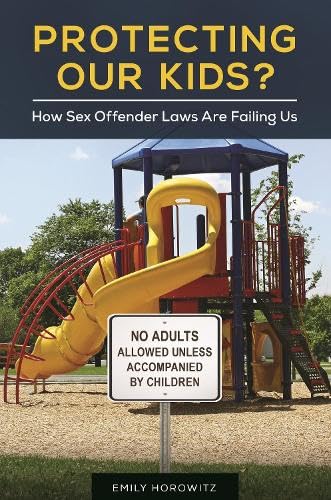

Protecting our kids? [electronic resource] how sex offender laws are failing us Emily Horowitz.
Idioma: Español Editor: Santa Barbara, California Denver, Colorado Praeger, an imprint of ABC-CLIO, LLC [2015]Descripción: one online resource (xxii, 181 pages) 25 cmTipo de contenido:- 9781440838637 (ebook)
- 364.15/30973 23
- HV6570.2 .H67 2015eb
| Imagen de cubierta | Tipo de ítem | Biblioteca actual | Biblioteca de origen | Colección | Ubicación en estantería | Signatura topográfica | Materiales especificados | Info Vol | URL | Copia número | Estado | Notas | Fecha de vencimiento | Código de barras | Reserva de ítems | Prioridad de la cola de reserva de ejemplar | Reservas para cursos | |
|---|---|---|---|---|---|---|---|---|---|---|---|---|---|---|---|---|---|---|
| Libro electrónico | Biblioteca de Mayagüez Acceso en línea | HV6570.2 .H67 2015eb (Navegar estantería(Abre debajo)) | Disponible | 50000003265666 | ||||||||||||||
| Libro electrónico | Biblioteca Mons. Iñaki Mallona (Arecibo) Acceso en línea | 364.153 (Navegar estantería(Abre debajo)) | Ebook | Disponible | 60000010177282 |
Descripciones mejoradas de Syndetics:
This thought-provoking work raises important questions about sex offender laws, drawing from personal stories, research, and data to prove the policies promote fear, destroy lives, and fail to protect children. Do sex offender laws protect children, or are they inherently unfair practices that, at their worst, promote vigilante justice? The latter, this book argues. By analyzing the social, political, historical, and cultural context surrounding the emergence of current sex offender policies and laws, the work shows how sex offenders have come to loom as greater-than-life monsters when, in many cases, that is not true at all. Looking at its subject from a fresh viewpoint, the book shares research and new analyses of data and qualitative evidence to show how sex-offender laws are not only ineffective, but engender destructive fear and anxiety. To help readers understand the impact of these laws, the author presents interviews with sex offenders and their families as they describe the day-to-day reality of living on the sex offender registry. Citing research and statistics, the book challenges the idea that sex offenders must be continually monitored and publicly identified because they are incurably predatory. Most important, the study shows that undue sex offender panic is preventing policymakers from addressing the true threats to children--poverty and growing inequality.
Includes bibliographical references and index.
Child abuse becomes a social problem -- Race and poverty matter -- Sex offender panic -- Sex offenders are different -- Case study: New York -- Child porn panic.