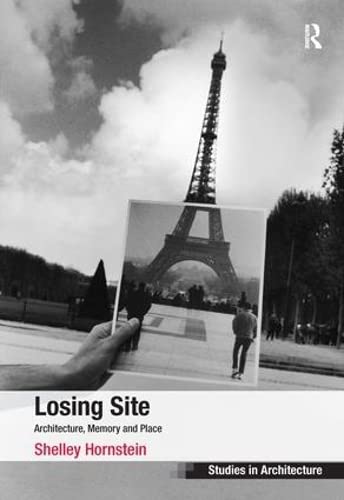

Losing site architecture, memory and place Shelley Hornstein. txt
Idioma: Inglés Series United States Ashgate Publishing Company 2011Descripción: xiii, 168 p. ill. 26 cmTipo de contenido:- text
- unmediaded
- volume
- 9781409408710 (hardback : alk. paper)
- 1409408710 (hardback : alk. paper)
- 1409408728 (ebook)
- Architecture, memory and place
- 720.1 22
- NA2500 H67 2011
| Imagen de cubierta | Tipo de ítem | Biblioteca actual | Biblioteca de origen | Colección | Ubicación en estantería | Signatura topográfica | Materiales especificados | Info Vol | URL | Copia número | Estado | Notas | Fecha de vencimiento | Código de barras | Reserva de ítems | Prioridad de la cola de reserva de ejemplar | Reservas para cursos | |
|---|---|---|---|---|---|---|---|---|---|---|---|---|---|---|---|---|---|---|
| Libro | CARIBET Biblioteca Arquitectura Colección General CARIBET | General NA2500 H67 2011 (Navegar estantería(Abre debajo)) | 1 | Disponible | 91000000032508 |
Descripciones mejoradas de Syndetics:
As Ruskin suggests in his Seven Lamps of Architecture: "We may live without [architecture], and worship without her, but we cannot remember without her." We remember best when we experience an event in a place. But what happens when we leave that place, or that place no longer exists? This book addresses the relationship between memory and place and asks how architecture captures and triggers memory. It explores how architecture exists as a material object and how it registers as a place that we come to remember beyond the physical site itself. It questions what architecture is in the broadest sense, assuming that it is not simply buildings. Rather, architecture is considered to be the mapping of physical, mental or emotional space. The idea that we are all architects in some measure - as we actively organize and select pathways and markers within space - is central to this book's premise. Each chapter provides a different example of the manifold ways in which the physical place of architecture is curated by the architecture in our "mental" space: our imaginary toolbox when we think of a place and look at a photograph, or visit a site and describe it later or send a postcard. By connecting architecture with other disciplines such as geography, visual culture, sociology, and urban studies, as well as the fine and performing arts, this book puts forward the idea that a conversation about architecture is not exclusively about formal, isolated buildings, but instead must be deepened and broadened as spatialized visualizations and experiences of place.
Include index.
Include bibliography.
Introduction : losing site -- Marking site : Walter Benjamin was here -- Memorializing site : on the grounds of history -- Transporting site : postcards of Israel and nation-building -- Destroying site : houses and objects, inside out -- Curating site : museums, itineraries and networks beyond borders -- Erasing site : spies on the other side of the full moon -- Conclusion : finding site.
Tabla de contenidos provista por Syndetics
- Preface
- Introduction
- Marking site: Walter Benjamin was here
- Memorializing site: on the grounds of history
- Transporting sites: Israel, postcards and nation-building
- Destroyed sites: places and things inside out
- Curating site: museums, itineraries and networks beyond borders
- Erasing sites: spies on the other side of the full moon
- Finding site
- Bibliography
- Index