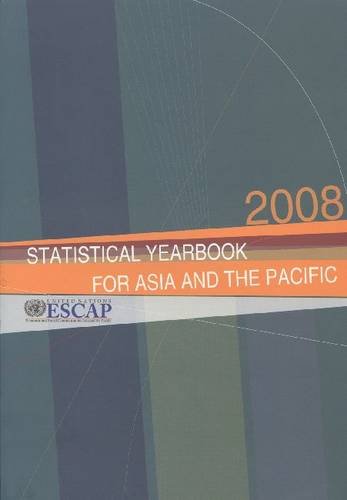

Statistical Yearbook for Asia and the Pacific. 2008
Detalles de publicación: New York UN 2008Descripción: xix, 224 p. graphs, chiefly tablesISBN:- 9789211205695
- 0252-3655
- Economic Statistics
- Natural disasters
- Energy Statistics
- Water statistics
- Air Pollution
- National parks and reserves
- Forests
- Tourism statistics
- Financial statistics
- Trade statistics
- Development Finance
- Transport statistics
- ICT Indicators
- Employment Statistics
- Educational indicators
- Gender Statistics
- Health indicators
- Migration statistics
- Demographic Statistics
- Population trends
- Asia and the Pacific
- Statistical Data
- Socio-economic indicators
- ST/ESCAP/2531
| Imagen de cubierta | Tipo de ítem | Biblioteca actual | Biblioteca de origen | Colección | Ubicación en estantería | Signatura topográfica | Materiales especificados | Info Vol | URL | Copia número | Estado | Notas | Fecha de vencimiento | Código de barras | Reserva de ítems | Prioridad de la cola de reserva de ejemplar | Reservas para cursos | |
|---|---|---|---|---|---|---|---|---|---|---|---|---|---|---|---|---|---|---|
| Libro | Biblioteca de Derecho Mons. Fremiot Torres Oliver sala Naciones Unidas, edif. Spellman | ST/ESCAP/2531 (Navegar estantería(Abre debajo)) | Disponible | 70000000885007 |
Descripciones mejoradas de Syndetics:
This is the second issue of the new Statistical Yearbook for Asia and the Pacific. Rich in information content, the Yearbook includes data, charts and a textual overview of well over 200 indicators, covering all spheres of the work of the Economic and Social Commission for Asia and the Pacific, as well as such cross-cutting issues as poverty and gender. The baseline year for the data is 1990 - intentionally the same as that for the Millennium Development Goals, so the Yearbook can also be used for tracking progress towards the Goals. The Yearbook uses the internationally comparable data available at the time of publication. It is aimed at a non-specialized audience that is interested in this dynamic and diverse region and wishes to see how the economies, societies and environment of Asia and the Pacific are developing in comparison with other world regions.
Includes bibliographical references (p. 219).
Available also at ESCAP website (viewed 15 June 2009).