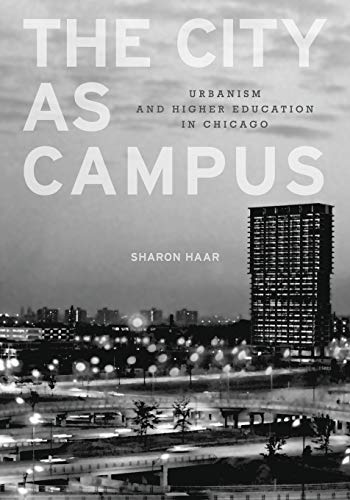

The City as Campus : urbanism and higher education in Chicago. / Sharon Haar. txt
Idioma: Español Minneapolis : University of Minnesota Press , 2011Descripción: xxix, 245 p. ill. ; maps ; 26 cmTipo de contenido:- text
- unmediaded
- volume
- 9780816665655 (pbk. : alk. paper)
- 9780816665648 (hardcover : alk.paper)
- Urbanism and higher education in Chicago
- LC238.3.C46 H33 2011
| Imagen de cubierta | Tipo de ítem | Biblioteca actual | Biblioteca de origen | Colección | Ubicación en estantería | Signatura topográfica | Materiales especificados | Info Vol | URL | Copia número | Estado | Notas | Fecha de vencimiento | Código de barras | Reserva de ítems | Prioridad de la cola de reserva de ejemplar | Reservas para cursos | |
|---|---|---|---|---|---|---|---|---|---|---|---|---|---|---|---|---|---|---|
| Libro | CARIBET Biblioteca Arquitectura Colección General CARIBET | General LC238.3.C46 H33 2011 (Navegar estantería(Abre debajo)) | 1 | Disponible | 91000000029181 |
Descripciones mejoradas de Syndetics:
We are witnessing an explosion of universities and campuses nationwide, and urban schools play an important role in shaping the cities outside their walls. In The City as Campus , Sharon Haar uses Chicago as a case study to examine how universities interact with their urban contexts, demonstrating how higher education became integrated with ideas of urban growth as schools evolved alongside the city.
The City as Campus shows the strain of this integration, detailing historical accounts of battles over space as campus designers faced the challenge of weaving the social, spatial, and architectural conditions of the urban milieu into new forms to meet the changing needs of academia. Through a close analysis of the history of higher education in Chicago, The City as Campus explores how the university's missions of service, teaching, and research have metamorphosed over time, particularly in response to the unique opportunities-and restraints-the city provides. Illustrating how Chicago serves as a site of pedagogical transformation and a location for the larger purpose of the academic community, The City as Campus presents a social and design history of the urban campus as an architectural idea and form.
index
Includes bibliographical references and index.
Introduction -- New institutions for a new environment : pedagogical space in the progressive city -- City as laboratory : Hull-House and the rise of the Chicago School -- Modern city, modern campus : institutional expansion and urban renewal in the postwar era -- Classrooms off the expressway : a new mission for higher education -- "Model of the modern urban university" : the new spatial form of the Chicago Circle campus -- Campus revolt : the reform of the commuter university -- City as campus : university space in the global city -- Conclusion --
Urban schools play an important role in shaping the cities outside their walls. This book uses Chicago as a case study to examine how universities interact with their urban contexts, demonstrating how higher education became integrated with ideas of urban growth as schools evolved alongside the city. The book shows the strain of this integration, detailing historical accounts of battles over space as campus designers faced the challenge of weaving the social, spatial, and architectural conditions of the urban milieu into new forms to meet the changing needs of academia --
Tabla de contenidos provista por Syndetics
- Acknowledgments(p. ix)
- Abbreviations(p. ix)
- Introduction(p. xiii)
- 1 New Institutions for a New Environment: Pedagogical Space in the Progressive City(p. 1)
- 2 City as Laboratory: Hull-House and the Rise of the Chicago School(p. 29)
- 3 Modern City, Modern Campus: Institutional Expansion and Urban Renewal in the Postwar Era(p. 49)
- 4 Classrooms off the Expressway: A New Mission for Higher Education(p. 69)
- 5 ôModel of the Modern Urban Universityö: The New Spatial Form of the Chicago Circle Campus(p. 97)
- 6 Campus Revolt: The Reform of the Commuter University(p. 133)
- 7 City as Campus: University Space in the Global City(p. 149)
- Conclusion(p. 185)
- Notes(p. 203)
- Index(p. 233)