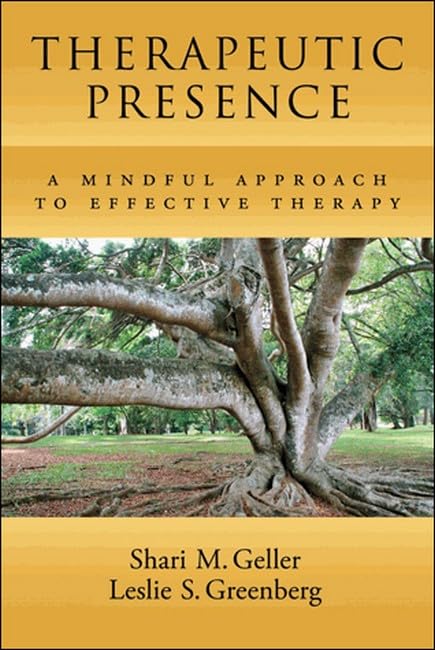

Therapeutic presence a mindful approach to effective therapy Shari M. Geller and Leslie S. Greenberg.
Detalles de publicación: Washington, DC American Psychological Association c2012.Descripción: vi, 304 p. 26 cmISBN:- 9781433810602
- 1433810603
- 616.891425 G318t 23
- RC489.M55 G45 2012
| Imagen de cubierta | Tipo de ítem | Biblioteca actual | Biblioteca de origen | Colección | Ubicación en estantería | Signatura topográfica | Materiales especificados | Info Vol | URL | Copia número | Estado | Notas | Fecha de vencimiento | Código de barras | Reserva de ítems | Prioridad de la cola de reserva de ejemplar | Reservas para cursos | |
|---|---|---|---|---|---|---|---|---|---|---|---|---|---|---|---|---|---|---|
| Libro | Biblioteca Encarnación Valdés Colección General bev | 616.891425 G318t (Navegar estantería(Abre debajo)) | Disponible | 80000002469230 |
Descripciones mejoradas de Syndetics:
The therapeutic relationship is essential to positive outcomes of psychotherapy. In this book, Shari M. Geller and Leslie S. Greenberg argue that therapeutic presence is the fundamental underlying quality of the therapeutic relationship and, hence, effective therapy. Therapeutic presence is the state of having one's whole self in the encounter with a client by being completely in the moment on a multiplicity of levels--physically, emotionally, cognitively, and spiritually.
Geller and Greenberg present their empirically based model of therapeutic presence that integrates three aspects of the concept: how present therapists prepare for presence both pre-session and in general life, what activities therapists engage in when being therapeutically present, and what in-session presence feels like.
The authors also provide a therapeutic presence theory of relationship based on research and clinical wisdom. Importantly, because presence is a learnable state that can be cultivated with practice and commitment, the authors infuse the book with practical, experiential exercises for cultivating presence.
Theoretical and empirical basis of the model -- History of presence across theoretical approaches -- Empirical research on therapeutic presence -- Therapeutic presence: a theory of relationship -- The model of therapeutic presence -- Preparing the ground for therapeutic presence -- The process of therapeutic presence -- The experience of therapeutic presence -- Additional perspectives on therapeutic presence -- Levels of therapeutic presence -- Challenges to therapeutic presence -- Neurobiology of therapeutic presence -- The cultivation of therapeutic presence -- Buddhist mindfulness : a way of enhancing therapeutic presence -- Experiential approaches : somatic, emotion-focused, creative, and relational approaches to cultivating therapeutic presence -- Presence exercises and practices.
Tabla de contenidos provista por Syndetics
- Introduction(p. 3)
- I Theoretical and Empirical Basis of the Model(p. 15)
- Chapter 1 History of Presence Across Theoretical Approaches(p. 17)
- Chapter 2 Empirical Research on Therapeutic Presence(p. 37)
- Chapter 3 Therapeutic Presence: A Theory of Relationship(p. 51)
- II The Model of Therapeutic Presence(p. 73)
- Chapter 4 Preparing the Ground for Therapeutic Presence(p. 75)
- Chapter 5 The Process of Therapeutic Presence(p. 93)
- Chapter 6 The Experience of Therapeutic Presence(p. 109)
- III Additional Perspectives on Therapeutic Presence(p. 133)
- Chapter 7 Levels of Therapeutic Presence(p. 135)
- Chapter 8 Challenges to Therapeutic Presence(p. 143)
- Chapter 9 Neurobiology of Therapeutic Presence(p. 161)
- IV The Cultivation of Therapeutic Presence(p. 177)
- Chapter 10 Buddhist Mindfulness: A Way of Enhancing Therapeutic Presence(p. 179)
- Chapter 11 Experiential Approaches: Somatic, Emotion-Focused, Creative, and Relational Approaches to Cultivating Therapeutic Presence(p. 207)
- Chapter 12 Therapeutic Presence Exercises and Practices(p. 231)
- Epilogue(p. 255)
- References(p. 263)
- Index(p. 285)
- About the Authors(p. 303)
Reseñas proporcionadas por Syndetics
CHOICE Review
Geller (Univ. of Toronto) and Greenberg (York Univ.) provide a fresh perspective on therapeutic presence, which they define as "having one's whole self in the encounter with a client by being completely in the moment on a multiplicity of levels." This multiplicity of levels--physical, emotional, cognitive, and spiritual--is achieved through a mindful approach: the therapist is present in his or her own process in order to formulate a genuine relationship with the client, to release the residue left by holding the client's pain, and to help the client examine his/her own inner makeup. The authors include empirical models that clarify what in-session presence feels like and how to achieve it, and they deliver this in a way that is practical for in vivo application and at same time offers therapists goals to achieve. The authors go beyond the experiential aspects of establishing therapeutic presence to discuss the neurophysiologic factors that help one modify one's neural structures to make mindfulness an integral rather than an ephemeral personality trait. Summing Up: Highly recommended. Upper-division undergraduates through faculty; professionals. K. G. Hays-Hurd National UniversityNotas de autor provistas por Syndetics
Shari M. Geller, PhD , is a registered clinical psychologist with a commitment to mindfulness practices and a passion for rhythm and drumming. Dr. Geller has a 20-year mindfulness practice and weaves Buddhist philosophy and rhythm-based work into her life and clinical practice. She has a private practice in Toronto and Grey-Bruce County, where she sees individuals and couples with a variety of issues as well as a desire for personal growth and/or emotional, psychological, and spiritual integration. She is also a contract faculty member at York University and the University of Toronto, where she teaches counseling skills, mindfulness, and therapeutic presence practices. Dr. Geller developed Therapeutic Rhythm and Mindfulness (TRM), a group program integrating mindfulness and rhythm-based technologies to facilitate emotional healing. Her research interests include the relationship of therapeutic presence to effective therapy and the health benefits of the TRM program for cancer survivors.Leslie S. Greenberg, PhD , is a Distinguished Research Professor of Psychology at York University in Toronto, Ontario. He is a leading authority on working with emotion in psychotherapy and the developer of emotion-focused therapy, an evidence-based approach. He has authored the major texts on emotion-focused approaches to treatment of individuals and couples. He has received the Distinguished Research Career Award of the Society for Psychotherapy Research, the Carl Rogers Award of APA's Society for Humanistic Psychology, the Canadian Council of Professional Psychology Programs' Award for Excellence in Professional Training, and the Canadian Psychological Association's Award for Distinguished Contributions to Psychology as a Profession. Dr. Greenberg is a founding member of the Society for the Exploration of Psychotherapy Integration and a past president of the Society for Psychotherapy Research. He conducts a private practice for individuals and couples and trains people in emotion-focused therapy.