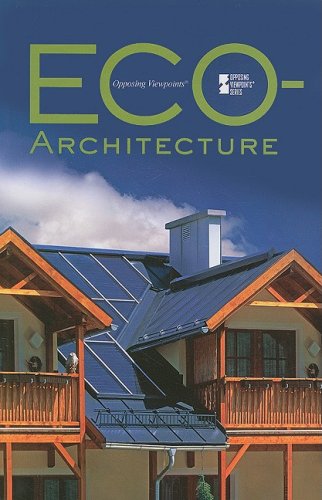
Imagen de Amazon.com

Portada de Syndetics
Imagen de OpenLibrary
Eco-architecture Christina Fisanick, book editor. txt
Idioma: Español Series United States Greenhaven Press 2008Descripción: 234 p. ill. 24 cmTipo de contenido:- text
- unmediaded
- volume
- 9780737739978 (pbk.)
- 720/.47 22
- NA2542.36 E26 2008
Contenidos:
| Imagen de cubierta | Tipo de ítem | Biblioteca actual | Biblioteca de origen | Colección | Ubicación en estantería | Signatura topográfica | Materiales especificados | Info Vol | URL | Copia número | Estado | Notas | Fecha de vencimiento | Código de barras | Reserva de ítems | Prioridad de la cola de reserva de ejemplar | Reservas para cursos | |
|---|---|---|---|---|---|---|---|---|---|---|---|---|---|---|---|---|---|---|
| Libro | CARIBET Biblioteca Arquitectura Colección General CARIBET | General NA2542.36 E26 2008 (Navegar estantería(Abre debajo)) | 1 | Disponible | 91000000007195 |
Total de reservas: 0
Includes bibliographical references (p. 218-221) and index.
Is eco-architecture beneficial to humans? -- How does eco-architecture impact the environment? -- How can eco-architecture be encouraged? -- How is eco-architecture being implemented?.
Tabla de contenidos provista por Syndetics
- Why Consider Opposing Viewpoints?(p. 11)
- Introduction(p. 14)
- Chapter 1 Is Eco-Architecture Beneficial to Humans?
- Chapter Preface(p. 19)
- 1 The Basics of Green Homes and Communities(p. 21)
- 2 Eco-Architecture Is Good for Businesses(p. 33)
- 3 Eco-Architecture Can Be Risky for Businesses(p. 40)
- 4 Eco-Architecture Can Eliminate Sick Building Syndrome(p. 46)
- 5 Sick Building Syndrome Is Due to Job Stress Not Building Conditions(p. 52)
- Periodical Bibliography(p. 60)
- Chapter 2 How Does Eco-Architecture Impact the Environment?
- Chapter Preface(p. 62)
- 1 Eco-Architecture Will Help the Environment(p. 64)
- 2 Eco-Architecture's Benefits to the Environment Are Exaggerated(p. 71)
- 3 Large Houses Can Be Eco-Friendly(p. 78)
- 4 Large Houses Cannot Be Eco-Friendly(p. 89)
- 5 Urban Sprawl Can Be Beneficial(p. 97)
- 6 Urban Sprawl Is Not Beneficial(p. 104)
- Periodical Bibliography(p. 111)
- Chapter 3 How Can Eco-Architecture Be Encouraged?
- Chapter Preface(p. 113)
- 1 Building Green Is Becoming Easier(p. 115)
- 2 Building Green Remains Difficult(p. 123)
- 3 Eco-Architecture Is Becoming More Attractive(p. 129)
- 4 HOAs Often Ban Eco-Friendly Practices as Unaesthetic(p. 137)
- 5 The LEED Rating System Helps Create Greener Buildings(p. 147)
- 6 The LEED Rating System's Effectiveness Is Dubious(p. 155)
- Periodical Bibliography(p. 165)
- Chapter 4 How Is Eco-Architecture Being Implemented?
- Chapter Preface(p. 167)
- 1 More College Campuses Are Building Green(p. 169)
- 2 School Districts Are Learning the Benefits of Eco-Architecture(p. 178)
- 3 Hospitals Are Going Green to Cut Toxins(p. 186)
- 4 Greenwashing Remains a Challenge to the Green Building Community(p. 193)
- 5 Ephemeral Structures Are the Ideal Eco-Architecture(p. 203)
- Periodical Bibliography(p. 209)
- For Further Discussion(p. 210)
- Organizations to Contact(p. 212)
- Bibliography of Books(p. 218)
- Index(p. 222)