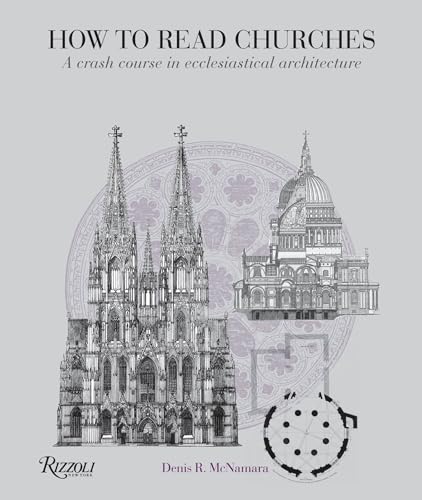

How to read churches : a crash course in ecclesiastical architecture McNamara, Denis R. (Denis Robert) txt
New York : Rizzoli International Publishers , 2011Edición: First published in the United States of AmericaDescripción: 256p. ill. ; plans 16cmTipo de contenido:- text
- unmediaded
- volume
- 9780847835980
- NA4800 M36 2011
| Imagen de cubierta | Tipo de ítem | Biblioteca actual | Biblioteca de origen | Colección | Ubicación en estantería | Signatura topográfica | Materiales especificados | Info Vol | URL | Copia número | Estado | Notas | Fecha de vencimiento | Código de barras | Reserva de ítems | Prioridad de la cola de reserva de ejemplar | Reservas para cursos | |
|---|---|---|---|---|---|---|---|---|---|---|---|---|---|---|---|---|---|---|
| Libro | CARIBET Biblioteca Arquitectura Colección General CARIBET | General NA4800 M36 2011 (Navegar estantería(Abre debajo)) | 1 | Disponible | 91000000029280 |
Descripciones mejoradas de Syndetics:
Small enough to fit in a pocket yet serious enough to provide real answers, this primer is a must-have for architecture and history buffs, tourists, and churchgoers interested in decoding the styles and symbols of religious buildings. Every building contains clues embedded in its design that identify not only its architectural style but also who designed it, what kind of congregation it was built for, and why. This practical yet charming handbook is the key to decoding the style, history, evolution, and social significance of religious buildings. Not strictly limited to churches, it also covers abbeys, chapels, and monasteries, among other structures. Organized according to architectural element (windows, domes, arches, etc.), each element is presented in chronological order. Additional chapters explore the architectural influence of geography, history, and various creeds, along with an illustrated timeline showing how, where, and in many cases why certain church features evolved through the centuries. There is also a useful introduction to naming each component of a church, from vaults to buttresses and transepts to apses. All entries are illustrated with period engravings and line drawings. This book will be invaluable for architecture buffs and anyone who has ever wondered why classic New England churches are white with little ornament, why Quaker meetinghouses have no altars, or why Episcopalians traditionally favored the Gothic style.
Building types --
Church types --
A grammar of style --
Materials --
Floor plans --
The nave --
Apses & sanctuaries --
Choirs & stalls --
Vaulting & buttresses --
Domes & cupolas --
Facades & portals --
Baptisteries & fonts --
Windows & tracery --
Towers & spires --
Altars & tabernacles --
Stained glass --
Ornaments & symbols.
Small enough to fit in a pocket yet serious enough to provide real answers, this primer is a must-have for architecture and history buffs, tourists, and churchgoers interested in decoding the styles and symbols of religious buildings. Every building contains clues embedded in its design that identify not only its architectural style but also who designed it, what kind of congregation it was built for, and why. This practical yet charming handbook is the key to decoding the style, history, evolution, and social significance of religious buildings. Not strictly limited to churches, it also covers abbeys, chapels, and monasteries, among other structures. Organized according to architectural element (windows, domes, arches, etc.), each element is presented in chronological order. Additional chapters explore the architectural influence of geography, history, and various creeds, along with an illustrated timeline showing how, where, and in many cases why certain church features evolved through the centuries. There is also a useful introduction to naming each component of a church, from vaults to buttresses and transepts to apses. All entries are illustrated with period engravings and line drawings. This book will be invaluable for architecture buffs and anyone who has ever wondered why classic New England churches are white with little ornament, why Quaker meetinghouses have no altars, or why Episcopalians traditionally favored the Gothic style.