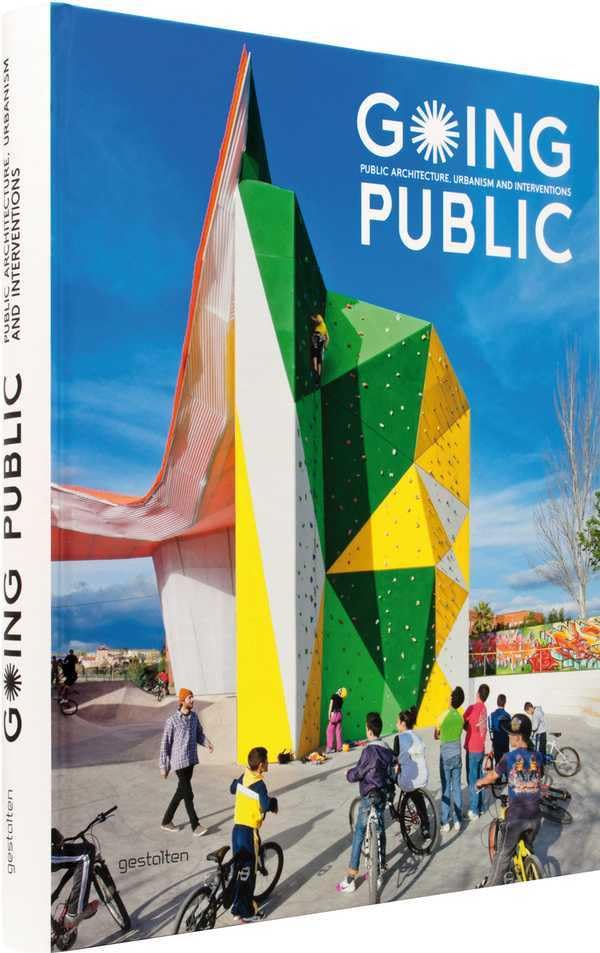

Going public : public architecture, urbanism and interventions / txt
Berlin : Gestalten, 2012Descripción: 265 p. ill. 30 cmTipo de contenido:- text
- unmediaded
- volume
- 9783899554403
- NA9050.5 G65 2013
| Imagen de cubierta | Tipo de ítem | Biblioteca actual | Biblioteca de origen | Colección | Ubicación en estantería | Signatura topográfica | Materiales especificados | Info Vol | URL | Copia número | Estado | Notas | Fecha de vencimiento | Código de barras | Reserva de ítems | Prioridad de la cola de reserva de ejemplar | Reservas para cursos | |
|---|---|---|---|---|---|---|---|---|---|---|---|---|---|---|---|---|---|---|
| Libro | CARIBET Biblioteca Arquitectura Colección General CARIBET | General NA9050.5 G65 2012 (Navegar estantería(Abre debajo)) | 1 | Disponible | 91000000030585 |
Descripciones mejoradas de Syndetics:
The architecture of the last several decades was shaped by the need for individual representation and demarcation. Today, a growing countermovement is focusing on the development of public space as a means to get people together in order to exchange ideas or share experiences. Going Public presents a compelling international selection of extraordinary current architectural projects in public space. Their objectives are as diverse as the structures themselves and range from providing recreational or cultural opportunities to facilitating social interaction. As the industrial age has evolved into the information age, our cities have developed new potential. In the past, churches and marketplaces were the focus of our social lives. Today, however, different types of community centers are being established. In addition to the transformation of existing public squares, parks, and pavilions, original projects such as community gardens, outdoor movie theaters, temporary installations, and other cultural venues are being built. Thus, in the hearts of our cities--but also on their peripheries--a new kind of public space is being defined. Innovative solutions are even being found for ubiquitous features of urban life such as benches, bicycle racks, and bus stops. Going Public also showcases work that leads us out of our cities and into the countryside. Contemporary versions of hideouts, observation towers, viewing platforms, and self-guided trails use public space differently than their more traditional counterparts and expand our possibilities for experiencing our natural surroundings and landscapes. The architecture featured in Going Public may range from bold to subtle, but all of it is innovative and surprising
Icludes index.
Gimmer shelter: public architecture as place-maker --
Constant gardener: green space in the city --
Walk with me: modes of spatial mobilization --
Benchmarks: accomodating the cityscape --
Between a rock and a hard place: architectures of intermediate status --
Why don't we do it in the road?: new forms of engagement in the city.
The architecture of the last several decades was shaped by the need for individual representation and demarcation. Today, a growing countermovement is focusing on the development of public space as a means to get people together in order to exchange ideas or share experiences. Going Public presents a compelling international selection of extraordinary current architectural projects in public space. Their objectives are as diverse as the structures themselves and range from providing recreational or cultural opportunities to facilitating social interaction. As the industrial age has evolved into the information age, our cities have developed new potential. In the past, churches and marketplaces were the focus of our social lives. Today, however, different types of community centers are being established. In addition to the transformation of existing public squares, parks, and pavilions, original projects such as community gardens, outdoor movie theaters, temporary installations, and other cultural venues are being built. Thus, in the hearts of our cities--but also on their peripheries--a new kind of public space is being defined. Innovative solutions are even being found for ubiquitous features of urban life such as benches, bicycle racks, and bus stops. Going Public also showcases work that leads us out of our cities and into the countryside. Contemporary versions of hideouts, observation towers, viewing platforms, and self-guided trails use public space differently than their more traditional counterparts and expand our possibilities for experiencing our natural surroundings and landscapes. The architecture featured in Going Public may range from bold to subtle, but all of it is innovative and surprising.
Going public: public architecture, urbanism and interventions.