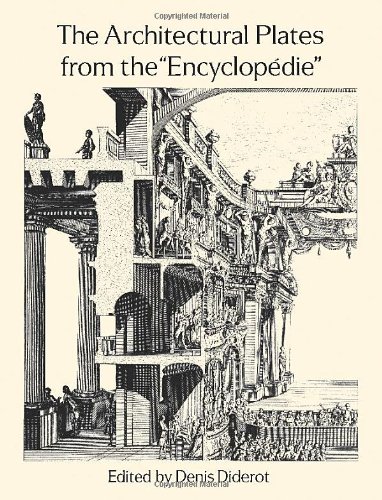

The Architectural plates from the ''Enciclopédie'' / edited by Denis Diderot. txt
Series Dover pictorial archive seriesNew York : Dover Publications, Inc. , 1995Descripción: x, 112p. ill. (chiefly col.),plates 31cmTipo de contenido:- text
- unmediaded
- volume
- 0486279545
- 9780486279541
- NA2840 A73 1995
| Imagen de cubierta | Tipo de ítem | Biblioteca actual | Biblioteca de origen | Colección | Ubicación en estantería | Signatura topográfica | Materiales especificados | Info Vol | URL | Copia número | Estado | Notas | Fecha de vencimiento | Código de barras | Reserva de ítems | Prioridad de la cola de reserva de ejemplar | Reservas para cursos | |
|---|---|---|---|---|---|---|---|---|---|---|---|---|---|---|---|---|---|---|
| Libro | CARIBET Biblioteca Arquitectura Colección General CARIBET | General NA2840 A73 1995 (Navegar estantería(Abre debajo)) | 1 | Disponible | 91000000016014 |
Descripciones mejoradas de Syndetics:
From Diderot's monumental illustrated record of 18th-century European arts and sciences: elegant renderings of architectural landmarks; drawings and plans for windmills, bridges and boats; renderings of palatial interiors and furnishings; elevations and floor plans for many well-known European theaters; scenes of 18th-century craftsmen at work in the building trades; and much more.
''The architectural plates form the ''Enciclopédie'' is a new (1995) Dover selection of illustrations originally published in the Enciclopédie, ou Dictionnaire Raisonné des Sciences, des arts, et des , Métiers, Paris, 1751-1780.''
Notas de autor provistas por Syndetics
Denis Diderot was a French philosopher and critic during the Age of Enlightenment. Born in 1713 in Langres, France, Diderot was educated at the University of Paris. From 1745 to 1772 he served as editor of L'Encyclopedie, which he fashioned as a journal of radical revolutionary opinion. He was a leader in the movement to challenge both church and state by furthering knowledge.Diderot also wrote several critical and philosophical works including Pensees sur l'interpretation de la nature (Thoughts on the Interpretation of Nature, 1754). In addition, he published essays based on personal experience, as well as several plays. As a philosopher, Diderot speculated on free will and held a completely materialistic view of the universe; he suggested all human behavior is determined by heredity.
He is recognized now as an art critic of the first rank. His Essai sur la peinture (Essay on Painting, 1796) won him posthumous praise as a critic of painting technique and aesthetics. He died in Paris in 1784 and was buried in the city's Église Saint-Roch. His heirs sent his vast library to Catherine II, who had it deposited at the National Library of Russia.
(Bowker Author Biography)