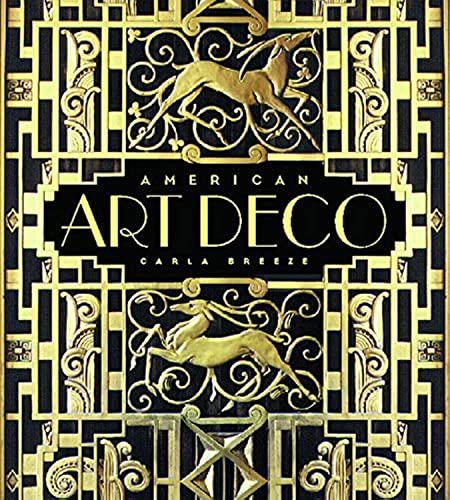

American art deco : architecture and regionalism. / Carla Breeze. txt
New York : W.W. Norton & Company , 2003Edición: 1st edDescripción: 287 p. ill. ;col. ;plans ; 28 cmTipo de contenido:- text
- unmediaded
- volume
- 9780393019704
- 0393019705
- 22 720.97309042
- NA712.5.A7 B74 2003
| Imagen de cubierta | Tipo de ítem | Biblioteca actual | Biblioteca de origen | Colección | Ubicación en estantería | Signatura topográfica | Materiales especificados | Info Vol | URL | Copia número | Estado | Notas | Fecha de vencimiento | Código de barras | Reserva de ítems | Prioridad de la cola de reserva de ejemplar | Reservas para cursos | |
|---|---|---|---|---|---|---|---|---|---|---|---|---|---|---|---|---|---|---|
| Libro | CARIBET Biblioteca Arquitectura Colección General CARIBET | General NA712.5A7 B74 2003 (Navegar estantería(Abre debajo)) | 1 | Disponible | 91000000010488 |
Descripciones mejoradas de Syndetics:
Art deco flourished in cities and small towns throughout America during the 1920s and 1930s. Extremely popular as a statement of modernity and technological progress, art deco movie palaces, dime stores, department stores, courthouses, and schools were ubiquitous in the American landscape; numerous examples of the style continue to be viable spaces. American art deco was unique. Unlike their European counterparts, architects in the United States had "exotic" indigenous cultures for inspiration. Arts such as Navajo chiefs' blankets, Hopi pottery, and Sioux beadwork, characterized by geometric ornament, were easily assimilated into the art deco style. Regionalism? good example of which is the Prairie style, advocated by Frank Lloyd Wright and other progressive architects'lso influenced American art deco. America's pioneering and westward migration provided powerful themes and motifs, producing an art deco with authentic national and regional characteristics. American Deco features descriptions'nd over 500 color photographs'f 75 opulent buildings across the country that have been preserved. The photographs document interiors, exteriors, and details of deco skyscrapers, courthouses, theaters, and other significant buildings.
Include index
Include bibliography
Contents --
Preface --
Acknowledgments --
Introduction --
The northeast --
The south --
The midwest and prairies --
The southwest --
California and the Pacific northwest --
Notes --
Bibliography --
Index --
"Art deco flourished in cities and small towns throughout America during the 1920s and 1930s. Extremely popular as a statement of modernity and technological progress, art deco movie palaces, dime stores, department stores, courthouses, and schools were ubiquitous in the American landscape. Many of the best examples of the style continue to be used today as important civic and social spaces." "American art deco was unique. Unlike their European counterparts, architects in the United States had "exotic" indigenous cultures for inspiration. Arts such as Navajo chiefs' blankets, Hopi pottery, and Sioux beadwork, characterized by geometric ornament, were easily assimilated into the art deco style. Regionalism - an example of which is the Prairie style, advocated by Frank Lloyd Wright and other progressive architects - also influenced American art deco. America's pioneering and westward migration provided powerful themes and motifs, producing an art deco style with authentic national and regional characteristics." "Two themes bound deco buildings and their decorative schemes together: regional pride, and a growing national symbolism that asserted the buildings' identity as uniquely, independently American. By 1928 art deco skyscrapers, warehouses, manufacturing lofts, apartments, and hotels were being built in all regions of the US, and the ground was broken for many more. Slabs and towers, attenuated pyramids, and innovative pinnacles began to transform many cities into what immigrants had imagined the New World to be - symbols of all that was modern, of the achievements of science, technology, and freedom." "American Art Deco features descriptions - and over 450 color photographs - of 75 lavish and innovative buildings across the country whose exterior features, such as windows, doors, light fixtures, ornament, and interior ceilings, elevator doors, stairways, and ornament, have not been drastically altered or removed. The buildings herein represent those that have maximum architectural integrity, thereby giving us the full scope of this much admired and exciting style."--Jacket.