
Staff development and instructional improvement plans and procedures Leslee J. Bishop.
Detalles de publicación: Boston Allyn & Bacon c1976.Descripción: xii, 344 p. 24 cmISBN:- 0205054706
- 371.1/46
- LB1731 .B53
| Imagen de cubierta | Tipo de ítem | Biblioteca actual | Biblioteca de origen | Colección | Ubicación en estantería | Signatura topográfica | Materiales especificados | Info Vol | URL | Copia número | Estado | Notas | Fecha de vencimiento | Código de barras | Reserva de ítems | Prioridad de la cola de reserva de ejemplar | Reservas para cursos | |
|---|---|---|---|---|---|---|---|---|---|---|---|---|---|---|---|---|---|---|
| Libro | Biblioteca Encarnación Valdés Colección General bev | 371.146 B622s (Navegar estantería(Abre debajo)) | Disponible | 80000000562499 |
Descripciones mejoradas de Syndetics:
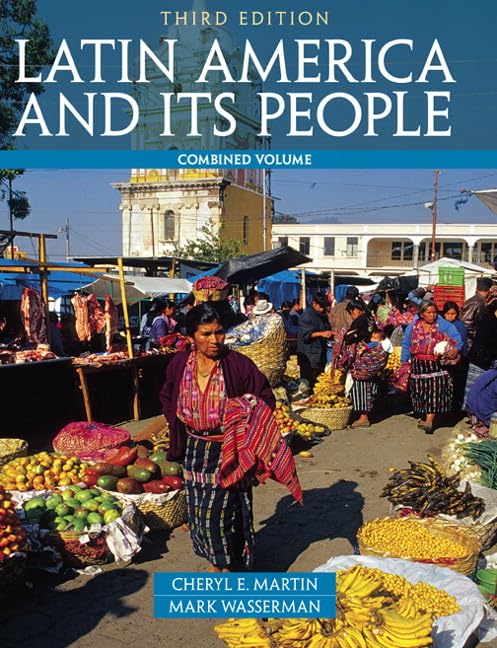
A thematic approach to detailing Latin America.
For courses in Latin-American history.
Written by two of the leading scholars in the field, Latin America and Its People presents a fresh interpretative survey of Latin-American history from pre-Columbian times to the present. It examines the many institutions that Latin-Americans have built and rebuilt - families, governments, churches, political parties, labor unions, schools and armies - through the everyday lives of the diverse people who forged these institutions and later altered them to meet changing circumstances.
Teaching and Learning Experience
Personalize Learning- MySearchLab provides engaging experiences that personalize learning and comes from a trusted partner with educational expertise and a deep commitment to helping students and instructors achieve their goals.
I mprove Critical Thinking- Learning More About Latin-Americans sections at the end of each chapter offer suggestions for further reading for students interested in pursuing research projects on the lives of Latin-Americans.
Engage Students- Latin-American Lives biographical essays and discussion questions focus on individuals whose lives illustrate key points within the chapter. Highlighting the famous, as well as the less well-known, these essays help students understand the individual's effect on greater society.
Support Instructors- MySearchLab and ClassPrep.
Note: MySearchLab does not come automatically packaged with this text. To purchase MySearchLab at no extra charge, please visit www.MySearchLab.com or use the following (VP ISBN-10: 0205168647, VP ISBN-13: 9780205168644)
Includes bibliographical references and index.
Tabla de contenidos provista por Syndetics
- Chapter 1 The First People of the Americas
- Chapter 2 Americans and Iberians on the Eve of Contact
- Chapter 3 The European Conquest of America
- Chapter 4 The Iberians' New World
- Chapter 5 The Amerindians' Changing World
- Chapter 6 A New People and Their World
- Chapter 7 The Shifting Fortunes of Colonial Empires
- Chapter 8 The New Nations of Latin America
- Chapter 9 Regionalism, War, and Reconstruction: Politics and Economics, 821-1880
- Chapter 10 Everyday Life in an Uncertain Age, 1821-1880
- Chapter 11 Economic Modernization, Society, and Politics, 1880-1920
- Chapter 12 Between Revolutions: The New Politics of Class and the Economies of Import Substitution Industrialization, 1920-1959
- Chapter 13 People and Progress, 1910-1959
- Chapter 14 Revolution, Reaction, Democracy, and the New Global Economy, 1959 to the Present
- Chapter 15 Everyday Life: 1959 to the Present
- List of Features
- List of Maps and Color Plates
- Map of National Capitals
- Preface
- About the Authors
- Chapter 1 The First People of the Americas
- The First Americans
- Coming to America
- Subsistence Strategies and the Development of Agriculture
- Sedentary Communities and Ceremonial Centers
- Ceremonial Centers in Mexico and Peru
- The Olmec: "Mother Culture" of Mexico?
- Chavín de Huantar in Peru
- The Cities of Classic Mesoamerica
- Monte Albán
- Teotihuacan
- Maya Civilization in the Classic Era
- Peru After Chavín
- The Moche
- The Nazca
- Tiwanaku
- The Wari Empire
- Mesoamerica and Peru, 900-1400 C.E
- The Toltecs
- The Mixtecs of Oaxaca
- The Post-Classic Maya
- Peru after Tiwanaku and Wari
- The World of Early Americans
- People and Their Environment
- Early Americans and Their Beliefs
- Communities, States, and War
- Conclusion
- Learning More About Latin Americans
- How Historians Understand Archaeology, Literacy, and the Study of History
- Latin American Lives Pacal the Great, King of Palenque, 603-683 C.E
- Slice Of Life The Craft Workers of Chan Chan, 1400 C.E
- Chapter 2 Americans and Iberians on the Eve of Contact
- Mesoamerica in the Fifteenth Century
- The Rise of the Mexica
- Mexica Statecraft
- Mexica Religion
- Everyday Life in the Time of the Mexica
- Mesoamerica on the Eve of the Spanish Invasion
- The Andes in the Fifteenth Century
- The Rise of the Incas
- Inca Statecraft
- Andean Religion in the Time of the Incas
- Everyday Life in the Time of the Incas
- The Aztecs and Incas Compared
- The Diversity of American Peoples
- The Tainos and Caribs
- The Tupi of Coastal Brazil
- The "Pueblo" Peoples of New Mexico
- The Spanish and the Portuguese
- Centuries of Conquest
- Medieval Iberia and the Reconquista
- Iberian Monarchies in the Fifteenth Century
- The Breakdown of Iberian "Convivencia"
- Iberian Society in the Fifteenth Century
- Iberia and the Beginnings of Overseas Expansion
- Conclusion
- Learning More About Latin Americans
- How Historians Understand Counting People In Past Societies
- Latin American Lives Tanta Carhua, Bride Of The Sun
- Slice Of Life The Marketplace At Tlatelolco
- Chapter 3 The European Conquest of America
- The Europeans Arrive
- Columbus and the First Encounters
- The Caribbean Colonies
- The Portuguese in Brazil
- The Spanish in Mesoamerica and the Andes
- Cortés and the Aztecs
- The Search for "Otro México"
- The Pizarros and the Incas
- Military Conquest or Strategic Alliance?
- Building a Colonial Society
- The Ecological Conquest
- Conquistadors, Encomenderos, and Native Peoples
- A Multiracial Society in Formation
- The "Spiritual Conquest" of Latin America
- Early Evangelization
- The Impact of Evangelization
- Resistance to Christianity
- The Consolidation of Colonial Empires
- The Viceroyalties of New Spain and Peru
- The Spanish Colonial Bureaucracy
- Royal Government in Brazil
- The Church in Spanish America and Brazil
- The Spanish and Portuguese Empires
- Conclusion
- Learning More About Latin Americans
- How Historians Understand Malinche And The Uses Of Historical Memory
- Slice Of Life The Cuzco Cabildo Founds A Convent, 1551
- Latin American Lives Domingos Fernandes Nobre, Mameluco Of Brazil
- Chapter 4 The Iberians' New World
- The Lure of Precious Metals
- The Silver Boom
- Labor and Technology in Silver Mining
- Procuring a Labor Supply
- Gold Mining in Brazil
- Agriculture
- Sugar Plantations
- Haciendas and Ranches
- Landownership
- Landed Elites
- Rural Society
- Trade and Transportation
- International Commerce
- Overland Transport
- Merchants
- Mercantile Restrictions
- Cities and Towns in the Iberians' New World
- Capital Cities
- Provincial Capitals and Other Towns
- Urban Amenities
- Urban Working Classes
- Conclusion
- Learning More About Latin Americans
- How Historians Understand Documenting Colonial Enterprise
- Latin American Lives Antonio López De Quiroga, Bolivian Entrepreneur
- Slice Of Life The Safra in Colonial Brazil
- Chapter 5 The Amerindians' Changing World
- Native Communities in Mesoamerica and the Andes
- Shifting Populations in the República de Indios
- Local Government in the República de Indios
- Subsistence and Survival in the República de Indios
- Native Communities and the Cash Economy
- Families and Households in the República de Indios
- Religion and Community Life in the República de Indios
- Natives as Catholics
- Belief and Practice in the República de Indios
- Religion and Community Identity
- Mission Indians
- Jesuit and Franciscan Missions
- Native Peoples in the Jesuit and Franciscan Missions
- Mission Indians and Colonial Society
- Native Peoples and the Colonial Order
- Indians in the República de Españoles
- "Indios Bárbaros"
- Regional Revolts
- Native Historical Memory and the Colonial Order
- Conclusion
- Learning More About Latin Americans
- How Historians Understand Measuring Acculturation Using Indigenous Language Sources
- Latin American Lives Felipe Guaman Poma de Ayala
- Slice Of Life The Indians of Oaxtepec Defend Their Land and Water
- Chapter 6 A New People and Their World
- The Making of Multiethnic Societies
- Spanish and Portuguese Immigrants
- Creoles
- Mestizos and Mamelucos
- African Slaves
- Slave Resistance
- Maroon Communities
- Free Blacks and Mulattos
- Race and Class in Colonial Latin America
- Social and Cultural Definitions of Race
- Class and Ethnicity
- Honor, Gender, and Patriarchy
- Honor and the Patriarchal Family
- Marriage and the Family
- Honor and Sexuality
- Honor and Homosexuality
- The Limits of Patriarchy
- Convents: "Islands of Women"
- Convents and Colonial Society
- Conformity and Defiance in Colonial Society
- The Social Etiquette of Everyday Life
- The Administration of Justice
- The Inquisition and Deviant Behavior
- Rituals of Rule
- Scatological Songs and Dances of Defiance
- Conclusion
- Learning More About Latin Americans
- How Historians Understand Parish Registers and the Study of Colonial Society
- Latin American Lives Juana De Cobos, Baker in Chihuahua
- Slice Of Life Corpus Christi in Cuzco
- Chapter 7 The Shifting Fortunes of Colonial Empires
- The Spanish and Portuguese Empires in Eighteenth-Century Politics
- Great Britain and Latin America
- The Seven Years' War
- The American Revolution and Latin America
- The French Revolution and Latin America
- The Haitian Revolution
- The Bourbon and Pombaline Reforms
- Defending the Spanish Empire
- Administrative Restructuring and New Viceroyalties
- The Power of the Church
- Economic Development
- Latin American Peoples in the Age of Revolution
- Social Change in the Late Colonial Period
- The Changing Face of Colonial Cities
- The Enlightenment in Latin America
- Resistance and Rebellion in the Late Colonial Period
- Developing Creole Consciousness
- Resistance to the Bourbon Reforms
- Conspiracies in Brazil
- The Great Rebellion in Peru
- Conclusion
- Learning More About Latin Americans
- How Historians Understand Latin America and the Atlantic World
- Slice Of Life The Royal Tobacco Factory in Mexico City
- Latin American Lives José Antonio Aponte, sculptor of Havana
- SLICE OF LIFE The royal tobacco factory in Mexico City
- Chapter 8 The New Nations of Latin America
- Spanish America and the Crisis of 1808
- Spain and the Napoleonic Invasion
- Representative Government in Spain and America, 1808-1814
- The "American Question"
- Spanish American Grievances and the Crisis of 1808
- Mexico
- Venezuela
- Argentina
- Spanish American Independence
- The Final Campaigns
- Regional Conflicts in the Spanish American Struggle for Independence
- The Independence of Brazil
- The Portuguese Monarchy in Brazil
- Popular Unrest in Brazil
- The Culmination of Brazilian Independence
- The Meaning of Independence
- Conclusion
- Learning More About Latin Americans
- How Historians Understand Were the wars of independence the turning point?
- Latin American Lives Manuela Sáenz, 1797-1856, liberator of South America
- Slice Of Life The 16th of September: independence day in Mexico
- Chapter 9 Regionalism, War, and Reconstruction: Politics and Economics, 1821-1880
- Dilemmas of Nationhood
- Who Governs and What Form of Government?
- Federalism/Centralism and Liberalism/Conservatism
- The Challenge of Regionalism
- Argentina, Mexico, Colombia, and Central America
- Brazil and Chile
- A Century of War
- Wars of Political Consolidation
- Intra-Regional Wars
- Foreign Wars
- Civil Wars
- The Impact of War
- Popular Participation
- Caudillos
- The Challenge of Economic Recovery
- Obstacles to Development
- Export Economies
- Conclusion
- Learning More About Latin Americans
- How Historians Understand Benito Juárez: The Making of a Myth
- Latin American Lives Francisco Solano López
- Slice Of Life The Parián Riot: Mexico City, 1828
- Chapter 10 Everyday Life in an Uncertain Age, 1821-1880
- The People
- The Large Estates: Haciendas, Estancias, Plantations, Fazendas
- Work Life
- Domestic Life
- Plantations and Slavery
- Villages and Small Holders
- Religion
- Urban Life and Societal Transformation
- The Cities
- Transformations
- Food, Clothing, Shelter, and Entertainment
- Food
- Clothing
- Shelter
- Entertainment
- Conclusion
- Learning More About Latin Americans
- How Historians Understand The Construction of Racism
- Latin American Lives The Gaucho
- Slice Of Life Urban Slaves
- Chapter 11 Economic Modernization, Society, and Politics, 1880-1920
- Economic Modernization
- Exports
- The Downside of Export-Led Modernization
- Railroads
- Modernization and Social Change
- Population Increase
- New Classes, New Voices
- Rural Discontent
- Mass Movements of People
- Politics in the Age of Modernization
- A Modernized Military
- The Rule of the Ranchers and Planters: Argentina and Brazil
- Democracy in Chile
- The Aristocratic Republic: Peru
- Dictatorship: Mexico
- Modernization and Resistance
- Indigenous Peoples
- Resistance in the Countryside
- The Mexican Revolution
- Conclusion
- Learning More About Latin Americans
- How Historians Understand Why Do People Rebel?
- Latin American Lives Evaristo Madero
- Slice Of Life A Chilean Mining Camp
- Chapter 12 Between Revolutions: The New Politics of Class and the Economies of Import Substitution Industrialization, 1920-1959
- Three Crises and the Beginnings of Intensified Government Involvement in the Economy, 1920-1945
- The Aftermath of World War I
- The Great Depression
- World War II
- Peacetime Economies
- Dictators and Populists
- The 1920s
- Depression and War
- Peacetime Politics
- Failure of the Left and Right
- Women's Suffrage
- Conclusion
- Learning More About Latin Americans
- How Historians Understand Reconstructing the Semana Trágica (Tragic Week) in Argentine History
- Latin American Lives Elvia and Felipe Carrillo Puerto
- Slice Of Life Colombian Coffee Farm in 1925
- Chapter 13 People and Progress, 1910-1959
- Socialization in the Factory and the Mine: Proletarianization and Patriarchy
- A Miner's Day at El Teniente
- Urbanization and Social Change
- The Cities
- Life on the Edge: The Middle Class
- La Chica Moderna
- Popular and High Culture
- Conclusion
- Learning More About Latin Americans
- How Historians Understand The Voice of the Lower Classes
- Latin American Lives Frida Kahlo
- Slice Of Life Village Life in Peru
- Chapter 14 Revolution, Reaction, Democracy, and the New Global Economy, 1959 to the Present
- The Revolutions: Cuba, Nicaragua, El Salvador, Guatemala, Peru, and Colombia
- Cuba
- Nicaragua
- El Salvador
- Guatemala
- Peru
- Colombia
- The Tyrannies: Brazil, Argentina, and Chile
- Brazil
- Argentina
- Chile
- The Exception: Mexico
- Resurgent Democracy and the "Pink Tide"
- The Struggle for Control of Everyday Life
- Indigenous Political Movements
- The New Global Economy
- Conclusion
- Learning More About Latin Americans
- How Historians Understand Theories of Economic Development and History
- Latin American Lives An Argentine Military Officer
- Slice Of Life On the Streets of Neuvo Laredo
- Chapter 15 Everyday Life: 1959 to the Present
- The Reign of Terror
- The Quality of Life
- What Does It Mean to Be Poor?
- Informal Economy
- Narcotics Trade
- The Great Migrations
- The Cities
- To Be Poor in the Cities
- An Urban Migrant's Story
- The Environment
- Natural Disasters
- The Globalization of Culture
- Art
- Conclusion
- Learning More About Latin Americans
- How Historians Understand From the Countryside to the City
- Latin American Lives Women Rebels
- Slice Of Life The Barrio/Favela
- Glossary
- Credits
- Index
- Index
Notas de autor provistas por Syndetics
Cheryl E. Martin Cheryl E. Martin has taught Latin-American history at the University of Texas at El Paso since 1978. A native of Buffalo, New York, she received her bachelor's degree from the Georgetown University School of Foreign Service and her M.A. and Ph.D. from Tulane University. She studied at the Universidad de Cuenca, Ecuador, on a Fulbright Fellowship and was a visiting instructor at the Universidad Autónoma de Chihuahua, Mexico. Her publications include Rural Society in Colonial Morelos (1985) and Governance and Society in Colonial Mexico: Chihuahua in the Eighteenth Century (1996). She also co-edited, with William Beezley and William E. French, Rituals of Rule, Rituals of Resistance: Public Celebrations and Popular Culture in Mexico (1994). Martin has served on the Council of the American Historical Association and on the editorial boards of the Hispanic American Historical Review, The Americas, the Latin American Research Review and H. Borderlands. She has received two fellowships from the National Endowment for the Humanities and Awards for Distinguished Achievement in both teaching and research at the University of Texas at El Paso. She enjoys reading and travel and is the proud grandmother of Mackenzie and Zachary. Mark Wasserman Mark Wasserman is a professor of history at Rutgers, The State University of New Jersey, where he has taught since 1978. Brought up in Marblehead, Massachusetts, he earned his B.A. at Duke University and his M.A. and Ph.D. at the University of Chicago. He is the author of three books on Mexico: Capitalists, Caciques, and Revolution: The Native Elite and Foreign Enterprise in Chihuahua, Mexico, 1854-1911(1984), Persistent Oligarchs: Elites and Politics in Chihuahua, Mexico, 1910-1940 (1993) and Everyday Life and Politics in Nineteenth Century Mexico: Men, Women, and War (2000). He also coauthored the early editions of the best-selling History of Latin America (1980-88) with Benjamin Keen. Wasserman has twice won the Arthur P. Whitaker Prize for his books and has received research fellowships from the Tinker Foundation, the American Council of Learned Societies/Social Science Research Council, the American Philosophical Society and the National Endowment of the Humanities. He has been vice-chair for undergraduate education of the Rutgers department of history and chair of the department's Teaching Effectiveness Committee.Wasserman was an elected member of the Highland Park, New Jersey Board of Education for nearly a decade and served as its president for two years. He is an avid fan of Duke basketball and enjoys hiking and travel.