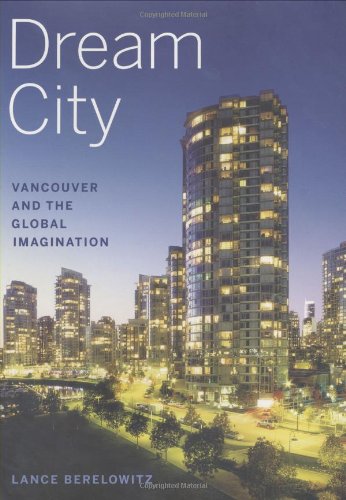
Imagen de portada de Amazon
Imagen de Amazon.com
Imagen de cubierta Syndetics
Portada de Syndetics
Imagen de OpenLibrary

Dream city : Vancouver and the global imagination / Lance Berelowitz. txt

Por: Canada : Douglas & McIntyre Ltd. , 2005Descripción: xi, 276 p. ill., maps 28 cmTipo de contenido:
  • text
Tipo de medio:
  • unmediaded
Tipo de soporte:
  • volume
ISBN:
  • 1553651030
  • 9781553651031
Tema(s): Clasificación CDD:
  • 307.1/216/0971133 22
Clasificación LoC:
  • HT169.C32 V353 2005
Premios: Haga clic para abrir en una nueva ventana
Valoración
    Valoración media: 0.0 (0 votos)
Existencias
Imagen de cubierta Tipo de ítem Biblioteca actual Biblioteca de origen Colección Ubicación en estantería Signatura topográfica Materiales especificados Info Vol URL Copia número Estado Notas Fecha de vencimiento Código de barras Reserva de ítems Prioridad de la cola de reserva de ejemplar Reservas para cursos
Libro CARIBET Biblioteca Arquitectura Colección General CARIBET General HT169.C32 V353 2005 (Navegar estantería(Abre debajo)) 1 Disponible 91000000002188
Total de reservas: 0

Descripciones mejoradas de Syndetics:

Vancouver, located at the edge of a continent and the edge of national consciousness, has become the model for post-industrial urbanism. Does it deserve the attention? This provocative new book explores the links between the city's seductive natural setting, turbulent political history, planning and design culture, and the local and global forces that are reshaping Vancouver's urban environment at a ferocious pace. Filled with historical and contemporary photographs and maps, Dream City offers compelling insight into how buildings, public spaces, extraordinary landscapes, and civic values have merged to form a uniquely 21st-century city.

Includes bibliographical references (p. 269-270) and index.

Tabla de contenidos provista por Syndetics

  • Acknowledgements(p. ix)
  • Introduction(p. 1)
  • 1 The Elemental City(p. 9)
  • 2 In the Garden of Eden(p. 15)
  • 3 In Nature's Way(p. 25)
  • 4 The Physical Armature(p. 39)
  • 5 Brushes with Destiny: Vancouver's Experience with Master-planning(p. 55)
  • 6 The Transportation Palimpsest(p. 71)
  • 7 The Road Not Taken(p. 89)
  • 8 For Sale: The (Abridged) Story of Vancouver's Development Community(p. 95)
  • 9 A Sense of Place: Characteristics of Vancouver's Public Realm(p. 127)
  • 10 Urbanists at Large in the Garden City: The Search for an Urban Tradition(p. 145)
  • 11 Edge City(p. 159)
  • 12 The Domestic Tradition: The Search for an Indigenous Architecture(p. 183)
  • 13 A Brief History of Zoning(p. 215)
  • 14 Hollywood North(p. 227)
  • 15 Public Life or Spectacle? The Culture of Public Space(p. 241)
  • Epilogue(p. 259)
  • Notes(p. 267)
  • Bibliography(p. 269)
  • Index(p. 271)

Extracto provisto por Syndetics

Introduction Vancouver has emerged as the poster child of urbanism in North America. In recent years, through a series of locally grown strategies, Vancouver has consciously willed itself into becoming a model of contemporary city-making. Like the most vivid of dreams, the city is reinventing itself: something curious, perhaps even miraculous, is happening here. The visitors--mostly from American cities seeking to find the key to their own urban renewal--come in steady droves, eagerly shepherded around town by local planners, politicians and academics. They go away suitably impressed. Barely a month goes by without yet another magazine article or news report praising Vancouver's urban virtues. And it is easy to be impressed by the obvious: the city's spectacular setting, the intimate and apparently happy cohabitation of wild nature and built fabric, the tightly packed gleaming new condo towers downtown, the public waterfront, the vibrant neighbourhood high streets, the neat parks and lush, tree-lined suburban streets. The place seems to work. But how did Vancouver get here, and is the attention deserved? How much of Vancouver's experience is applicable to other cities, particularly those in the United States? Why are places such as Shanghai, San Francisco and even Toronto now hiring Vancouver architects and planners to fix their cities? In short, what are the keys to understanding Vancouver's unique sense of place and its relevance to the rest of the world? To answer these questions is to look into the heart of this city of dreams, to dig beneath the surface impressions and unravel fact from myth, cause from consequence. In short, this is writing as a form of urban archaeology. Or perhaps, to offer a more suggestively West Coast genre, it is a detective story. Vancouver has propagated a number of myths about itself, now well established and accepted in the public mind. Yet it is a city of paradoxes. Dig deeper beyond the obvious, and the reasons for Vancouver's success seem more often to do with historical happenstance or a kind of invented authenticity. Or simply having made fewer mistakes as a result of being so remote and so much later in its development than almost any other major North American city. Ironically, Vancouver's very isolation and relative lack of political and economic power have meant that it was largely bypassed by the worst of North American "urban renewal": freeways, elevated and underground pedestrian systems, huge shopping malls, big-box retail, oversized curvilinear dead-end streets in place of the traditional street grid. Certainly, metropolitan Vancouver does have many of these symptoms of "modern" North American town planning, particularly in its outlying suburbs and bedroom communities where in fact the majority of its residents live. But there is a kind of virtuous cordon sanitaire around the City of Vancouver itself: almost no freeways transgress its municipal boundaries or violate the regular street grid, and a grand total of just two suburban shopping malls besmirch its neighbourhoods. There is a certain irony in American cities looking to Canada to remember what the United States taught us about city building and have now forgotten themselves. Think of Daniel Burnham, the Olmstead brothers, Harland Bartholomew, even Robert Moses, all of whom had an effect on the layout and form of many Canadian cities. In Vancouver's case, both Shaughnessy Heights and the British Properties were developed under the influence of these giants of American town planning. And Vancouver's vaunted, now late lamented, urban and interurban streetcar system was directly modelled on similar ones in Los Angeles and other American cities. And--just as Los Angeles is for restless Americans--Vancouver has always been whatever newcomers want it to be, the perennial immigrants' city of the imagination: Dream City. Yet it is really the place itself that has seduced the imagination of émigrés and visitors alike. Of course, back in 1985 when I first arrived in Vancouver, I knew none of this. But I had my suspicions... Excerpted from Dream City: Vancouver and the Global Imagination by Lance Berelowitz All rights reserved by the original copyright owners. Excerpts are provided for display purposes only and may not be reproduced, reprinted or distributed without the written permission of the publisher.
Compartir
logopucpr-y-vive

Contáctanos

¡Queremos saber de ti!

Tel. 787.841.2000 Ext. 1801

bibliotecavaldes@pucpr.edu

⁣Búscanos en las redes

© 2026 Desarrollado por Ignite Online • All Rights Reserved • Powered by Koha.