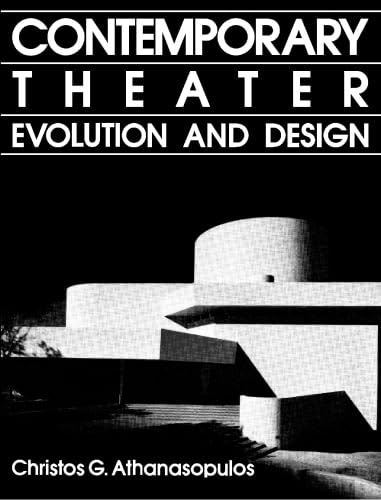

Contemporary theater : evolution and design. / Christos G. Athanasopulos. txt
Toronto : Singapore : BookSurge Publishing, 2006Edición: Second editionDescripción: xvi, 341 p. : ill. ; plans. ; 27 cmTipo de contenido:- text
- unmediaded
- volume
- 9781439212028
- 1439212023
- NA6821 A7413 2006
| Imagen de cubierta | Tipo de ítem | Biblioteca actual | Biblioteca de origen | Colección | Ubicación en estantería | Signatura topográfica | Materiales especificados | Info Vol | URL | Copia número | Estado | Notas | Fecha de vencimiento | Código de barras | Reserva de ítems | Prioridad de la cola de reserva de ejemplar | Reservas para cursos | |
|---|---|---|---|---|---|---|---|---|---|---|---|---|---|---|---|---|---|---|
| Libro | CARIBET Biblioteca Arquitectura Colección General CARIBET | General NA6821 A7413 2006 (Navegar estantería(Abre debajo)) | 1 | Disponible | 91000000068080 |
Descripciones mejoradas de Syndetics:
Contemporary Theater: Evolution and Design marks an unprecedented attempt to trace the evolution and style of theater architecture from its very beginnings to the present and to provide a methodology for modern theater design. Emphasizing that today's theaters are the inevitable result of older traditions and are themselves part of ongoing heritage, It defines the social, aesthetic, philosophic, and political components that have shaped 20th-century Theater forms and, from that point, identifies contemporary architectural trends for the theater.Contemporary Theater consists of four main sections, which follow chronologically signifying distinct periods in the evolution of the theater:Evolutionary Problems Up to the 20th Century - discusses instinctive theater in primitive tribes and Egypt; The Golden Age of Greece, the Roman Empire; Middle Ages up to 19th-century Romanticism and Realism.20th-Century Theater - examines the relation of 19th to 20th-century theater; the impact of social upheavals; World War I; new movements and trends in theater architecture, scenography and stagecraft; the "golden age of theater"; new technology; the emergence of Appia, Graig, Reinhardt, Piscator, Gropius, and the Bauhaus School.Contemporary Theater Forms - describes new exploratory theater forms created between the word wars:Contemporary Trends - summarizes the conclusions of the study; analyzes the functional needs of its performing art and defines the appropriate theater form for each art.Enhanced by numerous diagrams, charts and an extensive bibliography, Contemporary Theater represents the first holistic vision of the theater from architectural viewpoint. Equally important, the book stands as a challenge to contemporary architects and artist to build upon the rich traditions and forms of the past, as their ancestors did to revive the "living organism"known as theater.
Includes index.
Bibliography: p. 329-332.
Part One Evolutionary Problems up to the Twentieth Century --
The Instinctive Revelations --
The Beginnings --
Egypt --
Origin – The Greek Theater --
The Meaning of the Term --
Types of Greek Theater --
Tragedy and Comedy --
The Classic Athenian Theater --
The Hellenistic Theater --
The Greco-Roman Theater --
Scenic Conventions – Machines --
The Roman Theater --
The Influence of the Greeks --
The Form of Roman Drama --
Architectural Form --
The Middle Ages --
Christianity versus the Theater --
Evolution of the Medieval Drama --
The Medieval Performances --
The Renaissance --
First Steps --
The Italian Renaissance Stage --
Booth Stages and Popular Playhouses --
The Elizabethan Public Playhouse --
Baroque – The Eighteenth Century --
Problems of Transition --
The Scenic Spectacle – Scene a l’Italienne --
Inigo Jones --
The Auditorium in the Italian Stage --
Private and Court Theaters in England --
The English Theater of the Restoration and the Eighteenth Century --
The Rest of Europe --
The Nineteenth Century --
The Birth of Democracy --
Romanticism --
Realism --
Realism on the Stage --
Lighting --
Nineteenth-Century Theaters --
Part Two the Theater in the Twentieth Century --
The Period of Peace --
General Social Conditions --
The Revolution in the Theater --
The Architecture of Repetition --
The New Esthetic Trend in Scenography --
The Substance of the Contemporary Theater --
The Period Between the Wars --
Production as an Art – Political Theater --
Contemporary Trends in the Theater --
The Proscenium Controversy --
The Development of Technology – The Bauhaus --
Technology in the Theater --
The Theater of the Bauhaus --
The Space Theater --
Gropius’s “Total Theater” --
Part Three Contemporary Theater Forms --
New Forms --
The Trend Toward Change --
The Performing Arts --
The Proscenium Theater --
Preservation of the Form --
Adaptation to Contemporary Needs --
Distinctive Examples --
The Open-Stage Theater --
The Importance of the Spoken Word Revived --
Form and Purpose --
Typical Examples --
Sir Ty one Guthrie and His Theater --
The Theatre-in-the-Round or Arena Stage --
Definition --
Origin – First Attempts --
Functional Requirements of the Theater-in-the-Round --
Lighting --
Disadvantages --
Examples from the Organized Theater --
The Adaptable or Experimental Theater --
A Compromise Solution --
The Problems --
George Izenour’s Contribution --
Examples in Different Countries --
Part Four Resultant Trend in the Evolution of the Contemporary Theater --
Resultant Trend in the Evolution of Function and Form --
Separation of Functions --
An Analysis of Functional Requirements --
Evolution of the Form --
The Compound Forms --
The Multipurpose Theater --
The Theater Center --
The Space Theater of Our Era --
The Established Space --
Molnar’s U-Theater --
Trends of Our Time --
Film Projection as an Element of Space --
The Importance of Meaning and Speech --
Dominant Role of the Playwright --
Action and Plot --
The Playwright’s Status Today --
A Chronology of Theater Forms and Trends --
Contemporary Theater: Evolution and Design marks an unprecedented attempt to trace the evolution and style of theater architecture from its very beginnings to the present and to provide a methodology for modern theater design. Emphasizing that today's theaters are the inevitable result of older traditions and are themselves part of ongoing heritage, It defines the social, aesthetic, philosophic, and political components that have shaped 20th-century Theater forms and, from that point, identifies contemporary architectural trends for the theater. Contemporary Theater consists of four main sections, which follow chronologically signifying distinct periods in the evolution of the theater: Evolutionary Problems Up to the 20th Century - discusses instinctive theater in primitive tribes and Egypt; The Golden Age of Greece, the Roman Empire; Middle Ages up to 19th-century Romanticism and Realism. 20th-Century Theater - examines the relation of 19th to 20th-century theater; the impact of social upheavals; World War I; new movements and trends in theater architecture, scenography and stagecraft; the "golden age of theater"; new technology; the emergence of Appia, Graig, Reinhardt, Piscator, Gropius, and the Bauhaus School. Contemporary Theater Forms - describes new exploratory theater forms created between the word wars: Contemporary Trends - summarizes the conclusions of the study; analyzes the functional needs of its performing art and defines the appropriate theater form for each art. Enhanced by numerous diagrams, charts and an extensive bibliography, Contemporary Theater represents the first holistic vision of the theater from architectural viewpoint. Equally important, the book stands as a challenge to contemporary architects and artist to build upon the rich traditions and forms of the past, as their ancestors did to revive the "living organism"known as theater.