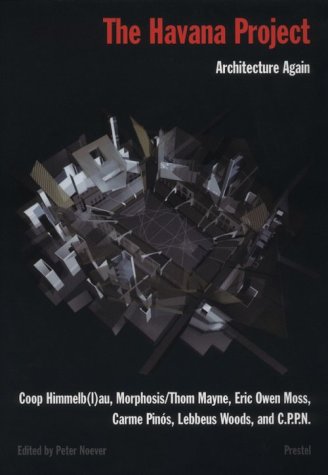

The Havana project Architecture Again : international conference on architecture, Havana, Cuba edited by Peter Noever for MAK, Vienna and MAK Center for Art and Architecture, Los Angeles ; with Coop Himmelb(l)au/Wolf Prix ... [et al.].
Idioma: Español Detalles de publicación: Munich New York Prestel c1996.Descripción: 184 p. ill. (some col.), ports. 24 cmISBN:- 9783791316000
- Architecture Again
- 720.97291 Ar25h 20
- NA804.H3 A734 1995
- Also issued online.
| Imagen de cubierta | Tipo de ítem | Biblioteca actual | Biblioteca de origen | Colección | Ubicación en estantería | Signatura topográfica | Materiales especificados | Info Vol | URL | Copia número | Estado | Notas | Fecha de vencimiento | Código de barras | Reserva de ítems | Prioridad de la cola de reserva de ejemplar | Reservas para cursos | |
|---|---|---|---|---|---|---|---|---|---|---|---|---|---|---|---|---|---|---|
| Libro | CARIBET Biblioteca Arquitectura Colección General CARIBET | NA804.H3 A734 1995 (Navegar estantería(Abre debajo)) | Disponible | 91000000023622 |
Descripciones mejoradas de Syndetics:
The city of Havana represents a real challenge to contemporary architects. Havana has a rich and diverse heritage with its cultural roots in Andalusia, Africa, the Caribbean, the United States and Soviet Russia, yet many of its historic (16th-19th century) buildings are in need of conservation and restoration. It has slums and a great need for housing, urban infrastructure (sewerage system, transportation), and it must cater for its growing tourist industry. In 1982, Havana was designated a Monument of World Heritage by UNESCO. In 1992, a team of international architects met in Vienna for a small, visionary conference to discuss the future of architecture. The influential findings of this conference were published by Prestel under the provocative title "The End of Architecture". For "The Havana Project: Architecture Again", many of the same team assembled once again in January 1995. This time they met to examine the specific and urgent project of Havana as a model that epitomized many of the problems that are facing and will face architects in cities all over the world in the later-20th and the 21st century. The team members were originally chosen for their differing perspectives on the artistic, social and political issues in contemporary architecture and the broad spectrum of experience they could contribute. For "The Havana Project", the conference delegates each designed a project to be in harmony with the many-faceted cultural background of Havana, and to endeavour to provide new architectural impetus and direction for the city. In the book, the contributors discuss the many cultural, political and artistic forces they considered, and how they combined and integrated each of them within their designs. This book enables students of architecture, design theory and city planning to see how they combined and integrated each of them within their designs. This book enables students of architecture, design theory, and city planning to see how prominent international experts tackle the contemporary problems of their art. It is illustrated with detailed drawings, plans and perspective sketches of each design.
Conference held Dec. 31, 1994 to Jan. 5, 1995 in Havana, Cuba.
Includes bibliographical references.
Also issued online.