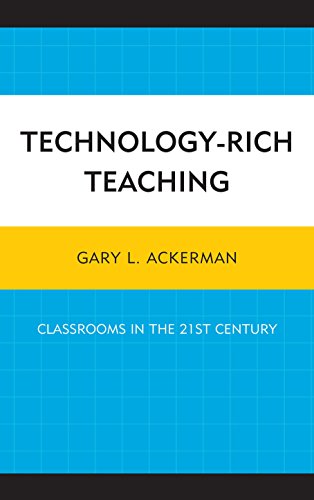

Technology-rich teaching: Classrooms in the 21st Century [electronic resource] / Gary L. Ackerman.
Idioma: Español Editor: Lanham, MD: University Press of America, 2016Descripción: 1 online resource (xiii, 186 pages): illustrations; 24 cmTipo de contenido:- 9780761866091 (electronic resource)
- LB1044.8 .A335 2015 eb
| Imagen de cubierta | Tipo de ítem | Biblioteca actual | Biblioteca de origen | Colección | Ubicación en estantería | Signatura topográfica | Materiales especificados | Info Vol | URL | Copia número | Estado | Notas | Fecha de vencimiento | Código de barras | Reserva de ítems | Prioridad de la cola de reserva de ejemplar | Reservas para cursos | |
|---|---|---|---|---|---|---|---|---|---|---|---|---|---|---|---|---|---|---|
| Libro electrónico | Biblioteca de Mayagüez Acceso en línea | LB 1044.8 .A335 2015 eb (Navegar estantería(Abre debajo)) | C. 1 | Disponible | 50000003263075 |
Descripciones mejoradas de Syndetics:
Information and computer technology arrived in classrooms more than three decades ago. Despite the efforts of educators and technologists, much teaching and learning has remained unchanged since it arrived. This is in contrast to the widespread adoption of computer technology in many other endeavors. Changing education to reflect the dominant role of technology in society requires understanding how technology has influenced (and continues to influence) several aspects of schools. Each of these is detailed in this book.
The effects of technology on the digital generations who are now enrolled in schools are described, as is the nature of the technology-mediated interaction that will prepare these generations for an unpredictable future. Strategies and approaches for curriculum design, professional development, and other aspects of school organization are presented as well. Teachers, school leaders, technology leaders will find valuable guidance for refreshing teaching and learning that makes use of technology.
Includes bibliographical references and index.
Information and computer technology arrived in classrooms more than three decades ago. Despite the efforts of educators and technologists, much teaching and learning has remained unchanged since it arrived. This is in contrast to the widespread adoption of computer technology in many other endeavors. Changing education to reflect the dominant role of technology in society requires understanding how technology has influenced (and continues to influence) several aspects of schools. Each of these is detailed in this book.The effects of technology on the digital generations who are now enrolled in schools are described, as is the nature of the technology-mediated interaction that will prepare these generations for an unpredictable future. Strategies and approaches for curriculum design, professional development, and other aspects of school organization are presented as well. Teachers, school leaders, technology leaders will find valuable guidance for refreshing teaching and learning that makes use of technology.