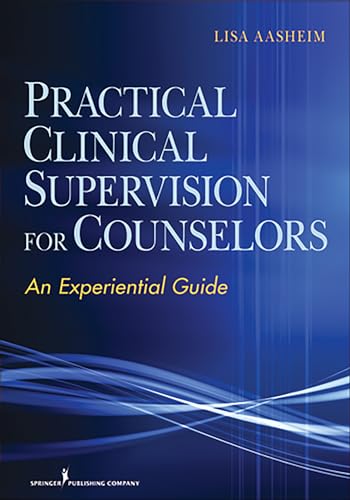

Practical clinical supervision for counselors an experiential guide Lisa Langfuss Aasheim.
Detalles de publicación: New York, NY Springer c2011.Descripción: xv, 333 p. 23cmISBN:- 9780826107862
- 9780826107879 (e-book)
- 362.196890068 A115p 23
- WM 55
| Imagen de cubierta | Tipo de ítem | Biblioteca actual | Biblioteca de origen | Colección | Ubicación en estantería | Signatura topográfica | Materiales especificados | Info Vol | URL | Copia número | Estado | Notas | Fecha de vencimiento | Código de barras | Reserva de ítems | Prioridad de la cola de reserva de ejemplar | Reservas para cursos | |
|---|---|---|---|---|---|---|---|---|---|---|---|---|---|---|---|---|---|---|
| Libro | Biblioteca Encarnación Valdés Colección General bev | 362.196890068 A115p (Navegar estantería(Abre debajo)) | Disponible | 80000002461815 |
Descripciones mejoradas de Syndetics:
As the field of counseling continues to experience major growth, the need for clinical supervisors is growing proportionally. This stand-alone text for graduate and post-Masters level supervision courses contains all of the information clinical supervisors will need to practice effectively in community mental health and private practice settings. It aligns with current supervision standards issued by the Association for Counselor Education and Supervision, and with the recommendations of the American Association for State Counseling Boards.
The book integrates theoretical and practical information while addressing all stages of the supervision process, from initial conceptualization and preparation to direct application and advanced skill utilization. Special attention is paid to ethical and legal issues, professional development, multicultural competence, evaluation, supervisory alliance, parallel process, and advanced supervision strategies. The text presents helpful tools for effective problem solving, including the supervisor self-concept exercise that guides the student in solidifying his or her identity as a supervisor. It will be useful for all levels of experience from novice to advanced supervisors.
Key Features: Aligns with current national and state-specific supervision standards Engages readers in multiple exercises that readily facilitate application of concepts and theories Provides solutions to common and emerging supervision dilemmas Addresses such underrepresented supervision components as group supervision and dilemmas specific to private practice or agenciesIncludes bibliographical references and index.
What is clinical supervision? -- Qualities of effective supervision -- Identifying a supervision model -- Preparing for the initial session -- The beginning : the initial session -- The supervisory alliance : building the relationship -- The supervisory alliance : strains, stressors & repair -- Beyond self-report : supervision methods and modalities -- The supervision process : technical tools and tips -- Modes of supervision : triadic and group supervision -- Creativity in supervision -- Legal and ethical matters -- Evaluation, documentation, and risk management -- The fine art of feedback.
Tabla de contenidos provista por Syndetics
- Preface(p. xi)
- Acknowledgments(p. xv)
- 1 Preparing to Supervise(p. 1)
- 1 What is Clinical Supervision?(p. 3)
- What is Clinical Supervision?(p. 3)
- Defining Clinical Supervision(p. 4)
- The Prevalence of Clinical Supervision(p. 6)
- The Purposes of Clinical Supervision(p. 6)
- How Should Clinical Supervision be Conducted?(p. 8)
- Supervisor Development(p. 8)
- Toward Reflective Practice(p. 9)
- Competent Supervision(p. 10)
- 2 Preparing for Effective Supervision(p. 13)
- Supervisor Credentials and Training(p. 13)
- State Licensing Boards(p. 14)
- Professional Organizations and Accreditation(p. 17)
- Standards of Supervision Practice(p. 18)
- Characteristics of the "Ideal" Supervisor(p. 20)
- The Supervisory Alliance(p. 20)
- Availability and Approachability(p. 21)
- Core Qualities(p. 22)
- Role Clarity: Supervisor or Therapist?(p. 23)
- Ability to Tolerate Powerful Affect(p. 23)
- Effective versus Ineffective Supervision(p. 24)
- A Model of "Lousy" Supervision(p. 25)
- Effective Supervision(p. 30)
- 3 Identifying Your Model of Supervision(p. 35)
- Supervision: Combining Science and Practice(p. 35)
- The Importance of Using a Supervision Model(p. 36)
- Evidence-Based Practice(p. 37)
- Selecting a Model(p. 38)
- Developmental Models(p. 39)
- Counseling and Psychotherapy-Based Models(p. 46)
- Cognitive-Behavior Therapy Supervision(p. 47)
- Social Role Models(p. 49)
- The Discrimination Model(p. 49)
- The Systems Approach to Supervision(p. 51)
- 4 Preparing for the Initial Session(p. 53)
- To Supervise or Not to Supervise?(p. 53)
- The Pre-Supervision Interview(p. 57)
- Supervision Fees(p. 61)
- Scheduling(p. 62)
- Setting The Stage for Supervision: The Supervision Contract, Informed Consent, and Professional Disclosure Statement(p. 63)
- II Supervision in Action(p. 69)
- 5 The Initial Session(p. 71)
- The Supervision Environment(p. 72)
- Beginning the Session(p. 73)
- The First Session Checklist(p. 74)
- Collaborative Goal Setting(p. 81)
- 6 The Supervisory Alliance: Building the Relationship(p. 85)
- The Supervisory Alliance(p. 85)
- Important Components of the Supervisory Alliance(p. 85)
- Role Clarity: Managing Multiple Relationships(p. 99)
- Managerial versus Clinical Supervision(p. 100)
- 7 The Supervision Alliance: Strains, Stressors, and Solutions(p. 103)
- Counterproductive Supervision Events(p. 103)
- Counterproductive Events Involving Ethical Nonadherence(p. 105)
- Counterproductive Events Involving Supervisor Technical Skill(p. 113)
- Counterproductive Events Involving Supervisor Personalization Skills(p. 115)
- Conflict in Supervision(p. 117)
- Defensive Strategies and Strategic Games(p. 122)
- 8 Beyond Self-Report: Supervision Modalities and Methods(p. 129)
- Concurrent and Ex-Post Facto Supervision Methods(p. 131)
- Concurrent Methods of Supervision(p. 131)
- Ex-Post Facto Supervision(p. 138)
- Technology-Assisted Remote Supervision(p. 145)
- 9 The Supervision Process: Technical Tools and Tips(p. 151)
- Supervision Phenomena and Processes: Making Sense of It All(p. 152)
- The Separation-Individuation Process(p. 152)
- Self-Efficacy(p. 155)
- Anxiety(p. 159)
- Self-Presentation(p. 160)
- Nondisclosure(p. 163)
- Lying(p. 166)
- Transference-Countertransference(p. 169)
- Supertransference(p. 171)
- Parallel Process(p. 172)
- Emotions(p. 174)
- Supervision Techniques(p. 177)
- 10 Models of Supervision: Triadic and Group Supervision(p. 189)
- Triadic Supervision(p. 189)
- Benefits and Drawbacks(p. 190)
- Supervision Structure(p. 191)
- Composing the Triad(p. 194)
- Group Supervision(p. 195)
- Goals of Group Supervision(p. 195)
- Benefits and Drawbacks of Group Supervision(p. 196)
- Group Supervisor Characteristics(p. 196)
- Group Composition(p. 198)
- Formatting the Group(p. 198)
- Bringing the Group into Action(p. 201)
- Engaging the Members(p. 203)
- Problems in Group Supervision(p. 206)
- 11 Creativity in Supervision(p. 209)
- The Scamper Model of Creativity(p. 209)
- No-Tech Creativity: Techniques Using No Equipment Nor Materials(p. 212)
- Low-Tech Creativity: Techniques Using Simple Technical Equipment and/or Simple Materials(p. 216)
- Mid- And High-Tech Creativity: Techniques Using Complex Technology and/or Materials(p. 219)
- III Critical Components of Clinical Supervision(p. 223)
- 12 Legal and Ethical Matters(p. 225)
- Ethics and Supervision(p. 226)
- Competence(p. 227)
- Due Process(p. 232)
- Informed Consent(p. 233)
- Confidentiality and Privilege(p. 234)
- Malpractice(p. 237)
- Direct Liability(p. 238)
- Multiple Relationships(p. 240)
- Ethical Decision-Making Model(p. 243)
- 13 Evaluation, Documentation, and Risk Management(p. 245)
- Formal Evaluation: Professional Performance Assessment(p. 245)
- Documentation in Supervision(p. 255)
- The Supervision Chart(p. 256)
- The Case Review Form(p. 258)
- 14 The Fine Art of Feedback(p. 265)
- The Nature of Feedback(p. 265)
- Content and Process(p. 267)
- Content and Variables(p. 267)
- Process Variables(p. 269)
- The Technical Aspects of Feedback in Supervision(p. 273)
- Working with Intention(p. 274)
- Earning The Right To Challenge(p. 275)
- The Three Constituents(p. 275)
- Effective and Ineffective Feedback(p. 276)
- Appendix A Ethical Guidelines(p. 279)
- Appendix B Supervisee Information Form(p. 287)
- Appendix C AMCD Multicultural Counseling Competencies(p. 289)
- Appendix D Counseling Supervision Contract(p. 293)
- Appendix E Sample Professional Disclosure Statement(p. 297)
- Appendix F Supervision Session Report(p. 301)
- References(p. 303)
- Index(p. 325)