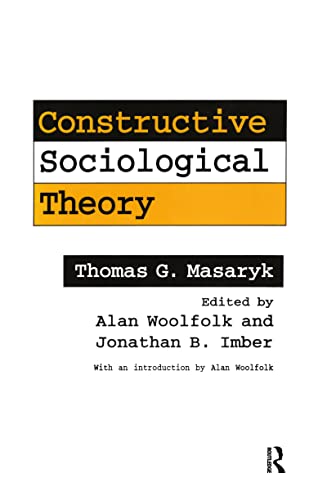

Constructive sociological theory the forgotten legacy of Thomas G. Masaryk Thomas G. Masaryk ; edited by Alan Woolfolk and Jonathan B. Imber ; with an introduction by Alan Woolfolk.
Detalles de publicación: New Brunswick, N.J. Transaction Publishers c1994.Descripción: p. cmISBN:- 156000164X
- 340/.1 20
- HM24 .M2947 1994
| Imagen de cubierta | Tipo de ítem | Biblioteca actual | Biblioteca de origen | Colección | Ubicación en estantería | Signatura topográfica | Materiales especificados | Info Vol | URL | Copia número | Estado | Notas | Fecha de vencimiento | Código de barras | Reserva de ítems | Prioridad de la cola de reserva de ejemplar | Reservas para cursos | |
|---|---|---|---|---|---|---|---|---|---|---|---|---|---|---|---|---|---|---|
| Libro | Biblioteca Encarnación Valdés Colección General bev | 340.1 M394c (Navegar estantería(Abre debajo)) | Disponible | 80000001747685 |
Descripciones mejoradas de Syndetics:
Thomas G. Masaryk was founding and first president of the State of Czechoslovakia. He was also a dissident charter member of the theoretical vanguard that established modern sociology in the nineteenth century. Many social scientists are aware of Masaryk's political role, but do not know about his significant contributions to sociology. With the publication of this book, Imber and Woolfolk hope to restore Masaryk to his rightful place in history as a founding sociological theorist.
This compilation of some of Masaryk's major writings reveals the intertwining of politics and social theory that is characteristic of his thinking. Chapters in Constructive Sociological Theory include The Development of the Modern Suicide Tendency"; "Essence and Method of Sociology"; The Epistemological Problem of Russian Philosophy"; "The Religious Question and Modern Philosophy"; The Class Structure of Society"; "Central Problems of Marxist Policy"; and "Democracy versus Theocracy."
Constructive Sociological Theory also presents these writings together in English for the first time. Alan Woolfolk's substantial introduction extensively discusses Masaryk's biographical background, academic life, political career, religious views, and interpretations of Marx and Comte, among other subjects. This landmark volume will be an essential addition to the libraries of political theorists, sociologists, philosophers, and theologians.
Includes bibliographical references and index.