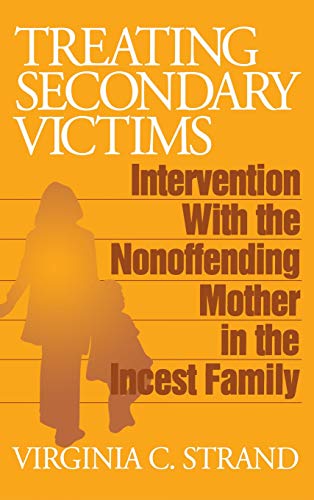

Treating secondary victims intervention with the non-offending mother in the incest family Virginia C. Strand.
Detalles de publicación: Thousand Oaks, Calif. London SAGE 2000.Descripción: 240 pISBN:- 0803952864
- 0803952872 (pbk.)
- 362.743 S8971t 21
| Imagen de cubierta | Tipo de ítem | Biblioteca actual | Biblioteca de origen | Colección | Ubicación en estantería | Signatura topográfica | Materiales especificados | Info Vol | URL | Copia número | Estado | Notas | Fecha de vencimiento | Código de barras | Reserva de ítems | Prioridad de la cola de reserva de ejemplar | Reservas para cursos | |
|---|---|---|---|---|---|---|---|---|---|---|---|---|---|---|---|---|---|---|
| Libro | Biblioteca Encarnación Valdés Colección General bev | 362.743 S8971t (Navegar estantería(Abre debajo)) | Disponible | 80000002134057 |
Descripciones mejoradas de Syndetics:
This book builds upon a foundation of research literature on incest victims and their families as well as the author′s own clinical experience to provide a conceptual framework for intervention and treatment of the non-offending mother. Amply illustrated with case examples, the author, Virginia C. Strand, outlines a treatment model and gives suggestions for specific treatment strategies. Particular emphasis is paid to the context of the mother′s situation, and how such factors as social class, ethnicity, age, and education must be taken into consideration when treating these clients. In addition, Strand provides helpful guidance to the therapist whose client must deal with the multiplicity of systems that are involved with intervention, investigation, and prosecution of child abuse cases. This book is a much needed guide for therapists, case workers, and other service providers who work with both the children who are incest victims, as well as their families.
Tabla de contenidos provista por Syndetics
- Understanding the Impact of Incest on the Nonoffending Mother
- Gender and Countertransference
- Contextual Considerations in the Engagement of the Mother
- Evaluating the Mother and Planning for Treatment
- Individual Treatment
- Group Treatment
- Family Treatment
- Case Coordination
- Working with Mothers Involved in Custody and Visitation Disputes
- Future Directions