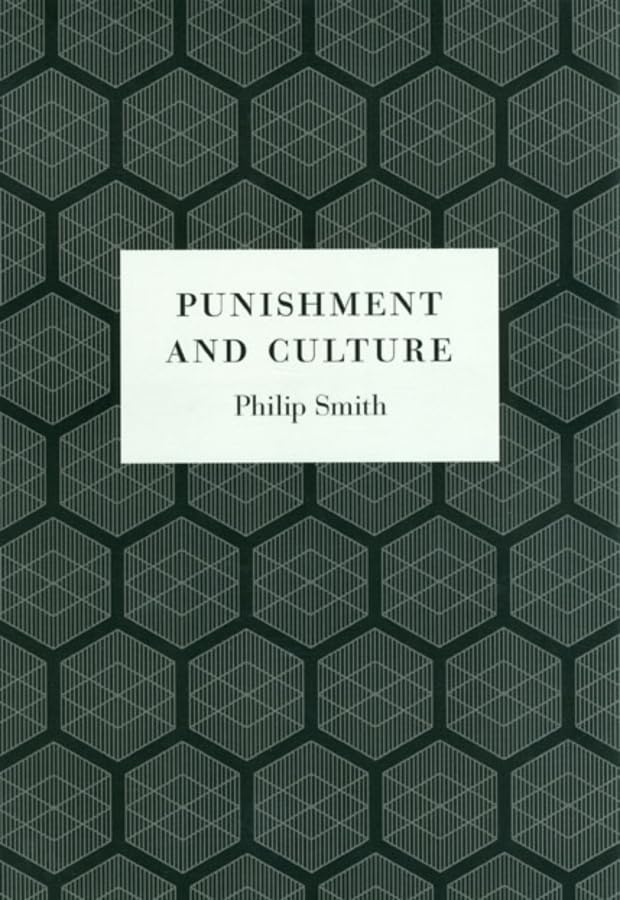

Punishment and culture Philip Smith.
Detalles de publicación: Chicago University of Chicago Press 2008.Descripción: viii, 219 p. ill. 24 cmISBN:- 9780226766096 (cloth : alk. paper)
- 0226766098 (cloth : alk. paper)
- 9780226766102 (pbk. : alk. paper)
- 0226766101 (pbk. : alk. paper)
- 303.3/6 22
- GT 6710 .S65 2008
| Imagen de cubierta | Tipo de ítem | Biblioteca actual | Biblioteca de origen | Colección | Ubicación en estantería | Signatura topográfica | Materiales especificados | Info Vol | URL | Copia número | Estado | Notas | Fecha de vencimiento | Código de barras | Reserva de ítems | Prioridad de la cola de reserva de ejemplar | Reservas para cursos | |
|---|---|---|---|---|---|---|---|---|---|---|---|---|---|---|---|---|---|---|
| Libro | Biblioteca de Derecho Mons. Fremiot Torres Oliver Colección General biblioteca derecho | GT 6710 .S65 2008 (Navegar estantería(Abre debajo)) | Disponible | 70000000848445 |
Descripciones mejoradas de Syndetics:
From the chain gang to the electric chair, the problem of how to deal with criminals has long been debated. What explains this concern with getting punishment right? And why do attitudes toward particular punishments change radically over time? In addressing these questions, Philip Smith attacks the comfortable myth that punishment is about justice, reason, and law. Instead he argues that punishment is an essentially irrational act founded in ritual as a means to control evil without creating more of it in the process.
Punishment and Culture traces three centuries of the history of punishment, looking in detail at issues ranging from public executions and the development of the prison to Jeremy Bentham's notorious panopticon and the invention of the guillotine. Smith contends that each of these attempts to achieve sterile bureaucratic control was thwarted as uncontrollable cultural forces generated alternative visions of heroic villains, darkly gothic technologies, and sacred awe. Moving from Andy Warhol to eighteenth-century highwaymen to Orwell's 1984 , Smith puts forward a dazzling account of the cultural landscape of punishment. His findings will fascinate students of sociology, history, criminology, law, and cultural studies.
Includes bibliographical references (p. [185]-214) and index.
The penal imagination -- The public execution -- The prison -- The panopticon -- The guillotine -- The electric chair -- Punishment and meaning.
Tabla de contenidos provista por Syndetics
- Acknowledgements
- Chapter 1 The Penal Imagination
- Chapter 2 The Public Execution
- Chapter 3 The Prison
- Chapter 4 The Panopticon
- Chapter 5 The Guillotine
- Chapter 6 The Electric Chair
- Chapter 7 Punishment and Meaning
- Notes
- Index