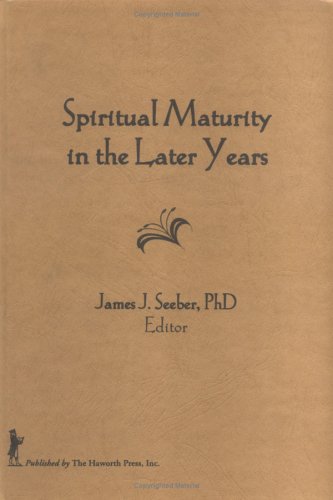

Spiritual maturity in the later years James J. Seeber, editor.
Detalles de publicación: New York Haworth Press c1990.Descripción: 196 p. 22 cmISBN:- 1560240504 (alk. paper)
- 1560240512 (pbk. : alk. paper)
- 248.8/5 20
- BV4580 .S69 1990
| Imagen de cubierta | Tipo de ítem | Biblioteca actual | Biblioteca de origen | Colección | Ubicación en estantería | Signatura topográfica | Materiales especificados | Info Vol | URL | Copia número | Estado | Notas | Fecha de vencimiento | Código de barras | Reserva de ítems | Prioridad de la cola de reserva de ejemplar | Reservas para cursos | |
|---|---|---|---|---|---|---|---|---|---|---|---|---|---|---|---|---|---|---|
| Libro | Biblioteca Encarnación Valdés Colección General bev | 248.85 S759 (Navegar estantería(Abre debajo)) | Disponible | 80000001678872 |
Descripciones mejoradas de Syndetics:
This in-depth book addresses the intertwined relationships between aging, spirituality, and physical well-being. As the number of Americans in the 75 to 84 age bracket is projected to reach 12 million by 2000, and the 85-plus population is expected to increase seven times by 2050, it is vital that the interconnected needs of spiritual and physical well-being of the aging are being met. As outlined in this book, blending concepts from theology, behavioral science, and medicine is the framework needed to develop a future in the human services field, capable of responding to the whole person. Spiritual Maturity in the Later Years takes a comprehensive look at what spiritual maturity is and how it relates to current thinking in theology, medicine, and psychotherapy. The editor highlights the fully ecumenical and interfaith nature of the search for understanding and the interdisciplinary nature of the religion and aging movement. Many helping professionals, as well as formally trained theologians, utilize religious resources in their lives and work. The editor also addresses the desperately growing need for research at both conceptual and empirical levels, helping ease complicated research due to the multidimensional character of psychology and sociology in religion.
Conceptual chapters represent such diverse topics as humor as a psychological sign of spiritual maturity, the search for meaning, and a theology for serving the oldest-old. Research chapters range from liturgical celebrations for the later years and reports on faith developments to ministry with Alzheimer's patients. Both academicians and practitioners will gain greater understanding from Spiritual Maturity in the Later Years of the need for a combined care approach to provide the best physical and spiritual care of the elderly.
Proceedings of a conference called "Spiritual Maturity and Wholeness in the Later Years: Theory Building for Empirical Practice" held April 23-25, 1987 in Claremont, Calif.
Published also as v. 7, no. 1/2 (1990) of the Journal of religious gerontology.
Includes bibliographical references.