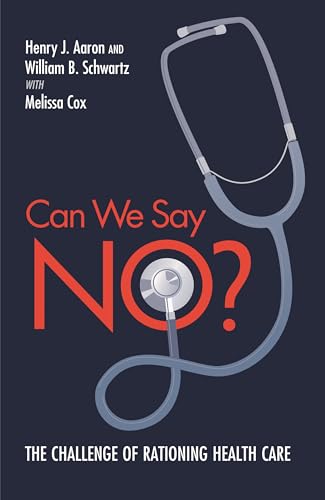

Can we say no? the challenge of rationing health care Henry J. Aaron and William B. Schwartz ; with Melissa Cox.
Detalles de publicación: Washington, D.C. Brookings Institution Press c2005.Descripción: xii, 199 p. 24 cmISBN:- 0815701209 (cloth : alk. paper)
- 0815701217 (pbk. : alk. paper)
- 362.10425 A113c 22
- RA410.5 .A23 2005
- WA 540 FA1
| Imagen de cubierta | Tipo de ítem | Biblioteca actual | Biblioteca de origen | Colección | Ubicación en estantería | Signatura topográfica | Materiales especificados | Info Vol | URL | Copia número | Estado | Notas | Fecha de vencimiento | Código de barras | Reserva de ítems | Prioridad de la cola de reserva de ejemplar | Reservas para cursos | |
|---|---|---|---|---|---|---|---|---|---|---|---|---|---|---|---|---|---|---|
| Libro | Biblioteca Encarnación Valdés Colección General bev | 362.10425 A113c (Navegar estantería(Abre debajo)) | Disponible | 80000002275009 |
Descripciones mejoradas de Syndetics:
Over the past four decades, the share of income devoted to health care nearly tripled. If policy is unchanged, this trend is likely to continue. Should Americans decide to rein in the growth of health care spending, they will be forced to consider whether to ration care for the well-insured, a prospect that is odious and unthinkable to many. This book argues that sensible health care rationing can not only save money but improve general welfare and public health. It reviews the experience with health care rationing in Great Britain. The choices the British have made point up the nature of the options Americans will face if they wish to keep public health care budgets from driving taxes ever higher and private health care spending from crowding out increases in other forms of worker compensation and consumption. This book explains why serious consideration of health care rationing is inescapable. It also provides the information policymakers and concerned citizens need to think clearly about these difficult issues and engage in an informed debate.
Includes bibliographical references and index.
The promise and the problem -- The British system -- Matters of life and death -- Quality of life -- Diagnoses -- Rationing and efficiency -- Efficiency and inefficiency in British health care -- Rationing health care in the United States.
"Examines the use of rationing as a means to curb health care spending, using the experience of Great Britain to highlight the promises and pitfalls of this approach"--Provided by publisher.
Notas de autor provistas por Syndetics
Henry J. Aaron is a senior fellow in Economic Studies at the Brookings Institution, where he holds the Bruce and Virginia MacLaury Chair. Among his many books are Can We Say No? The Challenge of Rationing Health Care , with William B. Schwartz and Melissa Cox (Brookings, 2006), and Reforming Medicare: Options,Tradeoffs, and Opportunities , written with Jeanne Lambrew (Brookings, 2008). William B. Schwartz is an expert on national health policy and is a professor of medicine at the University of Southern California. He was formerly chairman of the Department of Medicine and Vannevar Bush Professor at Tufts University and was also president of the American Society of Nephrology. Melisssa Cox is a student at Yale Law School.