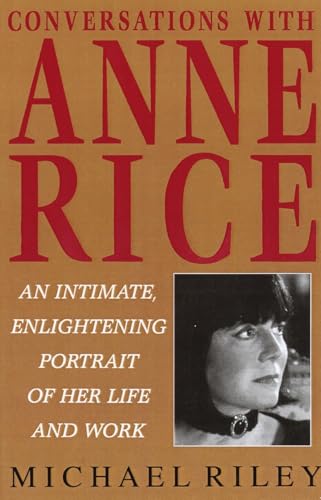
Imagen de portada de Amazon
Imagen de Amazon.com
Imagen de cubierta Syndetics
Portada de Syndetics
Imagen de OpenLibrary

Conversations with Anne Rice Michael Riley.

Por: Colaborador(es): Detalles de publicación: New York Ballantine Books 1996.Edición: 1st edDescripción: xvii, 296 p. 21 cmISBN:
  • 0345396367
Tema(s): Clasificación CDD:
  • 813.54 R5731c 20
Clasificación LoC:
  • PS3568.I265 Z463 1996
Recursos en línea:
Valoración
    Valoración media: 0.0 (0 votos)
Existencias
Imagen de cubierta Tipo de ítem Biblioteca actual Biblioteca de origen Colección Ubicación en estantería Signatura topográfica Materiales especificados Info Vol URL Copia número Estado Notas Fecha de vencimiento Código de barras Reserva de ítems Prioridad de la cola de reserva de ejemplar Reservas para cursos
Libro Biblioteca Encarnación Valdés Colección General bev 813.54 R5731c (Navegar estantería(Abre debajo)) Disponible 80000002224601
Total de reservas: 0

Descripciones mejoradas de Syndetics:

In the novel that introduced Anne Rice to the world, Interview with the Vampire, a reporter seeks out the facts behind an extraordinary life. In the years since, Anne Rice has created a remarkable and acclaimed body of work--encompassing her celebrated Vampire Chronicles, The Lives of the Mayfair Witches novels, two haunting historical epics, and her controversial, equally sought-after excursions into erotica. One of the world's best known and biggest bestselling authors of contemporary fiction, Rice has herself been the subject of countless interviews, profiles, and a full-length biography. Yet, who Anne Rice is, and the beliefs, fascinations, desires, fears, and passions that inspire her work, remain endlessly fascinating topics. In this first-of-its-kind book-length interview with Anne Rice, film scholar and author Michael Riley seeks out--and finds--the truth behind the extraordinary life and work of a unique, tantalizing writer.
In Conversations with Anne Rice, the creator of Lestat, Louis, and Lasher talks in depth--and in her own words--about everything: from her early struggles toward publication to the tremendous literary reputation she has achieved. From the success and adulation of the vampire novels to the lesser-known books that are her personal favorites. From the influence of classical and popular literature to that of Catholicism and eroticism. From the role of movies in her literary vision to her definitive critique of the film version of Interview with the Vampire, and far beyond.
Here, then, is Anne Rice--her heart, her psyche, her soul--in candid and captivating dialogue with her audience.

Tabla de contenidos provista por Syndetics

  • Acknowledgments(p. ix)
  • Introduction(p. xi)
  • Chronology(p. xv)
  • Part 1
  • 1. "A great trust in the imagination"(p. 5)
  • 2. "The big furious brainstorm ... of writing"(p. 37)
  • 3. "Roquelaure and Rampling"(p. 69)
  • Part 2
  • 4. "Family voices"(p. 111)
  • 5. "The savage garden"(p. 143)
  • 6. "A place where Ezra Pound and Mickey Spillane touch"(p. 168)
  • Part 3
  • 7. "Nobody's going to make this movie"(p. 205)
  • 8. "The things I loved ... the things I didn't"(p. 233)
  • 9. "From teenagers to housewives to brain surgeons to manicurists to truck drivers"(p. 260)
  • 10. "A quest for meaning"(p. 279)

Extracto provisto por Syndetics

INTRODUCTION       On Saturday evening, October 14, 1961, I drove with the parents of my friend Stan Rice from Dallas, Texas, to the nearby college town of Denton to attend Stan's wedding to Anne O'Brien. I had never met Anne, who had been living in San Francisco, but I had heard Stan talk about her a great deal. I no longer remember just what impressions of Anne I'd formed in advance, but I do remember the moment we met. I remember being struck by how pretty she was and by her slightly shy and endearing smile. I liked her at once, but even so I couldn't have supposed that moment marked the beginning of one of the most rewarding friendships of my life.   Within a few months Stan and Anne had moved to San Francisco, where they were going to school and working, and a few months after that I moved to southern California to attend graduate school. Airfares were much cheaper in those days (only twenty-four dollars round-trip between Los Angeles and San Francisco!), so not long after my arrival I visited them in their apartment on Ashbury only a few yards from the intersection with Haight, which was to become so familiar a landmark just a few years later. Soon I was visiting regularly, and it was as if Anne and I had known each other for years. No matter what the interval between them, our conversations seemed continuous--always lively talks filled with the enthusiasm, the passionate commitments, the humor and intensity, the urgent engagement with life that define Anne to anyone who knows her.   We had been friends having such conversations for almost fifteen years when Anne's first novel, Interview with the Vampire, was published, and her life and Stan's were changed forever. In the years since then I've watched as she has become not simply a successful novelist but one of the most widely read and admired writers in contemporary American literature. I have many times seen Anne interviewed on television, profiled in magazines and newspapers, greeted by throngs at book signings. I've listened to people who have read her books talk about her with the kind of immediacy and familiarity typically reserved for those we know best. In an important sense, I have often thought, they do know Anne well, for her novels are deeply informed by her character and personality. To read them is indeed to have a kind of "conversation" with Anne. But of course there are other kinds of conversations too, and I've seen and heard for myself how many people there are who would like to talk to her.   I should confess that I've found it a curious experience seeing someone I've known so well for so long being embraced by crowds who claim a quite different but certainly potent intimacy. And so perhaps inevitably I have reflected on the relationship between my Anne and the public's. Gradually I've concluded that while the fascination with her is rooted in her work, it also goes beyond that to something in Anne herself, something that is both compellingly attractive and slightly mysterious, and it was with such thoughts in mind that I first spoke to her about taping the series of conversations on which this book is based. I knew quite simply how much fun she is to talk to, how interesting and thoughtful, how candid, how honest and even brave, and I knew that I had rarely if ever seen an interview or profile that I thought did justice to her. Too often the interviewer got in the way. Too often Anne's own voice had to contend with the journalist's impressions of her. Let her speak for herself, I thought. She's wonderfully good at it. And so on four occasions--three spread over a week in late August 1993 and a fourth in early January 1995--we sat in a sun-filled room looking out on the garden of her beautiful Greek Revival house in New Orleans's Garden District and talked as we had so many times before.   If these occasions were necessarily more self-conscious than our usual encounters, I nevertheless wanted to capture as much as possible the tone and texture that have characterized our conversations during these almost thirty-five years. I did make some notes to remind myself of things I wanted to bring up, but I hardly needed them. With an opening question or comment, we were off, and the conversation quickly acquired a life of its own. There was no critical or biographical agenda. Rather, I simply cast the net wide and let Anne's energy and presence, her intelligence, her forthrightness and humor have full sway. Indeed, I might say a word about Anne's humor. Although some people expect her to be quite exotic, if not eccentric, she has a lively sense of humor both about herself and about the world at large, and her ready laughter is one of her most characteristic and appealing traits. It is also, of course, one that isn't readily apparent in print. For this reason, I have sometimes indicated in brackets where her laughter seemed indivisible from the tone and mood of her remarks.   Preparing this book has reminded me again of how much I've enjoyed talking with Anne Rice over the years, and I take pleasure now in sharing these conversations with her readers who want to hear her speak in her own voice and to know her for themselves.   Claremont, California October 8, 1995   CHRONOLOGY       1941    Born October 4 in New Orleans   1956    Her mother, Katherine O'Brien, dies   1957    Her father, Howard O'Brien, remarries and moves the family to Richardson, Texas, a suburb of Dallas   Meets Stan Rice at Richardson High School   1959    Graduates from high school and enters Texas Women's University in Denton   1960    Moves to San Francisco   1961    Returns to Texas and marries Stan Rice on October 14   1962    Returns to San Francisco with Stan   1964    Graduates from San Francisco State University with a B.A. in Political Science   1966    Daughter Michele is born on September 21   1969    Moves to Berkeley   Writes a short story called "Interview with the Vampire"   1970    Michele is diagnosed with leukemia   1972    Michele dies on August 5   1973    Writes Interview with the Vampire as a novel   1974    Attends Squaw Valley writers' conference where she meets agent Phyllis Seidel, who agrees to represent Interview with the Vampire and sells it to editor Vicky Wilson at Knopf   1976    Interview is published   1978    Son Christopher born on March 11   1979    The Feast of All Saints is published by Simon & Schuster   1980    Moves back to San Francisco to a Victorian in the Castro District   1982    Cry to Heaven is published by Knopf   1983    The Claiming of Sleeping Beauty by "A. N. Roquelaure" is published by Dutton   1984    Beauty's Punishment, the second Roquelaure, is published by Dutton   1985    Exit to Eden by "Anne Rampling" is published by Arbor House under editor John Dodds's Belvedere Books imprint Beauty's Release, the third Roquelaure, is published by Dutton   The Vampire Lestat is published by Knopf   1986    Belinda, the second Rampling, is published by John Dodds at Arbor House   John Dodds dies of cancer   1988    The Queen of the Damned is published by Knopf Returns to New Orleans and buys a house on Philip St.   1989    Moves back to New Orleans permanently and buys a house in the Garden District   The Mummy: Or Ramses the Damned is published by Ballantine Books   1990    The Witching Hour is published by Knopf   1991    Her father, Howard O'Brien, dies at age seventy-four   1992    The Tale of the Body Thief is published by Knopf   1993    Lasher is published by Knopf   Writes screenplay for Interview with the Vampire under a contract with David Geffen   1994    Taltos is published by Knopf   Film of Interview with the Vampire is released   1995    Memnoch the Devil is published by Knopf   Writes screenplay for The Witching Hour for David Geffen   1996    Servant of the Bones is published by Knopf Excerpted from Conversations with Anne Rice: An Intimate, Enlightening Portrait of Her Life and Work by Michael H. Riley, Anne Rice All rights reserved by the original copyright owners. Excerpts are provided for display purposes only and may not be reproduced, reprinted or distributed without the written permission of the publisher.

Notas de autor provistas por Syndetics

Michael Riley is a professor of film and literature at Claremont McKenna College. A contributing editor of Literature/Film Quarterly , he has published numerous critical essays and interviews, is the author of Conversations with Anne Rice , and is the coauthor of The Films of Joseph Losey . Professor Riley lives in Pasadena, California.
Compartir
logopucpr-y-vive

Contáctanos

¡Queremos saber de ti!

Tel. 787.841.2000 Ext. 1801

bibliotecavaldes@pucpr.edu

⁣Búscanos en las redes

© 2026 Desarrollado por Ignite Online • All Rights Reserved • Powered by Koha.