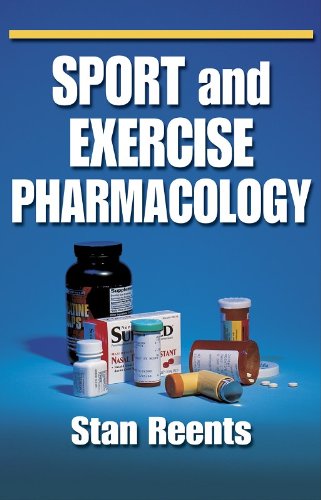

Sport and exercise pharmacology Stan Reents.
Detalles de publicación: Champaign, IL Human Kinetics 2000.Descripción: xii, 346 p. ill. 24 cmISBN:- 0873229371
- 21 615.7 R3279s
- RC1230 .R43 2000
| Imagen de cubierta | Tipo de ítem | Biblioteca actual | Biblioteca de origen | Colección | Ubicación en estantería | Signatura topográfica | Materiales especificados | Info Vol | URL | Copia número | Estado | Notas | Fecha de vencimiento | Código de barras | Reserva de ítems | Prioridad de la cola de reserva de ejemplar | Reservas para cursos | |
|---|---|---|---|---|---|---|---|---|---|---|---|---|---|---|---|---|---|---|
| Libro | Biblioteca Encarnación Valdés Colección General bev | 615.7 R3279s (Navegar estantería(Abre debajo)) | Disponible | 80000002086752 |
Descripciones mejoradas de Syndetics:
While drug and supplement use has increased substantially in recent years, there is a lack of firm understanding about how these substances can affect health and exercise. With Sport and Exercise Pharmacology , physicians and sports medicine specialists will learn how various commonly used drugs and supplements can affect exercise performance in their patients and athletes. Practical guidelines are offered so that professionals can closely monitor and circumvent adverse reactions to drug therapies.
But what are the effects of exercise on the drug itself? This issue is also explored in this valuable reference that covers a wide range of substances including supplements and over-the-counter, prescription, and social drugs, and highlights both sports medicine and clinical medicine issues. The role of exercise in actually preventing the need for drugs is a key message of the reference and a central reason that author Stan Reents, PharmD, has created the book.
With this essential resource, you will learn how drugs affect physical activities and how exercise can change the effects of drugs. Among the issues explored in Sport and Exercise Pharmacology are the following:
- How can drug therapy treat and prevent exercise-induced bronchospasm?
- What is the impact of athletes' use of analgesics?
- Lovastatin is known to be associated with muscle injury--does this necessarily mean that a person taking this lipid-lowering drug should not lift weights?
- Physicians often prescribe aerobic exercise to help lower blood pressure, but they also may prescribe diuretics--should a person taking a diuretic always avoid playing tennis on a hot day?
- Under what circumstances may creatine, androstenedione, and DHEA supplementation actually help performance, and when is it a waste of money?
- For what kinds of exercise does caffeine appear to boost performance? Are there any sporting events for which alcohol appears not to have a deleterious effect?
- How can exercise reduce the need for drug therapy for many chronic medical conditions?
The book covers cardiopulmonary agents, hormonal agents (including growth hormone, anabolic steroids, and erythropoietin), metabolic agents (including creatine, NSAIDS, and nutritional supplements), and socially used drugs. The text concludes with an examination of how exercise can be used as a preventive measure in reducing a patient's need for drug therapy.
Case studies at the beginning of each chapter provide real-world examples of the interactions between drugs and exercise. A closing bibliography summarizes dozens of resources on drugs and exercise.
This practical reference is your best resource to better understanding the varied and dynamic interactions between exercise and pharmacology, including the pivotal role that regular exercise plays in reducing the need for some drug therapies. This book will prove invaluable to any health professional whose clients exercise or engage in sports, and to any trainer, therapist, or fitness expert whose clients use supplements, banned substances, or prescription or over-the-counter drugs.
Includes bibliographical references.
Tabla de contenidos provista por Syndetics
- Credits(p. vii)
- Acknowledgments(p. xii)
- Introduction(p. 1)
- Better Clinical Research Is Needed(p. 5)
- References(p. 8)
- Part I Cardiopulmonary Agents(p. 11)
- Chapter 1 Beta-Receptor Antagonists (Beta-Blockers)(p. 13)
- How Exercise Affects the Action of Beta-Blockers(p. 16)
- How Beta-Blockers Affect Exercisers(p. 18)
- How Beta-Blockers Affect Exercise Performance(p. 35)
- Avoiding Potential Complications(p. 39)
- References(p. 41)
- Chapter 2 Diuretics(p. 47)
- How Exercise Affects the Action of Diuretics(p. 49)
- How Diuretics Affect Exercisers(p. 50)
- How Diuretics Affect Exercise Performance(p. 58)
- Avoiding Potential Complications(p. 62)
- References(p. 66)
- Chapter 3 Other Antihypertensive Drugs(p. 71)
- How Exercise Affects the Action of Antihypertensive Drugs(p. 74)
- How Antihypertensive Drugs Affect Exercisers(p. 80)
- How Antihypertensive Drugs Affect Exercise Performance(p. 90)
- Can a Conditioning Effect Be Achieved While Taking Antihypertensive Drugs?(p. 95)
- Avoiding Potential Complications(p. 96)
- References(p. 99)
- Chapter 4 Sympathomimetics(p. 105)
- How Exercise Affects the Action of Sympathomimetics(p. 108)
- How Sympathomimetics Affect Exercisers(p. 109)
- How Sympathomimetics Affect Exercise Performance(p. 111)
- Avoiding Potential Complications(p. 111)
- References(p. 114)
- Chapter 5 Bronchodilators and Respiratory Anti-Inflammatory Agents(p. 117)
- Exercise-Induced Bronchoconstriction(p. 118)
- Introduction to Respiratory Drugs(p. 119)
- How Exercise Affects the Action of Bronchodilators and Respiratory Anti-Inflammatory Agents(p. 125)
- How Respiratory Agents Affect Exercisers(p. 127)
- How Respiratory Agents Affect Exercise Performance(p. 132)
- Avoiding Potential Complications(p. 138)
- References(p. 141)
- Part II Hormonal Agents(p. 147)
- Chapter 6 Human Growth Hormone(p. 149)
- Somatrem and Somatropin(p. 150)
- How Exercise Affects the Action of Growth Hormone(p. 151)
- How Growth Hormone Affects Exercisers(p. 152)
- How Growth Hormone Affects Exercise Performance(p. 155)
- Avoiding Potential Complications(p. 156)
- References(p. 157)
- Chapter 7 Androgenic-Anabolic Steroids(p. 161)
- How Exercise Affects the Action of Androgenic-Anabolic Steroids(p. 165)
- How Androgenic-Anabolic Steroids Affect Exercisers(p. 166)
- How Androgenic-Anabolic Steroids Affect Exercise Performance(p. 170)
- Avoiding Potential Complications(p. 174)
- References(p. 179)
- Part III Metabolic Agents(p. 183)
- Chapter 8 Creatine(p. 185)
- How Exercise Affects the Action of Creatine Supplements(p. 186)
- Dosing Strategies and Effects on Tissue Concentrations of Creatine(p. 188)
- How Creatine Supplements Affect Exercisers(p. 192)
- How Creatine Supplements Affect Exercise Performance(p. 194)
- Dietary Factors and Their Effects on the Response to Creatine(p. 197)
- Avoiding Potential Complications(p. 198)
- References(p. 200)
- Chapter 9 Iron and Erythropoietin (Epoetin Alfa)(p. 203)
- Hematinic Agents(p. 204)
- How Exercise Affects the Action of Epoetin Alfa and Iron(p. 206)
- How Epoetin Alfa and Iron Supplements Affect Exercisers(p. 207)
- How Epoetin Alfa and Iron Supplements Affect Exercise Performance(p. 209)
- Avoiding Potential Complications(p. 211)
- References(p. 213)
- Chapter 10 Antilipemic Agents(p. 217)
- Antilipemic Agents(p. 218)
- How Exercise Affects the Action of Antilipemic Agents(p. 219)
- How Antilipemic Agents Affect Exercisers(p. 220)
- How Antilipemic Agents Affect Exercise Performance(p. 223)
- Avoiding Potential Complications(p. 228)
- References(p. 232)
- Chapter 11 Nonsteroidal Anti-Inflammatory Drugs (NSAIDs) and Salicylates(p. 235)
- Anti-Inflammatory Agents(p. 236)
- How Exercise Affects the Action of Anti-Inflammatory Agents(p. 239)
- How Anti-Inflammatory Agents Affect Exercisers(p. 240)
- How Anti-Inflammatory Agents Affect Exercise Performance(p. 244)
- Avoiding Potential Complications(p. 245)
- References(p. 248)
- Chapter 12 Nutritional Supplements(p. 253)
- Pharmaceutical or Nutraceutical? The DSHEA Law of 1994(p. 255)
- DHEA and Androstenedione(p. 256)
- Chromium(p. 264)
- Coenzyme Q-10(p. 267)
- Sodium Bicarbonate(p. 268)
- References(p. 270)
- Part IV Socially Used Drugs(p. 275)
- Chapter 13 Caffeine(p. 277)
- How Exercise Affects the Action of Caffeine(p. 278)
- How Caffeine Affects Exercisers(p. 279)
- How Caffeine Affects Exercise Performance(p. 285)
- Avoiding Potential Complications(p. 289)
- References(p. 293)
- Chapter 14 Ethanol(p. 297)
- How Exercise Affects the Action of Ethanol(p. 299)
- How Ethanol Affects Exercisers(p. 300)
- How Ethanol Affects Exercise Performance(p. 302)
- Avoiding Potential Complications(p. 305)
- References(p. 306)
- Chapter 15 Amphetamines and Cocaine(p. 309)
- How Exercise Affects the Action of Cocaine and Amphetamines(p. 310)
- How Cocaine and Amphetamines Affect Exercisers(p. 311)
- How Amphetamines and Cocaine Affect Exercise Performance(p. 312)
- Avoiding Potential Complications(p. 314)
- References(p. 316)
- Part V Final Thoughts(p. 319)
- Chapter 16 Exercise: The Overlooked Prescription(p. 321)
- Improving the Therapeutic Use of Exercise(p. 322)
- Becoming More Proactive in Recommending Exercise(p. 329)
- Guidelines for Physicians, Trainers, Teachers, and Parents(p. 339)
- References(p. 340)
- Additional Information Sources for Drugs and Exercise(p. 345)
- About the Author(p. 347)
Notas de autor provistas por Syndetics
Author of more than a dozen research articles, Stan Reents, PharmD, is editor in chief of Clinical Pharmacology, an internationally acclaimed electronic drug reference for health care professionals.
Dr. Reents has been a certified personal trainer and has 14 years of experience as clinical pharmacist at hospitals in Illinois, Florida, and Missouri. He has taught pharmacology at the University of Florida, Purdue University, and the University of Illinois. He earned his PharmD from the University of the Pacific.
Dr. Reents lives in Tampa, Florida. He is an avid tennis player.