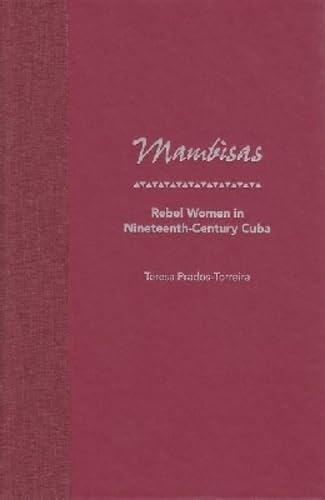

Mambisas rebel women in nineteenth-century Cuba Teresa Prados-Torreira.
Detalles de publicación: Gainesville, Fla. University Press of Florida c2005.Descripción: xii, 186 p. ill. 24 cmISBN:- 0813028523 (alk. paper)
- Women revolutionaries -- Cuba -- History -- 19th century
- Women, Black -- Cuba -- History -- 19th century
- Cuba -- History -- Insurrection, 1868-1878 -- Women
- Cuba -- History -- Revolution, 1895-1898 -- Participation, Female
- Cuba -- History -- Revolution, 1895-1898 -- Women
- Cuba -- History -- 1878-1895
- Cuba -- History -- Insurrection, 1868-1878 -- Participation, Female
- 972.9105082 P896m 22
- F1785 .P83 2005
| Imagen de cubierta | Tipo de ítem | Biblioteca actual | Biblioteca de origen | Colección | Ubicación en estantería | Signatura topográfica | Materiales especificados | Info Vol | URL | Copia número | Estado | Notas | Fecha de vencimiento | Código de barras | Reserva de ítems | Prioridad de la cola de reserva de ejemplar | Reservas para cursos | |
|---|---|---|---|---|---|---|---|---|---|---|---|---|---|---|---|---|---|---|
| Libro | Biblioteca Encarnación Valdés Colección General bev | 972.9105082 P896m (Navegar estantería(Abre debajo)) | Disponible | 80000002286493 |
Descripciones mejoradas de Syndetics:
This book examines a rarely studied yet crucial group of insurgents who fought for Cuban independence from Spain during the 19th century: rebel women known as mambisas . Coming from a wide variety of backgrounds--rich and poor, black and white, rural and urban, young and old--these women determinedly and passionately helped forge Cuba's new national identity. They wrote political pamphlets, carried military correspondence across enemy lines, raised money in New York and raised their families in rebel camps, served as nurses, and fought on the rebel army's front lines. In defeat or victory, imprisonment or exile, their stories are fascinating and compelling. nbsp; nbsp;nbsp;nbsp;nbsp;nbsp;nbsp;nbsp;nbsp;nbsp;nbsp;nbsp; Parallel to the evolution of the Cuban nationalist process, another social phenomenon was occurring--the growth of feminist consciousness. The rebel women's participation in the anticolonial struggle encouraged many of these women to question their role and position within their families and society. In a dramatic shift of cultural attitudes, many women began to view themselves as equal partners with men. nbsp; nbsp;nbsp;nbsp;nbsp;nbsp;nbsp;nbsp;nbsp;nbsp;nbsp;nbsp; This is the first work that explores how women shaped the war and were in turn shaped by it. Mambisas puts a human face on the Cuban struggle for independence, while at the same time examining the connection between nationalism and feminism in 19th-century Cuba. nbsp; nbsp;
Includes bibliographical references (p. [167]-177) and index.