Imagen de Amazon.com

Portada de Syndetics
Imagen de OpenLibrary
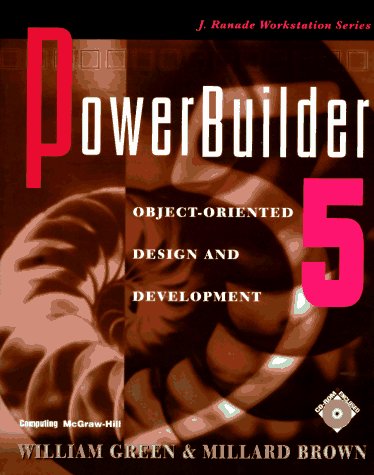
PowerBuilder 5 object-oriented design and development William Green, Millard Brown III.
Series J. Ranade workstation seriesDetalles de publicación: New York McGraw-Hill c1997.Descripción: xi, 631 p. ill. 24 cm. 1 computer laser optical disc (4 3/4 in.)ISBN:- 0070244693 (acid-free paper)
- PowerBuilder five
- 005.2 20
- QA76.76.A65 G73 1997
| Imagen de cubierta | Tipo de ítem | Biblioteca actual | Biblioteca de origen | Colección | Ubicación en estantería | Signatura topográfica | Materiales especificados | Info Vol | URL | Copia número | Estado | Notas | Fecha de vencimiento | Código de barras | Reserva de ítems | Prioridad de la cola de reserva de ejemplar | Reservas para cursos | |
|---|---|---|---|---|---|---|---|---|---|---|---|---|---|---|---|---|---|---|
| Libro | Biblioteca Encarnación Valdés Colección General bev | 005.2 G798p (Navegar estantería(Abre debajo)) | Disponible | 80000002054529 |
Total de reservas: 0
Descripciones mejoradas de Syndetics:
This timely, comprehensive guide to the industry's foremost graphical user interface development tool-Powerbuilder-covers all of the features of the long-awaited Version 5 using an object-oriented approach to design & development. Powerbuilder authorities William Green & Millard Brown deliver an advanced primer on development with Powerbuilder 5, focusing on managerial issues, class library application development, documentation, training, & deployment.
Includes index.
ESTE LIBRO INCLUYE UN DISCO, LO PUEDE SOLICITAR EN EL MOSTRADOR DE CIRCUlACION AL MOMENTO DEL PRESTAMO.
Tabla de contenidos provista por Syndetics
- Preface(p. xvii)
- Foreword(p. xxxvii)
- Acknowledgments(p. xxxix)
- Part I PowerBuilder for Managers(p. 1)
- Introduction(p. 1)
- Part Objectives(p. 4)
- Summary(p. 6)
- Chapter 1. Management Commitment(p. 7)
- Introduction(p. 7)
- Informed Decision Making(p. 7)
- Reusability Is a Goal, Not a Method(p. 8)
- Why PowerBuilder?(p. 8)
- Why Should We Reuse?(p. 9)
- The Myths and the Realities(p. 11)
- How to Maximize Productivity(p. 16)
- Summary(p. 17)
- Chapter 2. Developing a Strategy for Reuse(p. 19)
- Introduction(p. 19)
- Chapter Objectives(p. 19)
- The Reusability Strategy(p. 19)
- Summary(p. 26)
- Chapter 3. Standards and Guidelines(p. 27)
- Introduction(p. 27)
- Chapter Objectives(p. 30)
- Graphical User Interface (GUI) Development Guidelines(p. 30)
- Coding and Naming Guidelines(p. 31)
- Planning Standards(p. 39)
- Design Standards(p. 42)
- Development Guidelines(p. 44)
- Testing Standards(p. 46)
- Documentation Standards(p. 47)
- Deployment Guidelines(p. 48)
- Summary(p. 53)
- Chapter 4. Class Libraries(p. 55)
- Introduction(p. 55)
- Chapter Objectives(p. 55)
- Evaluating Class Libraries(p. 60)
- Where Can You Get More Information?(p. 66)
- What Libraries Are Available?(p. 67)
- Summary(p. 68)
- Chapter 5. Developing Reusable Classes(p. 69)
- Introduction(p. 69)
- Chapter Objectives(p. 69)
- Comparing the Different Approaches to Building Reusable Classes(p. 70)
- Designing Reusable Classes(p. 72)
- Summary(p. 84)
- Chapter 6. Common Reusable Object Libraries(p. 85)
- Introduction(p. 85)
- Chapter Objectives(p. 85)
- How Do These Objects Benefit Your Organization?(p. 86)
- How to Encourage the Paradigm Shift(p. 88)
- How to Construct CRO and CBC Libraries(p. 89)
- Buy-In from Project Teams(p. 90)
- Designing Specifically for CRO Use(p. 91)
- Summary(p. 91)
- Chapter 7. The Pilot Project(p. 93)
- Introduction(p. 93)
- The Selection Process(p. 94)
- Building on the Methodology(p. 96)
- Supporting the Pilot Effort(p. 96)
- Marketing Success(p. 97)
- Summary(p. 98)
- Chapter 8. Building on the Foundation(p. 101)
- Introduction(p. 101)
- Chapter Objectives(p. 101)
- Building on the Foundation(p. 101)
- Supporting the Foundation(p. 104)
- Summary(p. 106)
- Chapter 9. Third-Party Software(p. 107)
- Introduction(p. 107)
- Third-Party Software(p. 107)
- Summary(p. 114)
- Part II Developing a Class Library(p. 115)
- Introduction(p. 115)
- Part Objectives(p. 116)
- Methodologies(p. 117)
- Case Study: Object Framework(p. 119)
- Chapter 10. Requirements Analysis(p. 121)
- Introduction(p. 121)
- Chapter Objectives(p. 121)
- Where to Start(p. 123)
- Library Design Objectives(p. 123)
- Basic Methodology(p. 125)
- Deciding on a Library Architecture(p. 125)
- Agreeing on Naming Conventions(p. 131)
- Gathering Requirements from Developers and Users(p. 131)
- Build the Project Requirements List(p. 133)
- Cost/Benefit Study of Requirements(p. 133)
- Project Scope Definition(p. 133)
- Determine Requirement Activities(p. 135)
- Summary(p. 136)
- Chapter 11. Logical Class Definition (Class Library)(p. 139)
- Introduction(p. 139)
- Chapter Objectives(p. 140)
- Design Objectives(p. 141)
- Defining Logical Classes(p. 141)
- Expanding Activities(p. 144)
- Summary(p. 155)
- Chapter 12. Physical Class Design(p. 157)
- Introduction(p. 157)
- Chapter Objectives(p. 158)
- Maintaining Our Design Objectives(p. 159)
- Adhering to Design Principles(p. 159)
- Physical Class Definition(p. 187)
- Summary(p. 206)
- Chapter 13. Object Construction(p. 207)
- Introduction(p. 207)
- Chapter Objectives(p. 207)
- Object Administration(p. 208)
- Object Construction(p. 210)
- Tips and Techniques(p. 226)
- Summary(p. 246)
- Chapter 14. Object Testing and Documentation(p. 247)
- Introduction(p. 247)
- Chapter Objectives(p. 248)
- Object Testing(p. 248)
- Test Management(p. 256)
- Other Testing Considerations(p. 257)
- Object Documentation(p. 257)
- Summary(p. 259)
- Chapter 15. Productivity Aids(p. 261)
- Introduction(p. 261)
- Chapter Objectives(p. 261)
- Simple Wizards(p. 263)
- Extendible Wizards(p. 263)
- Adding an Object to an Extendible Wizard(p. 270)
- Summary(p. 274)
- Chapter 16. Support Infrastructure Development(p. 277)
- Introduction(p. 277)
- Chapter Objectives(p. 277)
- Goals of the Support Infrastructure(p. 277)
- Components of the Ideal Support Infrastructure(p. 278)
- The Nature of Support(p. 279)
- Assigning Priority(p. 282)
- Developing the Infrastructure(p. 283)
- Handling a Support Request(p. 286)
- Summary(p. 288)
- Chapter 17. Library Maintenance(p. 289)
- Introduction(p. 289)
- Chapter Objectives(p. 289)
- Methodologies Introduced(p. 290)
- The Automatic Correction Facility(p. 290)
- Staged Maintenance(p. 290)
- Maintaining Separate Versions(p. 291)
- Using Regression Testing(p. 291)
- Cleaning Up(p. 292)
- Panic Time(p. 299)
- Summary(p. 300)
- Chapter 18. Library Performance Metrics(p. 301)
- Introduction(p. 301)
- Chapter Objectives(p. 301)
- The Perception of Performance(p. 301)
- Inheritance: Myths and Realities(p. 304)
- Objects and Architecture: The Roles They Play(p. 308)
- Functions and Events: The Debate Continues(p. 308)
- Using the Library Search Path(p. 310)
- The Environment and Its Effect on Performance(p. 310)
- Compile Scenarios(p. 312)
- Benchmarking and Tuning(p. 313)
- What Should You Test?(p. 317)
- Test Results and Analysis(p. 319)
- Summary(p. 319)
- Chapter 19. Retooling Existing Projects(p. 321)
- Introduction(p. 321)
- Chapter Objectives(p. 321)
- Methodologies Introduced(p. 321)
- Justifying the Retrofit(p. 322)
- Estimating a Retroifit(p. 323)
- Implementing a Retrofit: The Tasks(p. 324)
- Summary(p. 333)
- Part III Application Development(p. 335)
- Introduction(p. 335)
- Part Objectives(p. 335)
- Application Development Methodologies(p. 336)
- Summary(p. 343)
- Chapter 20. Application Planning and Management(p. 345)
- Introduction(p. 345)
- Chapter Objectives(p. 345)
- Preparing for Development(p. 346)
- Preparing the Development Project Plan(p. 352)
- Project Management(p. 354)
- Summary(p. 354)
- Chapter 21. Application Logical Design (Requirements Analysis)(p. 355)
- Introduction(p. 355)
- Chapter Objectives(p. 356)
- The Case Study: Base Class Library Administration(p. 356)
- Requirement Analysis(p. 364)
- Logical Class Definition(p. 371)
- Database Definition(p. 372)
- Summary(p. 375)
- Chapter 22. Physical Design(p. 377)
- Introduction(p. 377)
- Chapter Objectives(p. 377)
- Physical Design(p. 378)
- Summary(p. 408)
- Chapter 23. Application Development(p. 409)
- Introduction(p. 409)
- Chapter Objectives(p. 409)
- Constructing Your Libraries(p. 410)
- The Search Path(p. 410)
- Encapsulation Techniques(p. 413)
- Building from a Base(p. 413)
- Building Objects(p. 414)
- GUI Considerations(p. 417)
- Source Control(p. 418)
- PowerBuilder Library Maintenance(p. 418)
- Summary(p. 421)
- Chapter 24. Object Integration(p. 423)
- Introduction(p. 423)
- Chapter Objectives(p. 423)
- Static Service(p. 424)
- Declarative Service(p. 426)
- Dynamic Service(p. 427)
- Accessing Service Functions(p. 429)
- Object Brokers(p. 429)
- Summary(p. 432)
- Chapter 25. Application Testing(p. 433)
- Introduction(p. 433)
- Chapter Objectives(p. 433)
- Using Method Test Plans(p. 434)
- Preparing Test Cases(p. 442)
- Using Automated Testing Tools(p. 446)
- Summary(p. 447)
- Chapter 26. Implementation and Maintenance(p. 449)
- Introduction(p. 449)
- Chapter Objectives(p. 449)
- Implementation(p. 449)
- Maintenance(p. 454)
- Summary(p. 459)
- Part IV Documentation Development(p. 461)
- Introduction(p. 461)
- Part Objectives(p. 462)
- Methodologies Introduced(p. 464)
- Chapter 27. Types of Documents(p. 465)
- Chapter Objectives(p. 465)
- Classifications of Documents(p. 465)
- Analysis Documents(p. 468)
- Design Documents(p. 469)
- Deployment Documents: User and Technical Manuals(p. 471)
- Deployment Documents: The Knowledge Base(p. 472)
- Deployment Documents: On-Line Help(p. 472)
- Summary(p. 472)
- Chapter 28. Documentation Development(p. 473)
- Introduction(p. 473)
- Application User Manuals Based on Navigation Workflow(p. 474)
- Application Technical Manual Based on Object Mapping(p. 478)
- Class Library Technical Manual Based on Class Hierarchy(p. 481)
- Turning Code into Documentation(p. 484)
- Summary(p. 486)
- Chapter 29. Automated Documentation(p. 487)
- Introduction(p. 487)
- Automated Documentation: Concepts and Justification(p. 487)
- Using ORCA(p. 489)
- Summary(p. 519)
- Chapter 30. Developing On-Line Help(p. 521)
- Introduction(p. 521)
- What Is On-Line Help?(p. 521)
- Chapter Objectives(p. 522)
- Why On-Line Help Is Needed(p. 522)
- Development Tools for On-Line Help(p. 523)
- Planning On-Line Help(p. 526)
- Development of On-Line Help(p. 534)
- Integrating Help with PowerBuilder(p. 537)
- Compilation and Distribution(p. 542)
- Useful On-Line Help Topics and Files(p. 542)
- Summary(p. 542)
- Chapter 31. Training(p. 543)
- Introduction(p. 543)
- Chapter Objectives(p. 543)
- Technologies(p. 544)
- Develop or Buy?(p. 545)
- Planning(p. 547)
- Get to Know Your Audience(p. 548)
- Outline Development(p. 549)
- Materials Development(p. 550)
- Workshops(p. 551)
- Delivering Training(p. 552)
- Follow Up(p. 553)
- Summary(p. 553)
- Part V Implementation and Beyond(p. 555)
- Introduction(p. 555)
- What We Cover(p. 555)
- The Implementation Chapters(p. 556)
- Development Tool Maintenance(p. 556)
- Summary(p. 556)
- Chapter 32. Library Implementation(p. 557)
- Introduction(p. 557)
- Implementation Guidelines: The Implementation Checklist(p. 558)
- Library Distribution(p. 568)
- Performance Metrics(p. 570)
- Summary(p. 570)
- Chapter 33. Application Implementation(p. 571)
- Introduction(p. 571)
- Implementation Guidelines(p. 573)
- Software Distribution(p. 594)
- Deployment FAQs(p. 595)
- Summary(p. 602)
- Chapter 34. Maintaining Your Environment: DLLs and Other Three-Letter Words(p. 603)
- Introduction(p. 603)
- Chapter Objectives(p. 603)
- What Is There to Maintain?(p. 604)
- What Is Certification and How Does It Help?(p. 604)
- Anatomy of an Upgrade(p. 607)
- What Is Coming Next?(p. 610)
- Tips and Techniques to Avoid the Impending Disaster(p. 610)
- Summary(p. 612)
- Chapter 35. The Future of Client-Server and PowerBuilder(p. 613)
- Introduction(p. 613)
- Chapter Objectives(p. 613)
- PowerBuilder 5.0(p. 614)
- Multi-Tiered Architecture(p. 615)
- OLE 2(p. 618)
- Windows 95/Windows NT(p. 618)
- Multiplatform Compatibility(p. 619)
- Summary(p. 619)
- Chapter 36. Summary, Conclusions, and Appendix Z(p. 621)
- Introduction(p. 621)
- Summary and Conclusions(p. 622)
- Appendix Z, or What the Publisher Did Not Want You to See(p. 622)
- Index(p. 625)
Notas de autor provistas por Syndetics
William Green is Vice President of client-server technology with RCG Information Technology, a consulting company. He was a contributing author for the books Secrets of the PowerBuilder Masters and PowerBuilder 4.0 Developers Guide. Mr. Green writes a regular column for PowerBuilder Advisor magazine, and also contributes to The PowerBuilder's Developers Journal.Millard Brown is the founder and co-owner of Gateway Systems, a consulting company that specializes in the business use of personal computers. He writes a regular column for PowerBuilder Advisor magazine, and also contributes to The PowerBuilder Developers Journal.