Imagen de portada de Amazon
Imagen de Amazon.com
Imagen de cubierta Syndetics
Portada de Syndetics
Imagen de OpenLibrary

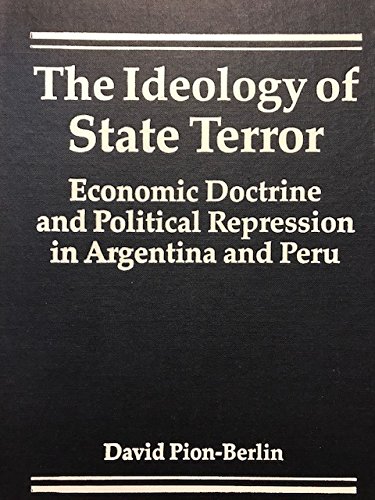
The ideology of state terror economic doctrine and political repression in Argentina and Peru David Pion-Berlin.

Por: Detalles de publicación: Boulder, Colo. L. Rienner Publishers 1989.Descripción: xi, 227 pISBN:
  • 1555871607
Tema(s): Clasificación CDD:
  • 323.4/9/0982 19
Clasificación LoC:
  • JC599.A7 P56 1989
Valoración
    Valoración media: 0.0 (0 votos)
Existencias
Imagen de cubierta Tipo de ítem Biblioteca actual Biblioteca de origen Colección Ubicación en estantería Signatura topográfica Materiales especificados Info Vol URL Copia número Estado Notas Fecha de vencimiento Código de barras Reserva de ítems Prioridad de la cola de reserva de ejemplar Reservas para cursos
Libro Biblioteca de Mayagüez Colección General mb JC599 .A7 P56 1989 (Navegar estantería(Abre debajo)) Disponible 50000001803153
Total de reservas: 0

Originally presented as the author's thesis (doctoral--Univ. of Denver)

Includes index.

Bibliography : p. 207-220.

Reseñas proporcionadas por Syndetics

CHOICE Review

Authoritarian rule in Latin America in the 1970s and early 1980s has been closely examined by many scholars who have concentrated either on the institutional framework of what has come to be called bureaucratic authoritarianism (Guillermo O'Donnell's classic, Modernization and Bureaucratic Authoritarianism, 1979) or on the human tragedy of life in a repressive state (Jacobo Timerman's, Prisoner Without a Name, Cell Without a Number, 1981). Pion-Berlin attempts to bridge the gap between these two approaches with his comparative study of economic policy and repression in Argentina and Peru. He is largely successful in showing how the implementation of structuralist and monetarist fiscal policies in these two countries affected the character of political life. The strength of the book lies in its meticulous discussion of the Argentine and Peruvian approaches to economic crisis and the internal tensions between labor and the military that led to numerous, harsh crackdowns on the civilian population. Although the book suffers somewhat because of an excessively theoretical introduction and a weak conclusion, the author more than makes up for these deficiencies with excellent chapters on the International Monetary Fund's role in Argentina and Peru and on the differences between the structuralist and monetarist schools of fiscal management. Pion-Berlin's study of Argentine and Peruvian economic policy and military control is a valuable and useful work. -M. J. Kryzanek, Bridgewater State College
Compartir
logopucpr-y-vive

Contáctanos

¡Queremos saber de ti!

Tel. 787.841.2000 Ext. 1801

bibliotecavaldes@pucpr.edu

⁣Búscanos en las redes

© 2026 Desarrollado por Ignite Online • All Rights Reserved • Powered by Koha.