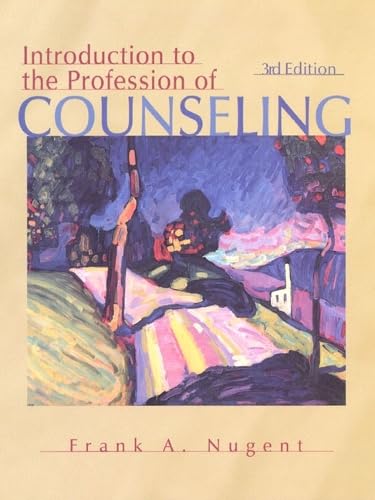
Imagen de portada de Amazon
Imagen de Amazon.com
Imagen de cubierta Syndetics
Portada de Syndetics
Imagen de OpenLibrary

Introduction to the profession of counseling Frank A. Nugent.

Por: Detalles de publicación: Upper Saddle River, N.J. Merrill c2000.Edición: 3rd edDescripción: xxiv, 562 p. ill. 25 cmISBN:
  • 0132609444
Tema(s): Clasificación CDD:
  • 158.3 N966i3 21
Clasificación LoC:
  • BF637.C6 N83 2000
Valoración
    Valoración media: 0.0 (0 votos)
Existencias
Imagen de cubierta Tipo de ítem Biblioteca actual Biblioteca de origen Colección Ubicación en estantería Signatura topográfica Materiales especificados Info Vol URL Copia número Estado Notas Fecha de vencimiento Código de barras Reserva de ítems Prioridad de la cola de reserva de ejemplar Reservas para cursos
Libro Biblioteca Encarnación Valdés Colección General bev 158.3 N966i3 (Navegar estantería(Abre debajo)) Disponible 80000002119587
Total de reservas: 0

Descripciones mejoradas de Syndetics:

Core text for the Introduction to Counseling course offered in counseling, education, psychology, and related departments.

Introduces the field of counseling in a complex, multicultural society. The text is based on a phenomenological, psychosocial, life-span developmental approach, whereby counselors help persons work through situational, developmental transitions and conflicts within a multicultural, social context.

Includes bibliographical references and indexes.

Tabla de contenidos provista por Syndetics

  • I Foundations of Counseling
  • 1 The Current Scene
  • 2 A Historical Perspective
  • 3 Professional, Ethical, and Legal Issues
  • II Counseling Theories and Techniques
  • 4 Human Development Theories and Counseling
  • 5 Counseling Theories
  • 6 Assessment: Tools and Processes
  • 7 Counseling Outreach: Prevention and Intervention
  • III The Counseling Process
  • 8 The Effective Counselor
  • 9 Individual Counseling
  • 10 Family and Marriage Counseling and Therapy
  • 11 Group Counseling
  • 12 Career Counseling
  • 13 Substance Abuse Counseling
  • 14 Counseling in a Pluralistic World
  • 15 Counseling Older Adults
  • IV Counseling Practice
  • 16 Counseling Programs in Elementary Schools
  • 17 Counseling Programs in Secondary Schools
  • 18 Counseling Programs in Colleges and Universities
  • 19 Community Counseling
  • Appendix A ACA Code of Ethics and Standards of Practice
  • Appendix B American Counseling Association
  • Appendix C ACA Divisions and Publications
  • Name Index
  • Subject Index

Extracto provisto por Syndetics

This book presents a comprehensive introduction to professional counseling, a profession that helps individuals, groups, and families work through troubles arising from situational conflicts experienced in everyday life. Professional counselors help people work through transitional periods, an emphasis especially significant during the shift into the new millennium. Counseling as we know it today developed after World War if largely as a result of the need to help veterans cope during their complex transition back into civilian life. Although the original focus was on assisting them with vocational exploration and training, their emotional and developmental needs soon became apparent. Up to that time, mental health treatment had been limited to a narrow range of techniques used either for managing persons who were chronically mentally ill or for exploring the neuroses of persons who were well-to-do. Neither approach was sufficient for working with normally functioning individuals, who, as a whole, have many varieties of complex and troublesome symptoms requiring a wide range of treatment options.I first sensed the need for helping soldiers work through personal conflicts when I was serving in the U.S. Army during World War 11 as an educational reconditioning specialist at Stark General Hospital in Charleston, South Carolina, one of the army hospitals that received wounded soldiers returning from European battlefields. My task was to help prepare them, through a reeducation process, to return to civilian life. But these soldiers, who had physical disabilities, were suffering from profound anxieties about going home. None of us on the staff were prepared to cope with their mental anguish. Physicians, nurses, and physical therapists were helping them recover physically, but psychiatrists and psychologists were working elsewhere in the psychiatric wards. In those days it was thought that only people with mental illness needed psychological help. But times were changing. My work with the wounded soldiers prompted me, after the war, to obtain a master's degree in vocational counseling at Columbia University and, a few years later, a PhD in the newly formed program of counseling psychology at the University of California-Berkeley. Graduate programs such as these in the late 1940s and the 1950s were beginning to respond to the psychological needs of the general population.The profession of counseling psychology, in its infancy after World War 11, evolved from a mix of vocational, developmental, educational, and psychological theories and practices. These divergent roots pulled the fledgling profession in different directions over the years as it struggled to define and redefine itself. Throughout this period my own professional outlook and experience developed as well. The philosophy and content of this text are based on these experiences.Training programs for counselors likewise have evolved, broadened, and deepened: Programs now include a wide variety of counseling approaches based on psychodynamic, humanistic, cognitive, cognitive-behavioral, and postmodern constructivist and social constructionist theories. Programs now attend to the developing self that evolves throughout one's adult life, a self in relation to others, to one's family, and to one's community. Training programs now attend to a person's holistic concerns-the need to nurture one's body, mind, spirit, land soul in a multicultural society. Feminist and ethnic counselors are influencing the profession significantly, particularly in their emphasis on the need to address client and family concerns in relation to the social-cultural context and the community. Increasing numbers of comprehensive neighborhood health care centers have emerged throughout the country to address the needs of individuals and families within the community.Over the decades, as the counseling profession has adapted to the changing needs of society, it has dev Excerpted from Introduction to the Profession of Counseling by Frank A. Nugent, Karyn Dayle Jones All rights reserved by the original copyright owners. Excerpts are provided for display purposes only and may not be reproduced, reprinted or distributed without the written permission of the publisher.
Compartir
logopucpr-y-vive

Contáctanos

¡Queremos saber de ti!

Tel. 787.841.2000 Ext. 1801

bibliotecavaldes@pucpr.edu

⁣Búscanos en las redes

© 2026 Desarrollado por Ignite Online • All Rights Reserved • Powered by Koha.