Imagen de portada de Amazon
Imagen de Amazon.com
Imagen de cubierta Syndetics
Portada de Syndetics
Imagen de OpenLibrary

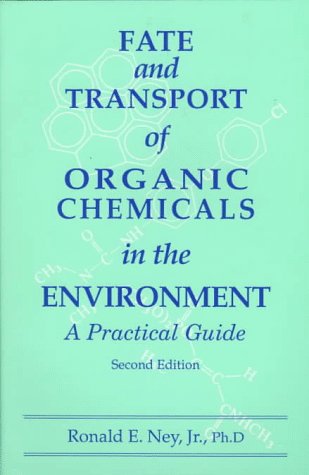
Fate and transport of organic chemicals in the environment a practical guide Ronald E. Ney.

Por: Colaborador(es): Detalles de publicación: Rockville, Md. Government Institutes c1995.Edición: 2nd edDescripción: vii, 302 p. ill. 23 cmISBN:
  • 0865874700
Tema(s): Clasificación CDD:
  • 628.5/2 20
Clasificación LoC:
  • TD196.O73 N49 1995
Valoración
    Valoración media: 0.0 (0 votos)
Existencias
Imagen de cubierta Tipo de ítem Biblioteca actual Biblioteca de origen Colección Ubicación en estantería Signatura topográfica Materiales especificados Info Vol URL Copia número Estado Notas Fecha de vencimiento Código de barras Reserva de ítems Prioridad de la cola de reserva de ejemplar Reservas para cursos
Libro Biblioteca Encarnación Valdés Colección General bev 628.52 N571f2 (Navegar estantería(Abre debajo)) Disponible 80000001868168
Total de reservas: 0

Descripciones mejoradas de Syndetics:

This guide provides a tool to help predict the fate and transport of chemicals in air, water, soil, flora, and fauna. Equations and background information needed for prediction are included. Predictive methods are explained. Data is included on 203 commonly encountered chemical substances.

Rev. ed. of: Where did that chemical go? c1990.

Includes bibliographical references and index.

Reseñas proporcionadas por Syndetics

CHOICE Review

A useful reference, this book details the fate of a host of organic compounds in the environment. In this second edition of his Where Did That Chemical Go? (1990), Ney describes some of the most important physical and chemical properties of a compound: water solubility, vapor pressure, octanol-water partition, hydrolysis, photolysis, and soil sorption. Numerous tables provide a quick reference correlating these properties with their environmental fate. Data on more than 200 compounds is presented. The summary of each compound includes a discussion assessing its likely mode of dissipation in the environment, along with potential exposure routes. Parallels between structure and toxicity are highlighted. Mathematical treatment of bioaccumulation provides a method for predicting whether a chemical will bioaccumulate in animals. Exercises are included in some chapters, allowing the reader to utilize the principles learned to predict the environmental fate of specific compounds. The text is easy to read, although somewhat repetitive. Upper-division undergraduate through faculty and professionals. M. M. Kirchhoff; Trinity College (DC)
Compartir
logopucpr-y-vive

Contáctanos

¡Queremos saber de ti!

Tel. 787.841.2000 Ext. 1801

bibliotecavaldes@pucpr.edu

⁣Búscanos en las redes

© 2026 Desarrollado por Ignite Online • All Rights Reserved • Powered by Koha.