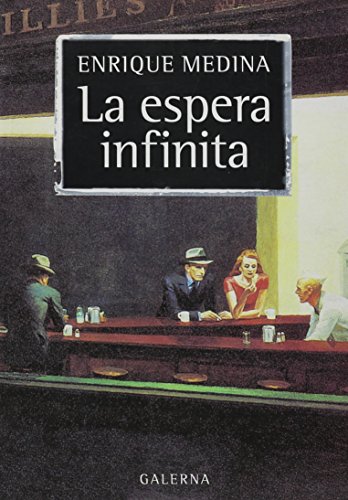

La espera infinita Enrique Medina.
Detalles de publicación: Buenos Aires, Argentina Galerna c2001.Descripción: 346 p. ill. 20 cmISBN:- 9505564155
- 863/.64 21
- PQ7798.23.E28 E76 2001
| Imagen de cubierta | Tipo de ítem | Biblioteca actual | Biblioteca de origen | Colección | Ubicación en estantería | Signatura topográfica | Materiales especificados | Info Vol | URL | Copia número | Estado | Notas | Fecha de vencimiento | Código de barras | Reserva de ítems | Prioridad de la cola de reserva de ejemplar | Reservas para cursos | |
|---|---|---|---|---|---|---|---|---|---|---|---|---|---|---|---|---|---|---|
| Libro | Biblioteca Encarnación Valdés Colección General bev | Ar 863 M491e (Navegar estantería(Abre debajo)) | Disponible | 80000002245259 |
Notas de autor provistas por Syndetics
Probably no other fiction writer in Latin America can match Medina for the directness and violence of his portrayals of the authoritarian social structure underlying Argentina and the whole region. Medina, who has published over 20 novels and collections of stories and newspaper writings, sees himself as a direct heir of Celine and Bukowski. Virtually all of his works were banned during recent military dictatorships in Argentina, but the country's return to democracy in 1983 has not significantly altered Medina's commitment to unmasking moral, political, and social hypocrisy.Medina spent much of his youth in a combined orphanage and reform school, placed there by his working-class mother when she could no longer care for him. His first, largely autobiographical novel, "The Tombs," focuses on a juvenile reformatory as an efficient institution for inculcating the dynamics of tyranny and the violence it breeds. The frequent accusations leveled against Medina of sloppy writing and an obsession with the seamiest realms of human existence may contain an element of truth, but they are arguably beside the point: Medina specifically promotes an unadorned discourse freed from poeticizing impulses and the disingenuous ideologies of the oppressors. Whether a narrative voice, however confident, can reveal the naked truth of life is an interesting problem, but the fact remains that Medina's writing, especially his weekly newspaper columns, have exercised an enormous impact during dark days in Argentina. "The Duke," about a prizefighter turned death squad agent, is one such work. Medina's writing stands in stark contrast to that of Latin American writers who have provided foreign readers with benign magical realist fantasies.
(Bowker Author Biography)