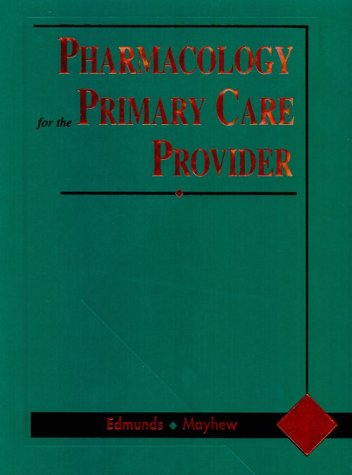

Pharmacology for the primary care provider Marilyn Winterton Edmunds, Maren Stewart Mayhew.
Detalles de publicación: St. Louis, Mo. Mosby c2000.Descripción: xxi, 1001 p. ill. 28 cmISBN:- 0815130929
- 615/.1 21
- RM301.28 .E34 2000
- 2001 F-201
- QV 38
| Imagen de cubierta | Tipo de ítem | Biblioteca actual | Biblioteca de origen | Colección | Ubicación en estantería | Signatura topográfica | Materiales especificados | Info Vol | URL | Copia número | Estado | Notas | Fecha de vencimiento | Código de barras | Reserva de ítems | Prioridad de la cola de reserva de ejemplar | Reservas para cursos | |
|---|---|---|---|---|---|---|---|---|---|---|---|---|---|---|---|---|---|---|
| Libro | Biblioteca Encarnación Valdés Colección General bev | 615.1 E2427p (Navegar estantería(Abre debajo)) | Disponible | 80000002189499 |
Descripciones mejoradas de Syndetics:
PHARMACOLOGY FOR THE PRIMARY CARE PROVIDER is a classroom text designed to transition into the clinical arena as your students begin practicing and prescribing. This practical book brings together the best and most important information from the medical, nursing, and pharmacology disciplines, making it an invaluable learning tool and an important companion text throughout the beginning years of clinical practice. Students will review professional roles and basic practical information about drug categories and what must be considered in prescribing and educating patients. The essentials are distilled into a thorough discussion of drug prototypes. Many helpful charts, figures, and clinical decision-making algorithms aid comprehension.
* Helps students appreciate and understand evidence-based medicine and the development of clinical treatment algorithms and guidelines. * Provides a summary of important things both the practitioner and the patient should know about client-initiated and client-controlled medications (including over-the-counter drugs, alternative medicines, and herbal products.) * Presents detailed information on how to provide effective patient teaching about medications. This information also helps meet some of the accreditation objectives mandated by the National League for Nursing. * Contains pharmacokinetic tables listing the latest information on drug interactions from the Cytochrome P450 enzyme system - new information now being introduced into curriculum for all practitioners. * Lists resources and references in each chapter so students always have access to the latest information.
Includes bibliographical references and index.
Unit 1. Foundations of prescriptive authority -- Unit 2. Economic Foundations of prescriptive authority -- Unit 3. Pharmacokinetics and pharmacodynamics -- Unit 4. The Therapeutic experiment -- Unit 5. Topical agents -- Unit 6. Respiratory drugs -- Unit 7. Cardiovascular drugs -- Unit 8. Gastrointestinal drugs -- Unit 9. Musculoskeletal drugs -- Unit 10. Central Nervous System drugs -- Unit 11. Hormones -- Unit 12. Antiinfectives -- Unit 13. Miscellaneous drugs.
Tabla de contenidos provista por Syndetics
- Unit 1 Foundations of Prescriptive Authority
- Prescriptive Authority: Tradition vs. Change
- The Advanced Practice Nurse: NP, CNM, CRNA and CNS
- Physician Assistants
- Unit 2 Economic Foundations of Prescriptive Authority
- Pharmacoeconomics
- Practical Applications of Pharmacoeconomic Principles
- Unit 3 Pharmacokinetics and Pharmacodynamics
- Pharmacokinetics
- Special Populations: Geriatrics
- Special Populations: Pediatrics
- Special Populations: Pregnancy and Nursing Mothers
- Client Initiated and Client-Controlled Therapy
- Unit 4 The Therapeutic Experiment
- Components of the Therapeutic Experiment
- Critical Decision-Making
- Practical Tips in Writing Prescriptions
- Evidence-Based Medicine
- Development of Clinical Practice Guidelines
- Design and Implementation of Patient Education ·
- Part II Specific Drug Monographs
- Unit 5 Topical Agents
- Ophthalmic Agents
- Topical Agents
- Unit 6 Respiratory Drugs
- Upper Respiratory Infection and Allergic Rhinitis Medications
- Asthma and Chronic Obstructive Pulmonary Disease Medications
- Unit 7 Cardiovascular Drugs
- Digoxin and Congestive Heart Failure
- Nitrates and Coronary Artery Disease
- Diuretics and Hypertension
- Beta Blockers
- Calcium Channel Blockers
- ACE Inhibitors
- Antiadrenergic and Peripheral Vascular
- Antiarrhythmics
- Antilipidemics
- Anticoagulants
- Unit 8 Gastrointestinal Drugs
- Antacids
- Histamine Blockers
- Laxatives
- Antidiarrheals
- Other Gastrointestinal Medications
- Unit 9 Musculoskeletal Drugs
- Acetaminophen
- Aspirin and Non-Steroidal and Anti- Inflammatory Drugs (NSAIDS)
- Slow-Acting Anti-Rheumatic Drugs (SAARDS)
- Gout
- Muscle Relaxants
- Unit 10 Central Nervous System Drugs
- CNS Stimulants
- Analgesics
- Migraine
- Antiemetics
- Anti-Anxiety
- Antidepressants
- Antipsychotics
- Anticonvulsants
- Antiparkinsons
- Unit 11 Hormones
- Contraceptives
- Hormone Replacement Therapy
- Osteoporosis Treatment
- Steroids
- Thyroid
- Antidiabetic
- Unit 12 Anti-Infectives
- Penicillins
- Cephalosporins
- Tetracyclines
- Macrolides
- Fluoroquinolones
- Aminoglycoside
- Sulfonamides
- Antitubercular
- Antifungal
- Antiretroviral
- Other Anti-Infectives
- Unit 13 Miscellaneous Drugs
- Immunizations and Other Biologicals
- Smoking Deterrents
- Urinary Tract
- Vitamins and Minerals
- Miscellaneous Drugs