Imagen de Amazon.com

Portada de Syndetics
Imagen de OpenLibrary
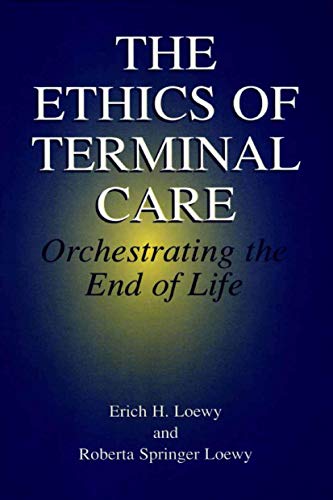
The ethics of terminal care orchestrating the end of life Erich H. Loewy and Roberta Springer Loewy.
Detalles de publicación: New York Kluwer Academic / Plenum Publishers c2000.ISBN:- 0306464357 (alk. paper)
- R 726 .L59 2000
| Imagen de cubierta | Tipo de ítem | Biblioteca actual | Biblioteca de origen | Colección | Ubicación en estantería | Signatura topográfica | Materiales especificados | Info Vol | URL | Copia número | Estado | Notas | Fecha de vencimiento | Código de barras | Reserva de ítems | Prioridad de la cola de reserva de ejemplar | Reservas para cursos | |
|---|---|---|---|---|---|---|---|---|---|---|---|---|---|---|---|---|---|---|
| Libro | Biblioteca de Derecho Mons. Fremiot Torres Oliver Colección General biblioteca derecho | R 726 .L59 2000 (Navegar estantería(Abre debajo)) | Disponible | 70000000623962 |
Total de reservas: 0
Descripciones mejoradas de Syndetics:
Today we have more control over how we live and how we die than we ever had before. This fact has produced many ethical problems. While much about life is biologically determined, much else is determined by the social circumstances surrounding it. Unfortunately, little energy is spent dealing with the social and psychological factors within which the medical/biological factors are imbedded. In this volume the authors examine some of the medical social and psychological conditions which affect the way we die.
Important topics covered include attitudes toward death; suicide, assisted suicide and euthanasia; hospice and pain management. This volume will be of interest to all who work with terminally ill patients.
Tabla de contenidos provista por Syndetics
- 1. Introduction(p. 1)
- Endnotes and References(p. 4)
- 2. Dying, Death and Attitudes(p. 5)
- Introduction(p. 5)
- The Social Context in America Today(p. 6)
- What We Think Dying and Being Dead is Like(p. 11)
- Physicians' Obligations(p. 17)
- The Centrality of Suffering(p. 18)
- Endnotes and References(p. 21)
- 3. Questions, Methods and the Problem of Autonomy(p. 23)
- A Brief Word about Theory(p. 23)
- Concepts of Life and Art(p. 26)
- Identified and Unidentified Lives at the End of Life(p. 28)
- Autonomy, Competency and Decisional Capacity(p. 30)
- Extended Autonomy and Advance Directives(p. 39)
- The Questions we Need to Ask, the Method we Might Use(p. 45)
- Judging According to the Patient's Interests and Setting Other Interests Aside--Is that Possible?(p. 48)
- Ethics Committees and Ethics Consultants(p. 50)
- Endnotes and References(p. 52)
- 4. The Concept of Orchestrating Death(p. 55)
- Introduction(p. 55)
- Conceptual, Linguistic and Educational Problems(p. 62)
- Relationships and talking with patients(p. 66)
- The Score and the Music(p. 71)
- Conductors(p. 74)
- Players(p. 76)
- The Concert Hall(p. 79)
- Conflicts(p. 82)
- Putting It all Together(p. 83)
- Endnotes and References(p. 86)
- 5. Sudden Death and the End of Life(p. 89)
- Introduction(p. 89)
- Orchestration in Situations of Sudden or Rapid Death(p. 90)
- Surrogates(p. 92)
- Futility(p. 95)
- Autopsy(p. 99)
- Organ Donation(p. 100)
- Closing Remarks(p. 102)
- Endnotes and References(p. 103)
- 6. Suicide, Assisted Suicide and Euthanasia(p. 105)
- Introduction(p. 105)
- Definition(p. 107)
- Suicide and Letting Die(p. 109)
- Terminal Sedation and Self-Starvation(p. 111)
- Harming Patients(p. 113)
- Separate Questions in the Euthanasia Debate(p. 114)
- Holocausts, Genocides and What Can Be Learned(p. 124)
- Resolution(p. 126)
- Endnotes and References(p. 128)
- 7. Hospice and the End of Life(p. 133)
- Introduction(p. 133)
- Hospice: Philosophical Ideals and Practical Realities(p. 136)
- The Patient's "Good," the "Good" Patient and the Pitfalls of Orchestrating Clinical Expertise(p. 145)
- Endnotes and References(p. 151)
- 8. Challenges for Tomorrow: Where Do We Go from Here?(p. 153)
- Educating Health Care Professionals(p. 153)
- Social Problems, Medicine and Gaining Access(p. 157)
- An Illustrative Case with Comments(p. 160)
- Summing Up(p. 170)
- Endnotes and References(p. 172)
- Index(p. 175)