Imagen de Amazon.com

Portada de Syndetics
Imagen de OpenLibrary
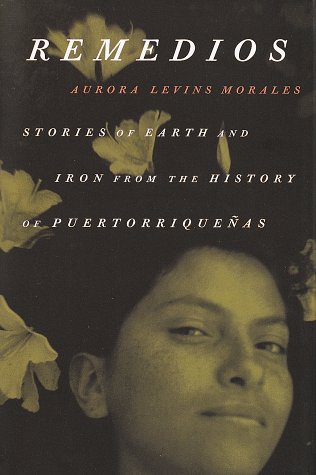
Remedios stories of earth and iron from the history of Puertorriqueñas Aurora Levins Morales.
Detalles de publicación: Boston Beacon Press c1998.Descripción: xxxvi, 235 p. 23 cmISBN:- 0807065161 (cloth)
- 808.8/99287 21
- PN6071.W7 M67 1998
| Imagen de cubierta | Tipo de ítem | Biblioteca actual | Biblioteca de origen | Colección | Ubicación en estantería | Signatura topográfica | Materiales especificados | Info Vol | URL | Copia número | Estado | Notas | Fecha de vencimiento | Código de barras | Reserva de ítems | Prioridad de la cola de reserva de ejemplar | Reservas para cursos | |
|---|---|---|---|---|---|---|---|---|---|---|---|---|---|---|---|---|---|---|
| Libro ab PR | Biblioteca Mons. Iñaki Mallona (Arecibo) Colección de Puerto Rico | 808.8 L665r (Navegar estantería(Abre debajo)) | Disponible | 60000003074439 |
Total de reservas: 0
Descripciones mejoradas de Syndetics:
Replete with herbal lore & tales of heroines whose work & words have provided sustenance to generations, Remedios offers the curative history of the many women & cultures who have met at the crossroads of the island of Puerto Rico.
Includes bibliographical references (p. [232]) and index.
Tabla de contenidos provista por Syndetics
- Agradecimientos(p. xvii)
- Preface Yerba Bruja(p. xxiii)
- Introduction Revision(p. xxxi)
- Bisabuelas
- Gingko(p. 1)
- First Mother--Sub-Saharan Africa: -200,000(p. 1)
- Women of Yams--West Africa: -50,000 to 200(p. 3)
- -50,000: Kindling--African Continent(p. 3)
- -8,000: Forests--Nigeria(p. 4)
- Wild Yam(p. 5)
- -4,000: Colors--West Africa(p. 6)
- -2,000 to 0: Bantu Women Cut Bananas--Africa(p. 6)
- Banana Peel(p. 7)
- 200: Salt--Northwest Africa(p. 7)
- Women of Bread--The Mediterranean: -12,000 to -1,500(p. 8)
- -12,000: The Deer Mother--El Juyo, Spain(p. 8)
- -6,500: The Peaceful Land--Southeastern Europe(p. 10)
- -6,000: Pig Mother--Europe(p. 12)
- -3,500: Mare's Milk--Ukraine(p. 13)
- -2,700 to -2,000: Deserts--North Africa(p. 15)
- -1,500: Cutting--Northeast Africa(p. 16)
- Morivivi(p. 18)
- Scars(p. 19)
- Women of Yuca--America: -15,000 to 500(p. 20)
- -15,000: Pikimachay--The Andes(p. 20)
- Potatoes(p. 21)
- -4,000: Rainforests--Upper Amazon and Orinoco Basins(p. 22)
- -4,000: Corn--MesoAmerica(p. 23)
- -1,000 to 500: Temples--Central and North America(p. 24)
- Tobacco(p. 24)
- 0: City Girls: Teotihuacan, Mexico(p. 25)
- 0 to 500: Turtle Women, Women of Trees--The Caribbean(p. 26)
- Abuelas
- West African Women: 600 to 1400(p. 27)
- 600 to 1400: Market Women--West Africa(p. 27)
- 700: Not All Tribes Build Upward Toward the Sky--Nigeria(p. 28)
- 600 to 1400: Slave Road--Africa(p. 29)
- 1352: Ibn Batuta Writes Home--Mali(p. 30)
- 1440: People, Pepper, Ivory, Gold--West Africa(p. 31)
- American Women: 700 to 1400(p. 32)
- 700: Mayas--MesoAmerica(p. 32)
- 975: Against the Knife--Mexico(p. 32)
- 1000: Bone and Hair and Shard--North America(p. 33)
- 1400: Caciques--Boriken(p. 34)
- Mediterranean Women: 600 to 1400(p. 35)
- 620: Arabian Nights--Arabian Peninsula(p. 35)
- 900 to 1300: Bread, Oil, Wine--Christian Spain(p. 38)
- Olive Oil(p. 40)
- 900 to 1200: Poets of Al-Andalus--Muslim Spain(p. 41)
- 1097: Fire at the Gates--Syria(p. 43)
- 900 to 1400: Juderias--Iberian Peninsula(p. 44)
- Pomegranates(p. 46)
- 1350: Working Santiago de Compostela--Galicia, Spain(p. 46)
- Premonitions(p. 47)
- 1478: Unfortunate Isles--Canary Islands(p. 47)
- 1482: Elmina Castle--Ghana(p. 48)
- 1487: Maleus Maleficarum--Germany(p. 49)
- 1490: Stolen Women(p. 50)
- Bad Dreams: The Prophets Speak--The Americas(p. 51)
- 1490: Guabancex Stirs the Pot--Boriken(p. 52)
- Calendars(p. 53)
- Discovery
- Huracan: 1492-1600
- Bitters(p. 64)
- 1492: Penetration(p. 64)
- 1492: Lamento sefardita--Spain(p. 66)
- Romero(p. 66)
- 1493 to 1511: Leyendas--Puerto Rico(p. 67)
- 1509 to 1521: La Marcaida--Cuba and Mexico(p. 77)
- 1514: Manikongo Affonso's School for Bakongo Girls--Kongo, West Africa(p. 79)
- 1515: Toa(p. 80)
- 1515: Pinones(p. 82)
- 1515: Pinon Shopping List(p. 83)
- 1515: Platano(p. 83)
- 1515: Naborias--The Names of the Captives(p. 84)
- 1519: The Speckled Death--Central America and the Caribbean(p. 86)
- Alegria(p. 87)
- 1525: Snakeskin--Mexico(p. 88)
- 1526: Conejo's Brothel--San Juan, Puerto Rico(p. 89)
- 1534: Slave Mothers--Puerto Rico(p. 90)
- 1547: Limpieza--The Spanish Empire(p. 92)
- 1550: Conversas at the Stake--Lorca, Spain(p. 93)
- Calendula(p. 95)
- 1560: Jigonsaseh--New York State(p. 95)
- 1563: Indiera(p. 96)
- 1564: Dona Gracia--Europe and the Ottoman Empire(p. 97)
- 1575: Teresa de Avila Counts Demons(p. 99)
- 1592: Flames--Puerto Rico(p. 100)
- Jenjibre: 1600-1699
- 1600: Catalina Steals Away--Spain and Panama(p. 103)
- 1605: A Seed Falls in Pernambuco--Brazil(p. 104)
- 1606: Caribes(p. 105)
- 1607: Wild West(p. 106)
- 1608: Gingerbread--San Juan de Puerto Rico and England(p. 107)
- Ginger(p. 107)
- 1618: Nzinga's Stool--Angola(p. 108)
- 1618: Witches' Stool--Western Europe(p. 109)
- 1623: Ana de Mendoza Unpacks--San Juan de Puerto Rico(p. 110)
- 1625: S/he--Latin America(p. 111)
- 1629: Manahatta--Mouth of the Hudson River(p. 113)
- 1630: The Weavers of Dean--England(p. 115)
- 1635: Playa Boqueron(p. 115)
- 1636: I Believe It Is No Sin--Galicia(p. 116)
- 1640: Paula de Eguiluz--Colombia(p. 117)
- 1647: Stuyvesant--New Amsterdam(p. 118)
- 1648: The House of Peace(p. 119)
- 1650: On the Road to Veracruz--Mexico(p. 119)
- 1663: Nzinga, the Warrior Queen--Angola(p. 121)
- 1664: Decree(p. 122)
- 1694: The Death of Palmares--Brazil(p. 123)
- Llanten(p. 123)
- 1695: News of Sor Juana--Mexico(p. 124)
- 1695: The Weavers of Tayasal--Guatemala(p. 125)
- Parteras: 1700-1798
- 1700: The Forests Sail East--New England(p. 127)
- White Pine(p. 127)
- 1701: The Country of Women(p. 128)
- 1706: Beatrice of Kongo--Central Africa(p. 129)
- 1714: Cangrejos(p. 130)
- 1720: Cecilia Ortiz(p. 131)
- 1728: Nannytown--Jamaica(p. 132)
- 1736: The First Cafeto(p. 133)
- 1741: Many-Headed Hydra--New York(p. 134)
- 1748: Escapees--St. Croix(p. 134)
- 1765: The Song of the Forest(p. 135)
- 1777: If Fray Inigo Had a Sister(p. 136)
- 1786: Parbulos(p. 137)
- 1788: Reverse Slavery--Ste. Domingue(p. 139)
- Anamu(p. 140)
- Lazos: 1798-1898
- Melao(p. 141)
- 1804: News from Haiti(p. 141)
- 1817: War Widows(p. 142)
- Yerba Buena(p. 143)
- 1820: Maestra Cordero(p. 144)
- 1824: We Treated Them Well(p. 145)
- 1824: Runaways(p. 147)
- 1825: Flora Tristan Reads in Bed--Paris, France(p. 148)
- 1833: Maria Bibiana Writes(p. 149)
- 1833: Voyages--Peru(p. 150)
- 1833: Maria Barbanera(p. 151)
- 1834: Autos de Anti-Fe--Spain(p. 152)
- Yellow Dock(p. 153)
- 1844: Some Lives Burn Like Quick Flame--France(p. 154)
- 1868: Francisca Brignoni(p. 154)
- 1873: The Freedwomen Contract Themselves(p. 155)
- 1875: Campos de soledad--Galicia, Spain(p. 156)
- 1880: Tortures--Tennessee and Puerto Rico(p. 157)
- 1886: Damas(p. 158)
- 1895: Charcas, or, the True Story of Cafe au Lait(p. 158)
- 1897: Luisa in Love(p. 159)
- 1895: Mercedes a caballo(p. 160)
- 1898 to 1900: Guabancex Again(p. 160)
- Aguacero: 1899-1929
- 1899: Ghost Dancing(p. 162)
- 1900: Civilization--Europe(p. 165)
- 1901: The Death Train--Southwestern United States(p. 165)
- 1903: Postcards of Colonialism(p. 166)
- 1909: La otra Aurora(p. 167)
- Ruda(p. 168)
- 1909: Lessons(p. 168)
- 1913: Opiniones(p. 169)
- 1914: Delmira--Montevideo, Uruguay(p. 171)
- 1917: War Effort(p. 172)
- 1918: Lavenderas(p. 172)
- 1918: Vida alegre(p. 173)
- Maguey(p. 174)
- 1919: Lost Bird--Western United States(p. 174)
- 1921: Harlem--New York(p. 176)
- 1923: Tuberculosis(p. 176)
- Mullein(p. 177)
- 1927: Pasodoble(p. 178)
- 1929: Journey(p. 178)
- 1929: Hechos desconocidos(p. 179)
- Derrumbe: 1930-1954
- 1930: El barrio(p. 181)
- 1931: Tiempo muerto(p. 182)
- Malanga(p. 183)
- 1933: Pura Belpre--New York(p. 183)
- 1934: Needleworkers(p. 184)
- 1935: Bread upon the Waters(p. 185)
- 1935: Julia in Naranjito(p. 187)
- Naranja(p. 188)
- 1937: The Jane Speed Bookstore--Birmingham, Alabama(p. 188)
- 1937: Madre patria(p. 189)
- 1942: Wartime at the PO--New York(p. 190)
- 1943: The Ghetto Comes to the Barrio--New York(p. 191)
- 1944: Nuestra guerra--New York(p. 192)
- 1948: Julia Drinks a River of Sorrow--New York(p. 193)
- 1950: Threads--New York, Puerto Rico, Illinois(p. 194)
- 1950: Stories(p. 196)
- 1953: No nascas--Puerto Rico and the United States(p. 198)
- 1953: The Bad Mother--New York(p. 200)
- 1953: 105th and Fifth Avenue--New York(p. 201)
- 1953: Dime Capitan(p. 202)
- 1954: Freedom Songs(p. 204)
- Milk Thistle(p. 204)
- 1954: Transition(p. 205)
- La Botanica (Sources)(p. 209)
- Glossary of Selected Words(p. 229)
- Medicine Cabinet(p. 232)
- Index of Historical Persons(p. 233)