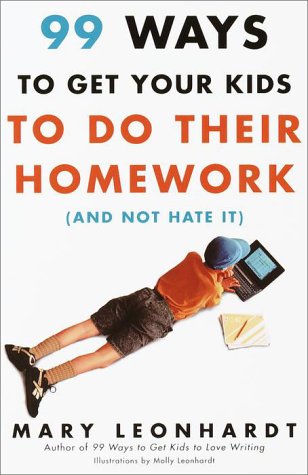
Imagen de portada de Amazon
Imagen de Amazon.com
Imagen de cubierta Syndetics
Portada de Syndetics
Imagen de OpenLibrary

99 ways to get your kids to do their homework (and not hate it) Mary Leonhardt.

Por: Detalles de publicación: New York Three Rivers Press c2000.Edición: 1st editionDescripción: 132 p. ill. 22 cmISBN:
  • 0609806386 (pbk.)
Otro título:
  • Ninety-nine ways to help your kids do their homework
Tema(s): Clasificación CDD:
  • 1st 372.13 L584n
Clasificación LoC:
  • LB1048 .L46 2000
Valoración
    Valoración media: 0.0 (0 votos)
Existencias
Imagen de cubierta Tipo de ítem Biblioteca actual Biblioteca de origen Colección Ubicación en estantería Signatura topográfica Materiales especificados Info Vol URL Copia número Estado Notas Fecha de vencimiento Código de barras Reserva de ítems Prioridad de la cola de reserva de ejemplar Reservas para cursos
Libro Biblioteca de Mayagüez Colección General mb LB1048 .L46 2000 (Navegar estantería(Abre debajo)) Disponible 50000002130747
Total de reservas: 0

Descripciones mejoradas de Syndetics:

Every child will balk at homework at some point during elementary or high school. In 99 Ways to Get Your Kids to Do Their Homework , Mary Leonhardt shows you how to encourage the student in your household to confront that hated chore as painlessly as possible. Her lighthearted but experienced advice will help schoolchildren (and parents!) everywhere develop a healthy attitude about homework and deal with specific homework problems at each level in their education. Effective, succinct, and workable, these practical pointers guide you and your children as they go from the elementary grades to high school. TEST.

Find the balance between supporting your children and helping them take responsibility for their own homework.
Help your children develop consistent and timely work habits.
Instill in your children a sense of accomplishment that will help them maintain good study habits through and beyond their school years.

Leonhardt balances constructive, helpful recommendations with a healthy, down-to-earth style to help your child not only excel in school, but also actually enjoy it!

Extracto provisto por Syndetics

Introduction I've been a teacher for close to thirty years and have written a number of books about how to get kids to love reading and writing. But I think that's too ambitious a goal for homework. Some homework children can easily love -- assignments that respect their talents, assignments that absorb them and give them the satisfaction of completing an exciting, interesting task -- but much homework is pretty dreary. Kids are made to fill out worksheets, write rigid essays, and memorize vocabulary words. Boring. The dog ate it. ZZZzzzzzz. We all know the conventional advice for getting kids to do this stuff. We should set up a daily schedule for them to follow, make sure they have a quiet area for study, help them keep track of assignments, give them a hand with any difficult work, and check to make sure everything is finished. And, I guess, with some children this routine works well. I always pictured these happy, compliant children, these competent, successful parents, in my mind when I was trying to get my children to do homework. Homework never worked like that in my house. No, my three children did homework when and where they felt like it -- sometimes in front of the television, sometimes in the car on the way to school, sometimes in the kitchen surrounded by comic books and jam sandwiches . . . and sometimes never. I won't soon forget the eighth-grade teacher who informed me that my daughter was getting a D in English because she wasn't answering the comprehension questions, or doing the plot webs, for the stories they were reading in class. "I know she's reading the stories," the teacher told me, "because she always takes part in the class discussions on them." "Then, ah . . ." I ventured to ask, "what's the point of the comprehension questions?" "To make sure they're reading the story," the teacher said promptly, and with no trace of irony. So I went home and asked Molly why she wasn't doing the questions. "The stories are interesting, but the questions are dumb," she informed me. "And the plot web? What's a plot web?" I asked. Somehow, twenty-two years of teaching high-school English had left me without a knowledge of plot webs. "I don't know. I don't do them," she said definitively. And she didn't. But you know what? Because she loved reading, and was a very good writer, she did just fine in her high-school English courses. It turned out that she had all the essentials in place for doing well in school, and when the dumb assignments dropped out, as they tend to do the higher up the education ladder kids climb, she didn't have a problem with homework. Not only that, the independent mind that occasionally got her in trouble in elementary and middle school helped her in high school, where she was able to produce some very sophisticated work. I wasn't surprised, because I understood by then that there was boring, mindless homework -- and there was real homework. All of my children tended to do the real homework, and I had decided long ago that that was enough. It enabled me to accept their sometimes less-than-stellar report cards with equanimity. I knew they were acquiring all of the necessary skills that real homework teaches. And that's what this book is about. The trick to homework, I've figured out, is not to let the bad drive out the good. You can't let the tedium and mindlessness of bad homework assignments contaminate the whole idea of independent work. While it's very important -- crucial for later success in college and in the workplace -- for children to acquire the independent habits of work that good school assignments produce, it isn't important that parents hang over children and make sure they do a perfect job on every random worksheet that comes home. In fact, it's counterproductive, because it ensures that kids will begin to hate all homework. So what should parents do? Should they give help? How much? When? These are the issues this book will try to unravel. In addition, I've included some interviews with high-school students who have had very different experiences with homework over the years. You'll see that almost all kids have ups and downs where homework is concerned, and I think you'll also see that the best thing for a parent to do -- in almost all situations -- is to give friendly support. Attempts at coercion usually backfire, and end up doing more harm than good. I'd love to hear from you with more tips or feedback. You can E-mail me at maryl@tiac.net. Excerpted from 99 Ways to Get Your Kids to Do Their Homework: And Not Hate It by Mary Leonhardt All rights reserved by the original copyright owners. Excerpts are provided for display purposes only and may not be reproduced, reprinted or distributed without the written permission of the publisher.

Notas de autor provistas por Syndetics

Mary Leonhardt has taken her enjoyment of literature into the classroom and onto the printed page. Her Parents Who Love Reading, Kids Who Don't, along with her Keeping Kids Reading, are intended to encourage young people to enjoy and appreciate the gift of reading.

Ms. Leonhardt, who holds an MA in English from Brown University, has taught at many schools, including a convent school in California, Concord-Carlisle High School in Massachusetts, and several Virginia high schools while her husband was serving there with the U.S. Navy. She has 20+ years of experience in the teaching of English; her graduate work in learning difficulties at Old Dominion University helped her better understand the difficulties many students have with reading.

Within her own family Ms. Leonhardt can relate to reading troubles. Her son took special education reading classes until the ninth grade. Due to a large extent to his mother's having read aloud to him his reading greatly improved. He recently enrolled at the University of Maine.

With an emphasis on the appreciation of literature, Mary Leonhardt sees enjoyment as the key. It doesn't matter if the enjoyment comes from comic books, juvenile thrillers, or more "traditional/classical" literature.

(Bowker Author Biography)

Compartir
logopucpr-y-vive

Contáctanos

¡Queremos saber de ti!

Tel. 787.841.2000 Ext. 1801

bibliotecavaldes@pucpr.edu

⁣Búscanos en las redes

© 2026 Desarrollado por Ignite Online • All Rights Reserved • Powered by Koha.