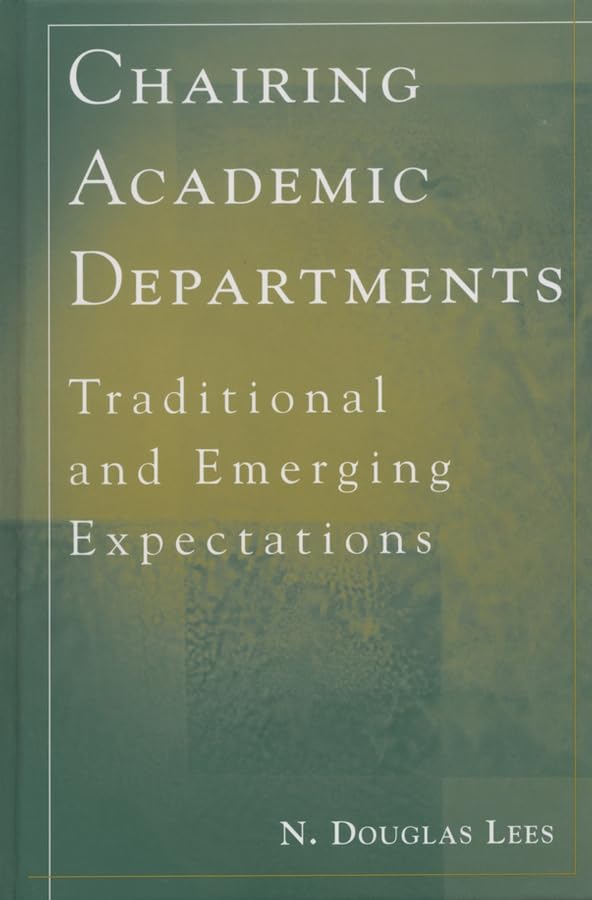

Chairing academic departments traditional and emerging expectations N. Douglas Lees.
Detalles de publicación: Bolton, Mass. Anker Pub. Co. c2006.Descripción: xiii, 338 p. 24 cmISBN:- 193337103X
- 9781933371030
- 378.1/110973 22
- LB2341 .L285 2006
| Imagen de cubierta | Tipo de ítem | Biblioteca actual | Biblioteca de origen | Colección | Ubicación en estantería | Signatura topográfica | Materiales especificados | Info Vol | URL | Copia número | Estado | Notas | Fecha de vencimiento | Código de barras | Reserva de ítems | Prioridad de la cola de reserva de ejemplar | Reservas para cursos | |
|---|---|---|---|---|---|---|---|---|---|---|---|---|---|---|---|---|---|---|
| Libro | Biblioteca Encarnación Valdés Colección General bev | 378.111 L4871c (Navegar estantería(Abre debajo)) | Disponible | 80000002309733 |
Descripciones mejoradas de Syndetics:
What role does the position of department chair occupy in higher education today? Once characterized as largely a management function, the 21st-century department chair is now facing a host of emerging challenges that require additional skills and fresh approaches to fulfilling the role.
In Chairing Academic Departments , the author offers experience-based suggestions for new, existing, and potential chairs as they face a higher education enterprise that is undergoing significant change. While acknowledging that many traditional responsibilities and expectations will remain unaltered, the author also identifies several dynamic functions-from entrepreneurial work and fundraising, faculty evaluation and motivation, student recruitment and retention, problem solving, and interpersonal interactions such as advising, meditating, and mentoring.
The author navigates the changes arising in the role of department chair by offering valuable insight in the following areas:
Characteristics of effective department chairs How to work with, and advocate for, internal constituents Managing and disseminating information Recruiting, retaining, and evaluating faculty Fiscal responsibility and strategic planning Benefits of serving as department chair Planning to exit the chair positionWhile the position of department chair will continue to evolve, Chairing Academic Departments equips readers with the situational understanding and practical advice they need to meet the demands of tomorrow.
Includes bibliographical references (p. 335-336) and index.
The position of academic department chair -- The department chair: then, now, and soon to be -- Characteristics of effective chairs -- Remaining professionally viable while chair -- The chair as keeper of information -- Quality assurance -- Staying legal -- Staying sane -- Working with internal constituents -- Communication -- Working with faculty -- Working with the dean and other administrators -- Interacting with students -- Working with faculty -- Staffing the academic department -- Recruiting and retaining faculty -- Faculty culture -- Guiding faculty careers -- Faculty evaluation -- The challenge of change -- Fiscal constraints in higher education -- Strategic planning -- The chair as campus entrepreneur -- The chair as external entrepreneur -- Preparing to lead change -- Understanding and overcoming resistance to change -- Next steps -- Chair selection and development -- Exiting the chair position -- The benefits to serving as chair.
Tabla de contenidos provista por Syndetics
- About the Author
- Preface
- PartI The Position of Academic Department Chair
- 1 The Department Chair: Then, Now, and Soon to Be
- 2 Characteristics of Effective Chairs
- 3 Remaining Professionally Viable While Chair
- 4 The Chair as Keeper of Information
- 5 Quality Assurance
- 6 Staying Legal
- 7 Staying Sane
- PartII Working With Internal Constituents
- 8 Communication
- 9 Working With Faculty
- 10 Working With the Dean and Other Administrators
- 11 Interacting With Students
- PartIII Working With Faculty
- 12 Staffing the Academic Department
- 13 Recruiting and Retaining Faculty
- 14 Faculty Culture
- 15 Guiding Faculty Careers
- 16 Faculty Evaluation
- PartIV The Challenge of Change
- 17 Fiscal Constraints in Higher Education
- 18 Strategic Planning
- 19 The Chair as Campus Entrepreneur
- 20 The Chair as External Entrepreneur
- 21 Preparing to Lead Change
- 22 Understanding and Overcoming Resistance to Change
- PartV Next Steps
- 23 Chair Selection and Development
- 24 Exiting the Chair Position
- 25 The Benefits of Serving as Chair
- Bibliography
- Index
Notas de autor provistas por Syndetics
N. Douglas Lees is professor and chair of biology at Indiana University-Purdue University Indianapolis (IUPUI). He received his undergraduate degree in biology from Providence College and his Ph.D. in biological sciences from Northwestern University. Upon arriving at IUPUI in the early 1970s, he began a journey of simultaneous career and institution building. He began a journey of simultaneous carrier and institution building. He has witnessed and participated in the conversion of a pair of two-year feeder campuses into an urban research university that will serve as a model for the future.His personal research has focused on sterol biosynthesis in fungi with an interest in identifying new targets for the development of antifungal drugs. Since being named chair in 1992, he has developed interests in chair leadership and several other difficult issues facing higher education in this current era of change. Away from the office, Doug and his wife Stephanie are occupied with raising and educating their four children, who range in age from 13 to 24.