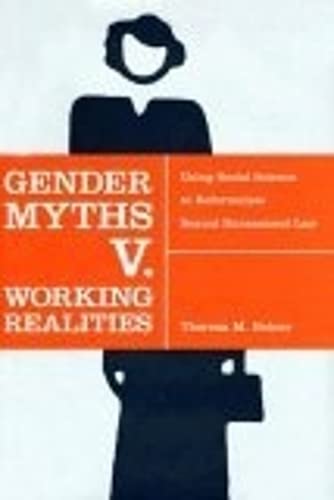

Gender myths v. working realities using social science to reformulate sexual harassment law Theresa M. Beiner.
Detalles de publicación: New York New York University Press c2005.Descripción: x, 262 p. 24 cmISBN:- 0814799175 (cloth : alk. paper)
- 9780814799178 (cloth : alk. paper)
- Gender myths versus working realities
- 344.7301/4133 22
- KF 3467 .B44 2005
| Imagen de cubierta | Tipo de ítem | Biblioteca actual | Biblioteca de origen | Colección | Ubicación en estantería | Signatura topográfica | Materiales especificados | Info Vol | URL | Copia número | Estado | Notas | Fecha de vencimiento | Código de barras | Reserva de ítems | Prioridad de la cola de reserva de ejemplar | Reservas para cursos | |
|---|---|---|---|---|---|---|---|---|---|---|---|---|---|---|---|---|---|---|
| Libro | Biblioteca de Derecho Mons. Fremiot Torres Oliver Colección General biblioteca derecho | KF 3467 .B44 2005 (Navegar estantería(Abre debajo)) | Disponible | 70000000832787 |
Descripciones mejoradas de Syndetics:
Both the courts and the public seem confused about sexual harassment--what it is, how it functions, and what sorts of behaviors are actionable in court. Theresa M. Beiner contrasts perspectives from social scientists on the realities of workplace sexual harassment with the current legal standard. When it comes to sexual harassment law, all too often courts (and employers) are left in the difficult position of grappling with vague legal standards and little guidance about what sexual harassment is and what can be done to stop it. Often, courts impose their own stereotyped view of how women and men "ought" to behave in the workplace. This viewpoint, social science reveals, is frequently out of sync with reality.
As a legal scholar who takes social science seriously, Beiner provides valuable insight into what behaviors people perceive as sexually harassing, why such behavior can be characterized as discrimination because of sex, and what types of workplaces are more conducive to sexually harassing behavior than others. Throughout, Beiner offers proposals for legal reform with the goal of furthering workplace equality for both men and women.
Includes bibliographical references (p. 209-252) and index.
Making a more realistic assessment of what is sufficiently severe or pervasive to constitute sexual harassment -- The reasonable woman standard : much ado about nothing? -- The conundrum of "unwelcome" sexual harassment -- Conceptualizing sexual harassment as "because of sex" -- Reality bites the Ellerth/Faragher standard for imputing liability to the employers for supervisor sexual harassment -- Making targets whole and deterring defendants -- The new sexual harassment claim.